Vertical and Horizontal Nail Ridges: How They Differ, and Which Ones Need a Doctor

You are sitting under the office lights, tilt your hand slightly, and notice the surface of your nails is not as smooth as it used to be. Some people see fine lines running from the base to the tip. Others see a groove running across the nail, as if a string had been tied around it. A quick search brings up vitamin deficiency, thyroid problems and worse, and suddenly you are worried. This article explains how vertical and horizontal nail ridges differ, what causes each, whether a vitamin deficiency is involved, and which ones really need a doctor.
The good news is that the ridges people notice most often, fine vertical lines, are usually just a normal part of nails getting older, much like fine lines on skin. The kind worth paying attention to is a horizontal groove across the nail, because it is a record that the nail stopped growing for a while. Just knowing which direction the lines run takes away half the worry.
Two common beliefs that are not quite right
Before looking at each type, let us clear up two things people hear a lot.
- Belief one: every ridged nail is a warning sign of illness, or means you lack vitamins. It is easy to see where this comes from. Many health articles list all the ways nails reveal disease in one place, so readers assume every line on a nail is serious. In fact vertical ridges and horizontal ones are two different things, and vertical ridges are almost never a disease.
- Belief two: buff the nail smooth and the ridges are gone. Buffing does make the surface look smoother for a while. But the ridges are formed by the nail factory at the base. Buffing the surface does nothing to the new nail growing in, and buffing often thins the nail plate until it becomes brittle.
Both beliefs come from good intentions, wanting to catch illness early and wanting nice nails. You just need to know which lines are worth worrying about and how to care for them without harming the nail.
Two kinds of nail ridges: look at the direction
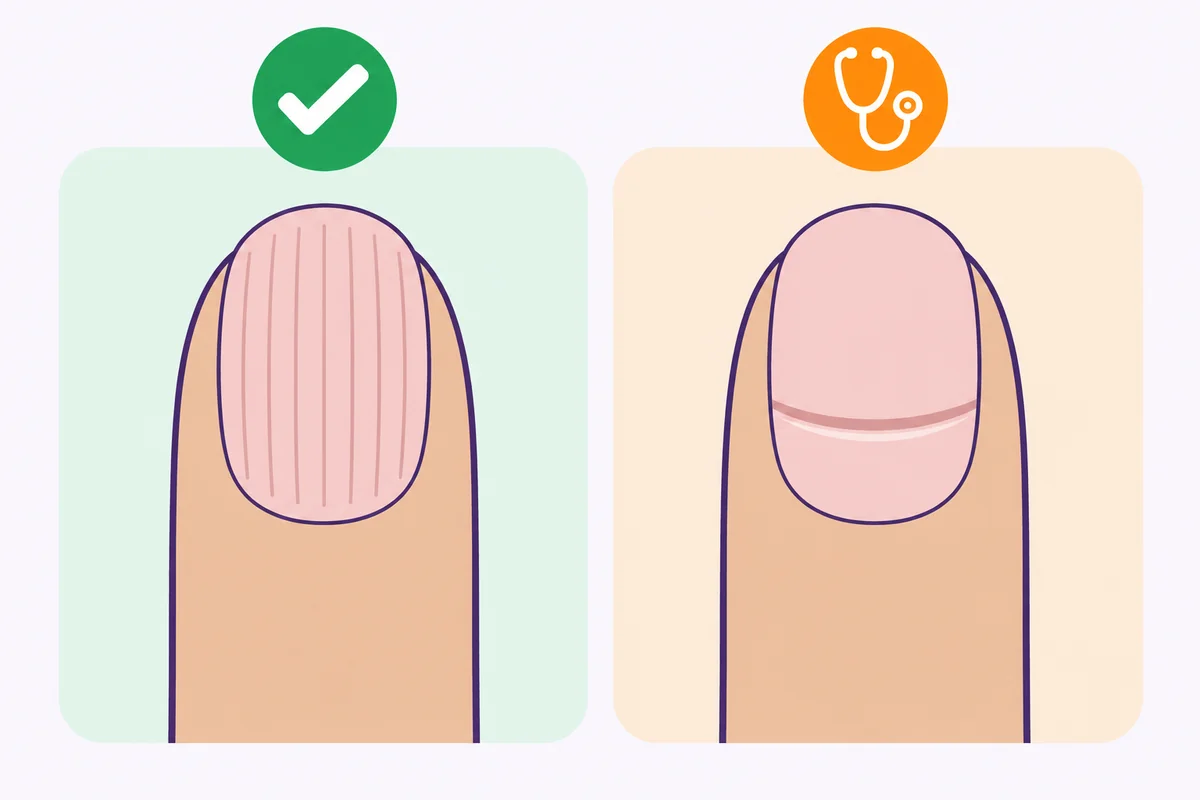
- Vertical ridges (left). Several fine lines running lengthwise from the base of the nail to the tip, a bit like corduroy. They usually show on several nails at once.
- Horizontal ridges (right). A groove running across the nail from one side to the other, parallel to the cuticle. There may be one or several. These are called Beau's lines.
An easy way to check: hold your nail at an angle under a light and run a fingertip of your other hand gently from the base to the tip. If you feel a step across the nail, it is a horizontal ridge. If that stroke feels smooth but stroking from side to side feels wavy, the ridges are vertical.
What causes vertical nail ridges?
Vertical ridges running from the cuticle to the tip are harmless, and they often become more prominent with age. Many people develop them as they get older because cell turnover in the nail matrix, the nail factory under the cuticle, changes with age. Parts of the nail grow in slightly thicker or thinner than others, forming small lengthwise waves.
Causes of vertical ridges include:
- Age. The most common cause, much like lines on the skin. Not a disease.
- Dry nails and skin. Hands that are often in water, soap or washing-up liquid, all-day air conditioning, or eczema make the ridges more visible.
- An underactive thyroid. It can cause thick, brittle nails with vertical ridges, usually along with other symptoms such as feeling cold, tiredness, weight gain and dry hair.
- Iron deficiency. Can be linked to vertical ridges, usually along with tiredness, pale skin and dizziness.
If the ridges are fine and even across several nails, the nails have not changed colour or started splitting, and you feel well, home care is usually enough. There is one kind of vertical line not to ignore, though: a single new dark brown or black streak, or one that is getting wider. See a dermatologist promptly, because it can be melanoma, a skin cancer, under the nail.
What causes horizontal nail ridges?
A horizontal ridge forms when the nail matrix stops working or slows down for a while. When it starts making nail again, the section made during the pause is thinner than the rest, leaving a groove across the nail. A deep groove running across the nail is a sign that something slowed or stopped the nail from growing.
The usual causes are:
- Serious illness or high fever, such as pneumonia, measles, COVID-19 or a severe infection. The body temporarily stops spending energy on making nails.
- Serious injury or major surgery
- Chemotherapy
- Uncontrolled diabetes and peripheral vascular disease, where blood flow to the fingers is poor
- Zinc deficiency
- A hard knock to the finger, such as trapping it in a door or dropping something heavy on it. This usually affects just one nail.
- Nail damage from manicures. Acrylic or gel nails that are applied or removed badly can also cause horizontal ridges.
- A habit of picking at or pushing back the thumb cuticles. This is called washboard nails: a row of ridges across the middle of the thumbnail.
You can estimate when a horizontal ridge happened
Horizontal ridges have one useful quirk: they tell time. The ridge forms at the base of the nail and moves up as the nail grows. Fingernails grow by about 3.5 millimetres a month on average. Toenails are much slower, and the rate varies with age and health.
So, for example, if a ridge sits about 3 to 4 millimetres from the base of the nail, the nail probably paused roughly a month ago. Think back: were you ill with a fever, under heavy stress, or did you hurt that finger around then? That information is very useful to share with a doctor.
- The ridge sits in the same place on almost every nail: something affected your whole body, such as a serious illness, a high fever or certain medicines.
- The ridge is on one nail only: usually something local, such as a knock to that finger or an inflamed cuticle on that nail.
Horizontal ridges from illness grow out once the body has recovered, so the ridge itself is not frightening. What matters is the cause. If a new ridge appears and you cannot think why, tell your doctor.
Nail ridges: which vitamin are you missing?
People search this a lot. The answer is that it can be involved for some people, but it is not the main cause for most. Here is how it breaks down:
- Vertical ridges can be linked to iron deficiency.
- Horizontal ridges can be linked to zinc deficiency.
- Thin nails that dip into a spoon shape are often associated with iron deficiency.
Deficiencies like these usually come with other symptoms, such as tiredness, pale skin, hair loss or slow wound healing. If ridges are your only symptom, there is no need to rush out and buy vitamins or minerals. Some are not good for you in excess, and iron and zinc are things a doctor should check with a blood test before recommending. What is safe and useful now is a varied diet with protein from meat, eggs and beans, plus leafy greens.
Another nail-and-nutrition belief people often get wrong is about white spots. Read more in white spots on your nails: is it really calcium deficiency?
Signs it is time to see a doctor
If you notice any of the following, see a doctor or a dermatologist.
- A new horizontal ridge, especially on several nails, when you cannot think of an illness or injury around that time
- A very deep groove, or the nail starting to separate at the base
- A new dark brown or black streak, or one that is getting wider
- A single deep vertical split that cracks the nail apart or keeps coming back in the same place
- Small pits in the nail, as if made by a pin. These may be linked to psoriasis, atopic dermatitis or alopecia areata.
- Thin nails that dip into a spoon shape
- A colour change, such as yellow, white across the whole nail, very pale, or bluish
- Swelling, redness, pain or pus around the nail
- Other symptoms at the same time, such as unusual tiredness, feeling cold, unexplained weight change, heavy hair loss, or numbness in the hands or feet
Caring for vertical ridges at home
No cream makes age-related vertical ridges disappear, but keeping nails moisturised makes the ridges less noticeable and stops the nails turning brittle as well.
- Use hand cream every time you wash your hands, working it into the nails and the skin around them, not just the backs of your hands.
- Massage cuticle oil into the base of the nails before bed.
- Wear gloves for washing up and housework so your nails are not soaked and dried over and over all day.
- Buff as little as possible. If you want a smoother surface, use a fine buffer with one light pass, not a weekly session, because frequent buffing thins nails and makes them brittle. We find a ridge-filling base coat is a safer way to smooth the surface than buffing the ridges away.
- Do not push or pick at your cuticles hard. The cuticle is the seal protecting the nail factory, and pushing it hard out of habit can cause ridges. More on this in peeling cuticles: 5 mistakes people make with their cuticles.
If your ridged nails also split or peel in layers, that has its own care routine in brittle nails that split easily: causes and care.
Can gel nails make ridged nails look smoother?
Yes, if the ridges are fine, age-related vertical ones. Gel polish does not treat the ridges, but it helps a lot with how they look. The base and colour layers settle into the small grooves, and the top coat leaves an even gloss, so a surface that looked wavy under the lights looks much smoother. When you reach for something under the light, the whole nail reflects one even shine.
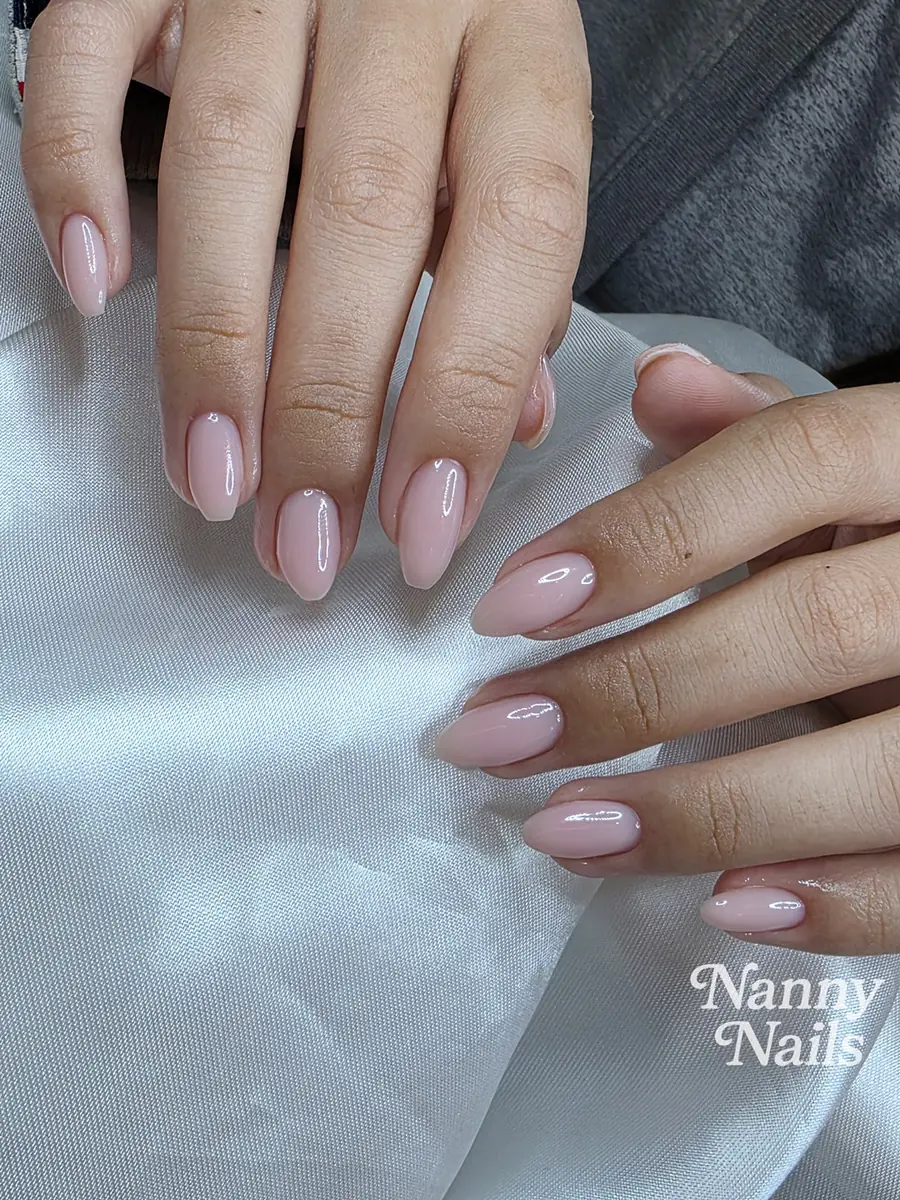
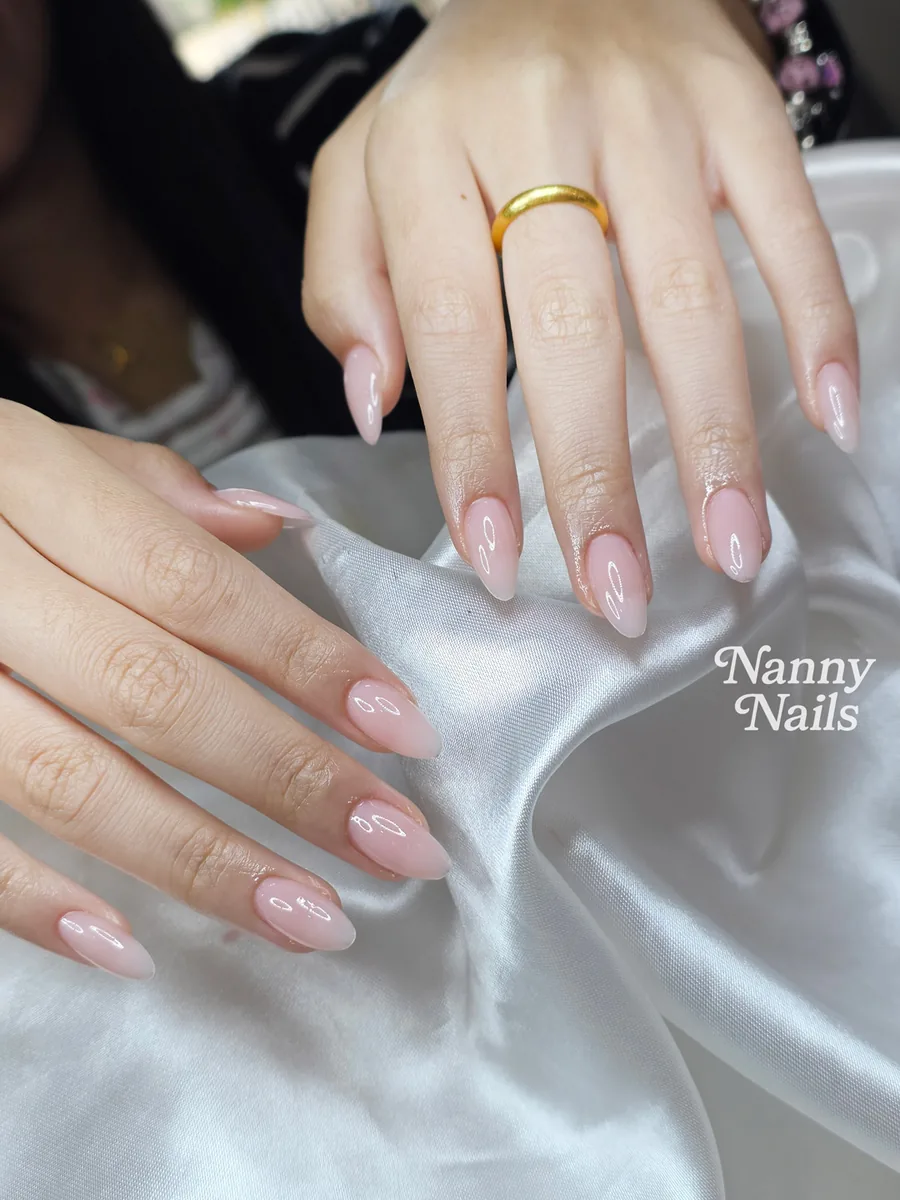
If the ridges are quite visible, or your nails are thin as well, another option is rubber base: a thick, flexible base that coats the nail to a smoother surface before the colour goes on, so it looks smoother than colour alone. You can compare rubber base with builder gel in rubber base vs builder gel: what is the difference.
There are two cases where you should not rush to paint over it:
- A new horizontal ridge, or any of the warning signs above. See a doctor first. Gel colour hides the ridge so you can no longer see how it is changing. Come back once the doctor says it is fine.
- Yellow, thick nails or suspected fungus. We will not paint over these, because the nail process adds moisture to the nail, which could help a fungus spread.
At our salon we push the cuticle back first and only then trim the excess skin. Every set gets a base coat before the colour and is cured under a UV lamp. When it is time for a change, never pick or prise gel off yourself: the gel takes the top layer of your real nail with it, leaving the nail thinner and more ridged than before. The right way to remove it is in can you remove gel nails at home.
| Service | Price |
|---|---|
| Gel polish, hands, 1 colour | 200 baht |
| Rubber base, nail reinforcement | 200 baht (colour not included) |
| Rubber base + 1 gel colour | 400 baht |
| Builder gel, nail reinforcement | 250 baht (colour not included) |
| Remove old gel, then a new set | 5 baht per nail (50 baht for a full hand) |
See the full menu on our services and prices page. Every set comes with our 7-day care period, so you can go home and use your hands as normal with peace of mind.
What customers say about the finish
(Lovely colours, the polish goes on smooth and neat, and it does not take long. I love it. I get my nails done here every time I am in Nakhon Phanom.)Google review by CHERRY ST
(The nail artist is meticulous and very good, never rushes, always checks the customer is happy first, and is very skilled.)Google review by Nooknik SU
Read all our reviews on the reviews page.
The short version
Fine vertical ridges on several nails mostly come with age and dryness. Care for them with hand cream, cuticle oil, gloves and as little buffing as possible. If you want the surface to look smoother, gel colour or rubber base helps with the look. A horizontal ridge is a record that the nail stopped growing for a while. Measure how far it is from the base and think back to what happened around then. If it is new and you do not know why, if it is on several nails, or if you have other symptoms, see a doctor first, every time.
For more glossy nude and sheer pink shades that keep nails looking smooth, like the ones in this article, browse our gallery.
FAQ
What causes vertical nail ridges?
Mostly getting older, which is harmless. Dry nails and skin make them more visible. Less often they are linked to an underactive thyroid or iron deficiency, which usually come with other symptoms.
What causes horizontal nail ridges?
The nail stopping or slowing its growth for a while, for example from a serious illness with high fever, serious injury, chemotherapy, uncontrolled diabetes, zinc deficiency, a knock to the finger, or nail damage from manicures applied or removed badly.
Which vitamin deficiency causes nail ridges?
Vertical ridges can be linked to iron deficiency and horizontal ridges to zinc deficiency, but neither is the main cause for most people, and they usually come with other symptoms. Do not self-prescribe supplements; ask a doctor for a blood test first.
Which nail ridges need a doctor?
A new horizontal ridge with no known cause, a deep groove or a nail separating, a new dark streak, pits in the nail, spoon-shaped nails, a colour change, swelling or redness around the nail, or other symptoms such as unusual tiredness.
Do horizontal nail ridges go away?
The ridge moves up with the growing nail and is eventually clipped off. Fingernails grow about 3.5 millimetres a month on average, so this takes several months. Find out the cause first, and ask a doctor if you are unsure.
Can gel nails make ridged nails look smoother?
For fine vertical ridges, yes: gel colour and top coat make the surface look smoother and glossier. If the ridges are more visible or the nails are thin, rubber base (200 baht, colour not included) coats the nail to a smoother surface. Gel does not treat ridges, and a new horizontal ridge should be seen by a doctor first.
What is the salon’s 7-day care period?
If work done at the salon lifts or peels within 7 days, bring it back and we will fix it for free.
Where is the salon and how do I book?
We are in Ban Noi Tai, Soi 7/1, Mueang Nakhon Phanom. Open every day, nail appointments 09:00 to 18:00, 3 bookings a day. Book on LINE @nannynails or call +66 99 002 8935.
Send us a photo of your nails first
Take a photo of your nails under a light and send it on LINE. We will help you decide between a glossy nude gel, rubber base for a smoother surface, or seeing a doctor first. Send a colour you like too if you have one. We take 3 bookings a day, between 09:00 and 18:00.
Read more