Ingrown Toenail: What Causes It, How to Care for It, and Will It Heal on Its Own?
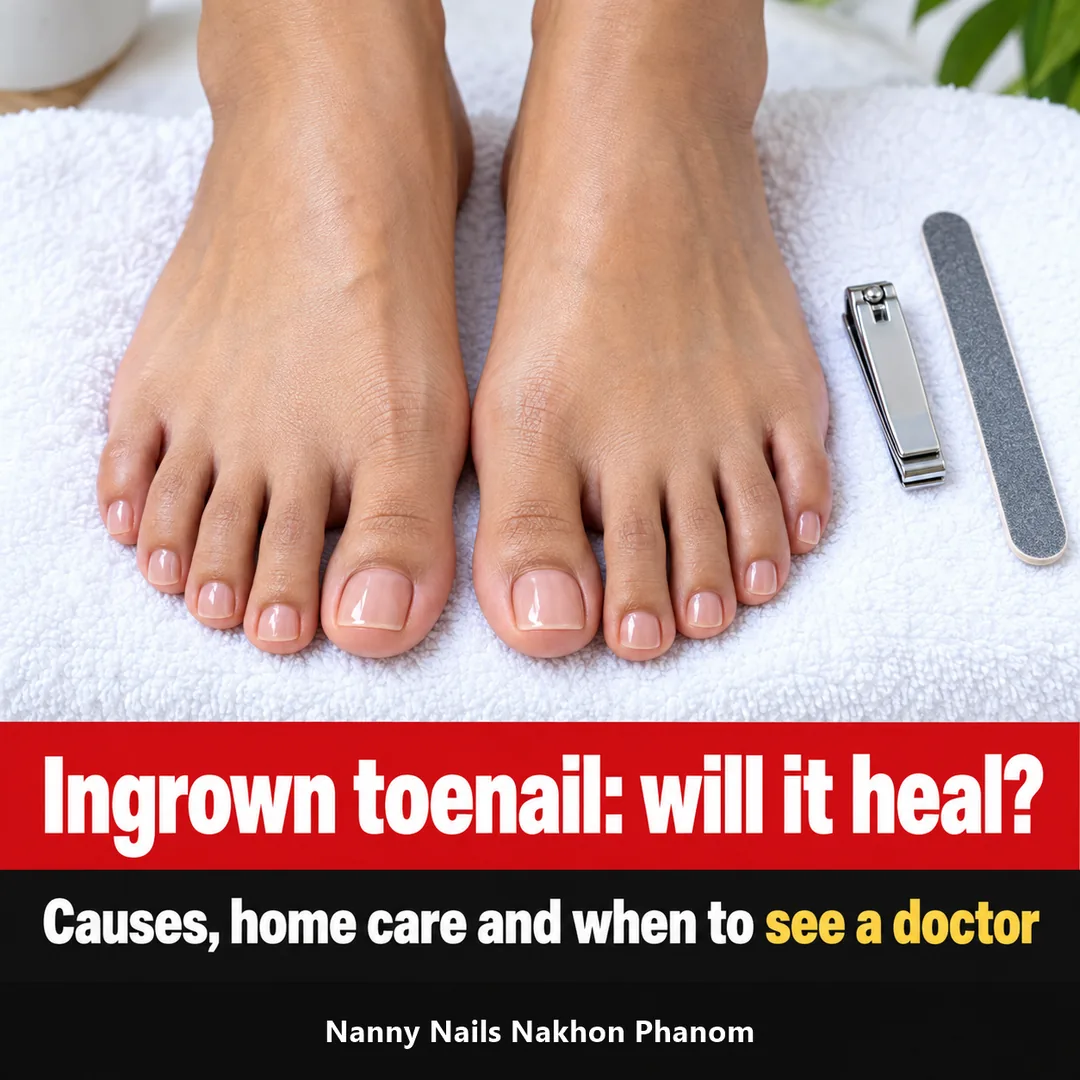
You wear the same pair of shoes to work all day. When you get home and take them off, there is a dull throbbing at the corner of your big toe. You look down and the skin beside the nail is red and a little swollen. That is often how an ingrown toenail starts, and it is very common. This article explains what causes an ingrown toenail, which cases you can look after at home, which ones need a doctor, and how to cut your nails so it does not keep coming back.
An ingrown toenail is not a sign that someone does not keep their feet clean. Very often it comes from small habits almost everyone has, like cutting toenails in a curve to follow the shape of the toe so they look tidy, or wearing narrow shoes you have owned for years. Left alone, though, a small sore spot can turn into an inflamed toe that makes walking hard.
What is an ingrown toenail?
An ingrown toenail happens when the edge or corner of a nail grows down into the skin at the side of the nail. As the nail presses into the skin, the area becomes painful, swollen and red. If the skin breaks and germs get in, it can become infected and fill with pus. It is most common on the big toe, because that toe carries the most weight and gets squeezed the most by shoes. Fingernails can be affected too, although much less often.
What causes an ingrown toenail?
There is usually more than one reason, and most of them are things you can change.
- Cutting toenails in a curve or too short When you cut deep into the corners to follow the curve of the toe, the corner of the new nail has a good chance of growing into the skin. This is the most common cause.
- Tight or narrow shoes They squeeze the toes so the nail presses into the skin all day. High heels do the same by pushing your weight forward onto the front of the foot.
- Picking or tearing at the nail corners This leaves a ragged edge, and the nail can grow back out of line.
- An injury to the toe Stubbing it on something hard, dropping something heavy on it, or sports where the foot takes repeated knocks.
- Naturally curved nails Some people are born with nails that curve down strongly at the sides, and they get ingrown nails more easily than others.
- Feet that stay damp all day Damp skin at the side of the nail becomes soft, which makes it easier for the nail to dig in.
What does an ingrown toenail look like? The stages
Early stage
The skin beside the nail is slightly red, tender when you press it, and a little swollen. It hurts more when you wear shoes. At this stage, many people can manage it at home if they start looking after it early.
Inflamed stage
The redness and swelling get worse, the area feels warm, and it throbs even when you are not wearing shoes. White or yellow pus may start to ooze out. At this stage you should see a doctor.
Long-lasting or recurring stage
A raised, red lump of tissue grows at the side of the nail and bleeds easily, or the same toe keeps getting better and then flaring up again. This needs a doctor's care. Some people need a small procedure at a clinic or hospital to stop it coming back.
Will an ingrown toenail heal on its own?
In the early stage, before there is any pus, many people find it gets better by itself once they care for it the right way and stop wearing shoes that squeeze. Once there is pus, however, you should not wait for it to heal on its own, because the infection can spread. See a doctor.
One thing is important to remember. If you have diabetes, poor circulation in your feet, or a weakened immune system, do not try to treat an ingrown toenail yourself at all. See a doctor from the very start. In these groups, even a small wound on the foot can get worse much faster than it would for most people.
Ingrown toenail home treatment for mild cases
This is only for the early stage, when there is no pus and you do not have any of the health conditions mentioned above.
- Soak your foot in warm water for 10-15 minutes, 2-3 times a day. It helps reduce swelling and softens the skin. Dry your foot completely every time.
- Keep the area clean and dry and change your socks whenever they get damp.
- Wear wide shoes or open-toe shoes while it still hurts, so the toe is not squeezed.
- Do not cut, pick or dig at the corner of the nail yourself The deeper you cut, the deeper the new corner tends to grow back into the skin.
- Check it every day If it has not improved within 2-3 days, or it is getting worse, see a doctor.
It can be tempting to wedge something under the nail corner or trim a little "V" out of it to relieve the pressure. Please do not. These tricks often break the skin, invite infection, and leave a sharper corner that grows back into the same spot.
When should you see a doctor?
- There is pus, redness that spreads out from the side of the nail, or you have a fever.
- The pain keeps getting worse, or walking is difficult.
- You have cared for it at home for 2-3 days and it is not getting better.
- A red lump of tissue has grown beside the nail, or the same toe keeps getting ingrown again and again.
- You have diabetes, poor circulation or a weakened immune system. In that case, go from the start.
What happens when you see a doctor about an ingrown toenail?
Many people put off seeing a doctor because they are afraid it will hurt, or they do not know what to expect. Knowing roughly what happens can take some of the worry away. The exact steps depend on your toe, and the doctor decides what is right for you.
- An examination first The doctor looks at how red and swollen the toe is, whether there is pus, and whether there is a red lump of tissue beside the nail. They will ask how long it has been going on, whether it has happened before, and about any health conditions you have.
- If it is mild The doctor may simply explain how to care for it at home and ask you to come back for a check.
- If there is pus The doctor may drain it and decide whether you need any medicine. Medicine is for the doctor to prescribe, so please do not buy something and take it on your own.
- If it is severe or keeps coming back The doctor may remove the part of the nail that is digging into the skin, usually just a strip along the side, after numbing the toe with a local anaesthetic, so you should not feel much during the procedure. In some cases the doctor may also stop that edge of the nail from growing back, to lower the chance of it happening again.
- Afterwards You will be told how to look after the wound, how long to keep it dry, and when to come back. Following those instructions helps it heal faster.
It is usually a small procedure, and you can go home the same day. Every case is a little different, so feel free to ask the doctor what they plan to do, how much rest you will need, and how to care for the wound.
How to cut toenails to prevent ingrown nails
Prevention is much easier than treatment, and most of it comes down to how you cut your nails.
- Always cut straight across Cut in a straight line from side to side. Do not curve down into the corners to follow the shape of the toe, and do not dig the corners out.
- Do not cut too short Leave the nail about level with the tip of your toe, so the corners sit just clear of the skin at the sides.
- File any sharp corners Smooth a sharp corner gently with a file instead of cutting deep into it.
- Cut after a bath or shower The nail is softer, easier to cut, and less likely to split.
- Choose shoes that do not squeeze the front of your foot You should be able to wiggle your toes comfortably.
- Keep your feet dry This matters most if you wear closed shoes all day.
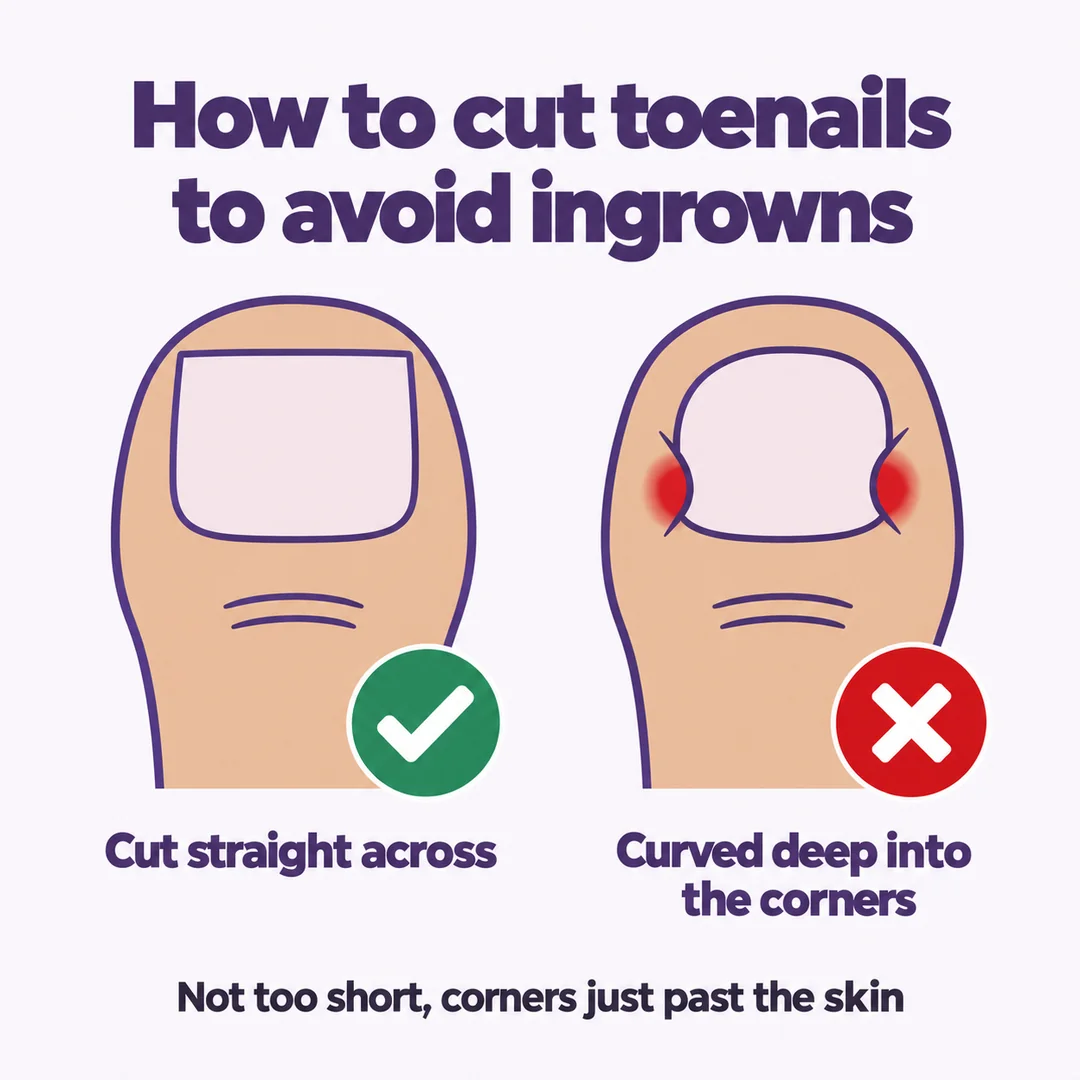
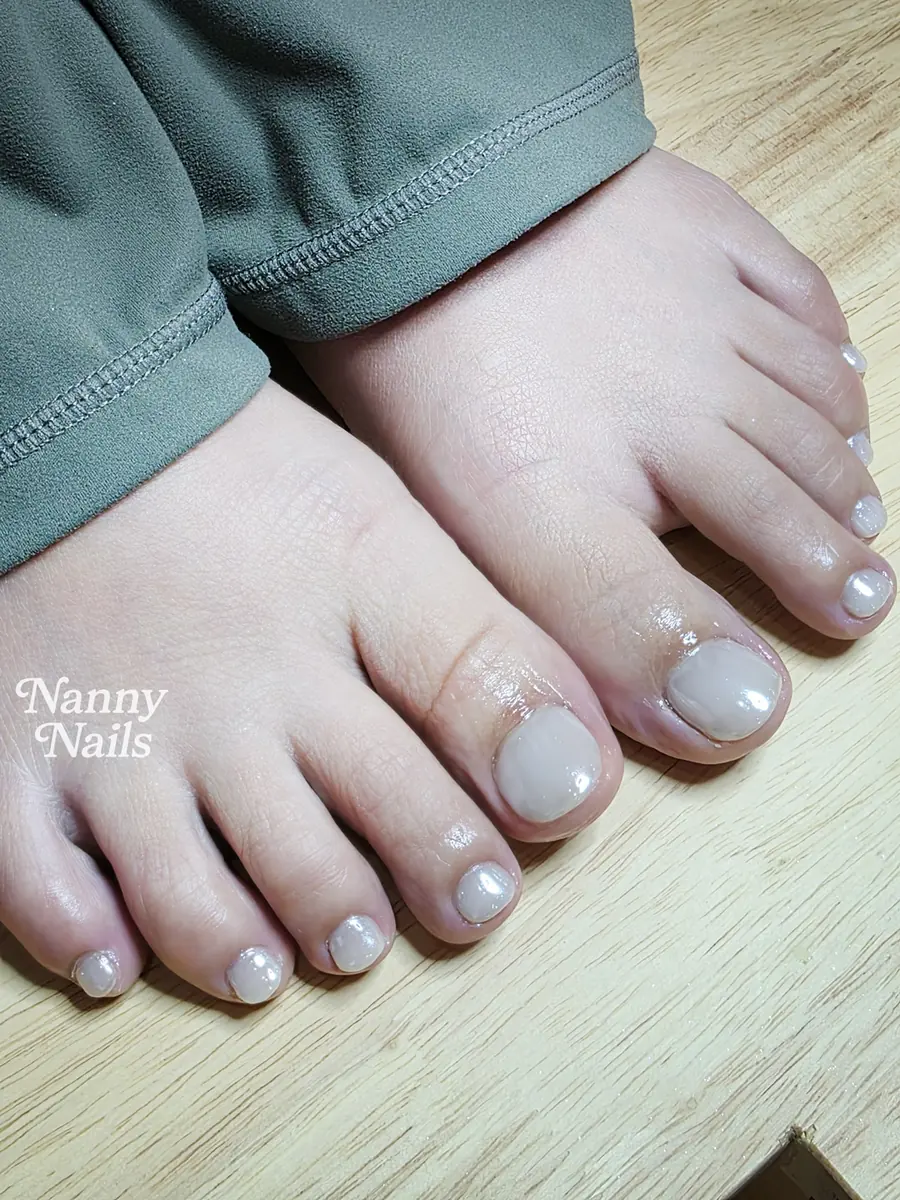
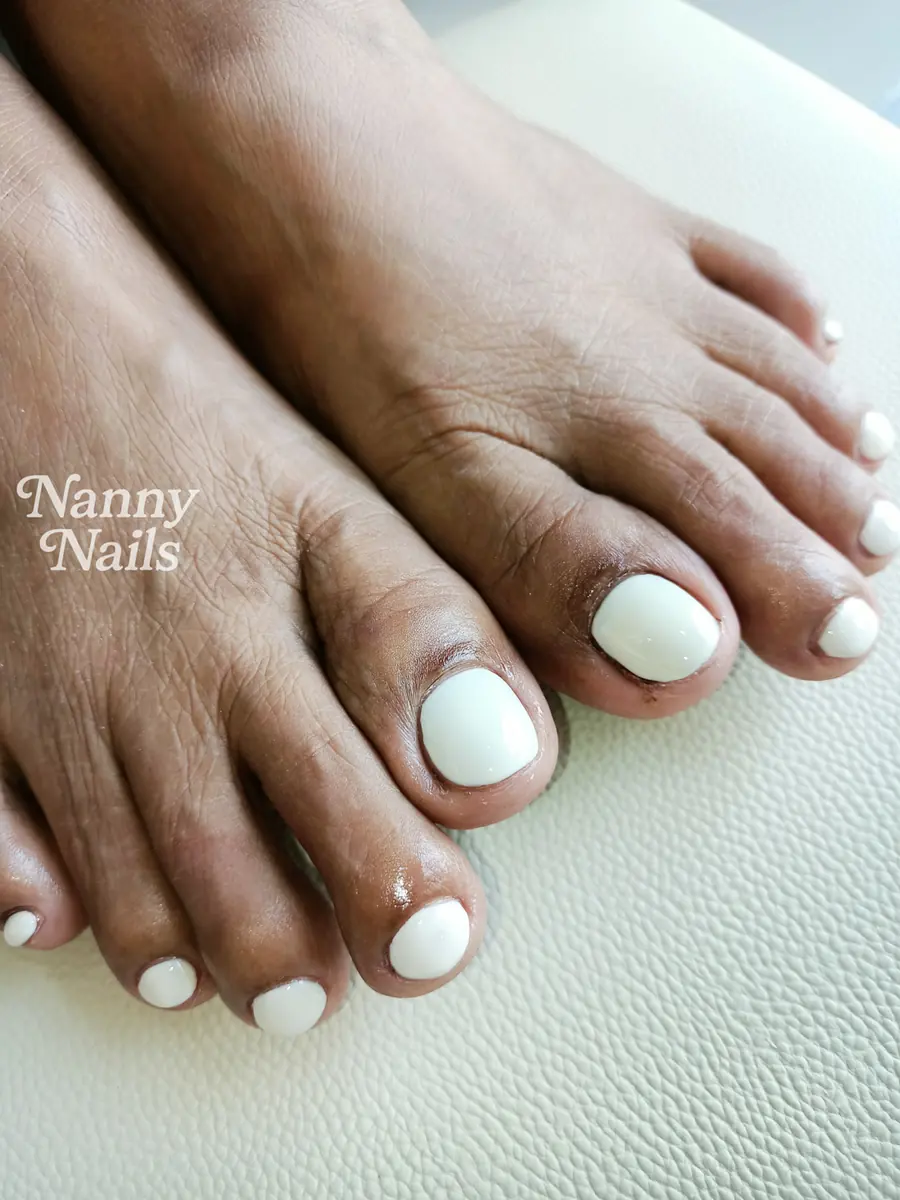
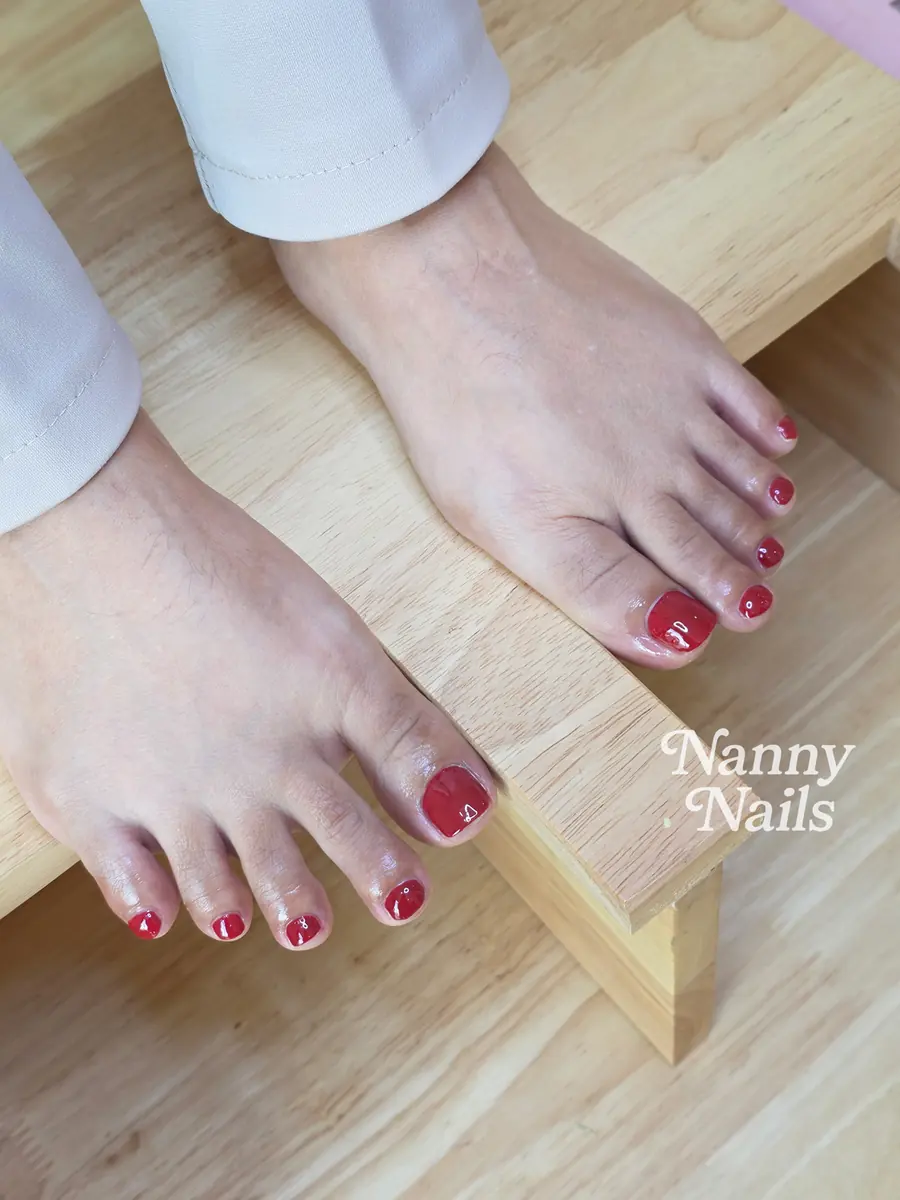
Cut straight and not too short, and the nails still look neat. A straight edge with gently filed corners is also the best base for gel colour on your toes, because the colour sits evenly right to the edge.
Choosing shoes and socks to prevent ingrown toenails
How you cut your nails matters a lot, but your shoes and socks matter just as much, because your feet spend many hours in them every day.
- Leave room at the front There should be a little space between your big toe and the end of the shoe, enough to wiggle your toes comfortably.
- Shop for shoes in the afternoon or evening Feet swell a little during the day, so shoes that fit then will stay comfortable all day.
- Cut back on high heels and pointed shoes If you need them for work, switch to flat shoes or sandals whenever you can.
- Socks should not squeeze your toes Tight socks and tights can press on the nail just like tight shoes. Pick the right size and a fabric that absorbs sweat.
- Change your socks every day If your feet sweat a lot, change them during the day too, and rotate your shoes so each pair has time to dry out.
- Replace worn-out shoes Old shoes that have lost their shape, with a squashed toe box, can press on your toes without you noticing.
Ingrown toenails in children and teenagers
Ingrown toenails are common in teenagers, especially those who play sports like football, running or basketball. Their feet take repeated knocks, they wear sports shoes all day, and their feet sweat a lot.
- Children's feet grow quickly, and shoes that fitted a few months ago may already be too tight. Check the size of school shoes and sports shoes regularly.
- Teach your child to cut their toenails straight across, not too short, and not to bite or pick at their nails.
- After sports, take off the shoes, wash the feet, dry them well and put on clean socks.
- If your child complains of a sore big toe, starts limping, or you see redness and swelling beside the nail, take them to a doctor. Do not let them pick at it or cut it themselves.
Can you get an ingrown fingernail?
Yes, although it is much less common than on the toes. It usually comes from biting your nails, picking at the skin around them, or cutting the corners too deep. The signs are similar: the skin beside the nail is red, swollen and sore to touch.
The care is the same too. Keep the area clean and dry, stop biting or picking, and do not cut into the corners. If there is pus, spreading swelling, growing pain or a fever, see a doctor.
What a nail salon can and cannot do
At Nanny Nails, we do not cut or treat ingrown toenails. If a toe shows signs of an ingrown nail, or is red, swollen or has a wound, we will not do that toe, and we will recommend that you see a doctor first. Working on an inflamed toe could make things worse, and that is not a risk we are willing to take with your feet.
What we can do is look after toenails that are already healthy. We trim them straight and not too short, tidy the edges, and paint gel colour so your feet look good again. Once everything has healed and you want pretty toes again, you are very welcome to come in.
| Toenail service | Price |
|---|---|
| Gel colour on toes, 1 colour | 250 baht |
| Gel colour on toes, 2-3 colours | 300 baht |
| Special colour (toes) | 300 baht |
See our full menu on the services and prices page, and read what customers say about us on the reviews page.
Comfortable feet start with cutting your nails the right way
Once you know that ingrown toenails usually start with curved cutting and tight shoes, prevention becomes much simpler. Cut straight across, do not cut too short, and choose shoes that let your toes move. Your feet will thank you every time you walk. And if your toe ever becomes inflamed, do not wait. See a doctor first.
For toenail ideas to enjoy once your feet have healed, browse our nail design gallery.
FAQ
What causes an ingrown toenail?
Common causes are cutting toenails in a curve or too short, tight or narrow shoes, picking at the nail corners, an injury to the toe, naturally curved nails, and feet that stay damp.
Will an ingrown toenail with pus heal on its own?
You should not wait for it to heal by itself. If there is pus, spreading redness or a fever, see a doctor, because the infection can spread.
How can I care for a mild ingrown toenail at home?
Soak your foot in warm water for 10-15 minutes, 2-3 times a day, keep it clean and dry, wear wide or open-toe shoes, and do not cut or dig at the nail corner. If it is not better within 2-3 days, see a doctor. If you have diabetes, poor circulation or a weakened immune system, see a doctor from the start.
How should I cut my toenails to prevent ingrown nails?
Cut straight across, not curved down into the corners. Do not cut too short, leave the corners just clear of the skin at the sides, and gently file any sharp corners.
Does Nanny Nails cut or treat ingrown toenails?
No. We are a nail salon and we do not treat ingrown toenails, and we will not do nails on an inflamed toe. If you have symptoms, please see a doctor. Once your feet have healed, we are happy to trim and paint your toenails.
What will a doctor do for an ingrown toenail?
The doctor examines the toe first. For a mild case they may only explain home care. If there is pus they may drain it, and if it is severe or keeps coming back they may remove a strip of nail along the side after numbing the toe with a local anaesthetic. The doctor decides which option is right for you.
Where is the salon and how do I book?
We are at Ban Noi Tai, Soi 7/1, Mueang Nakhon Phanom. Nail appointments run from 09:00 to 18:00. Book on LINE @nannynails or call +66 99 002 8935.
Toes healed and ready to look pretty again?
We do not cut or treat ingrown toenails. But if your toenails are healthy, message us on LINE. Our nail artist will trim them straight and paint them in gel colour. We take just 3 bookings a day, and appointments run from 09:00 to 18:00.
Read more