Nail Biting: The Harm Goes Beyond Untidy Nails, and 6 Ways to Stop That Actually Work
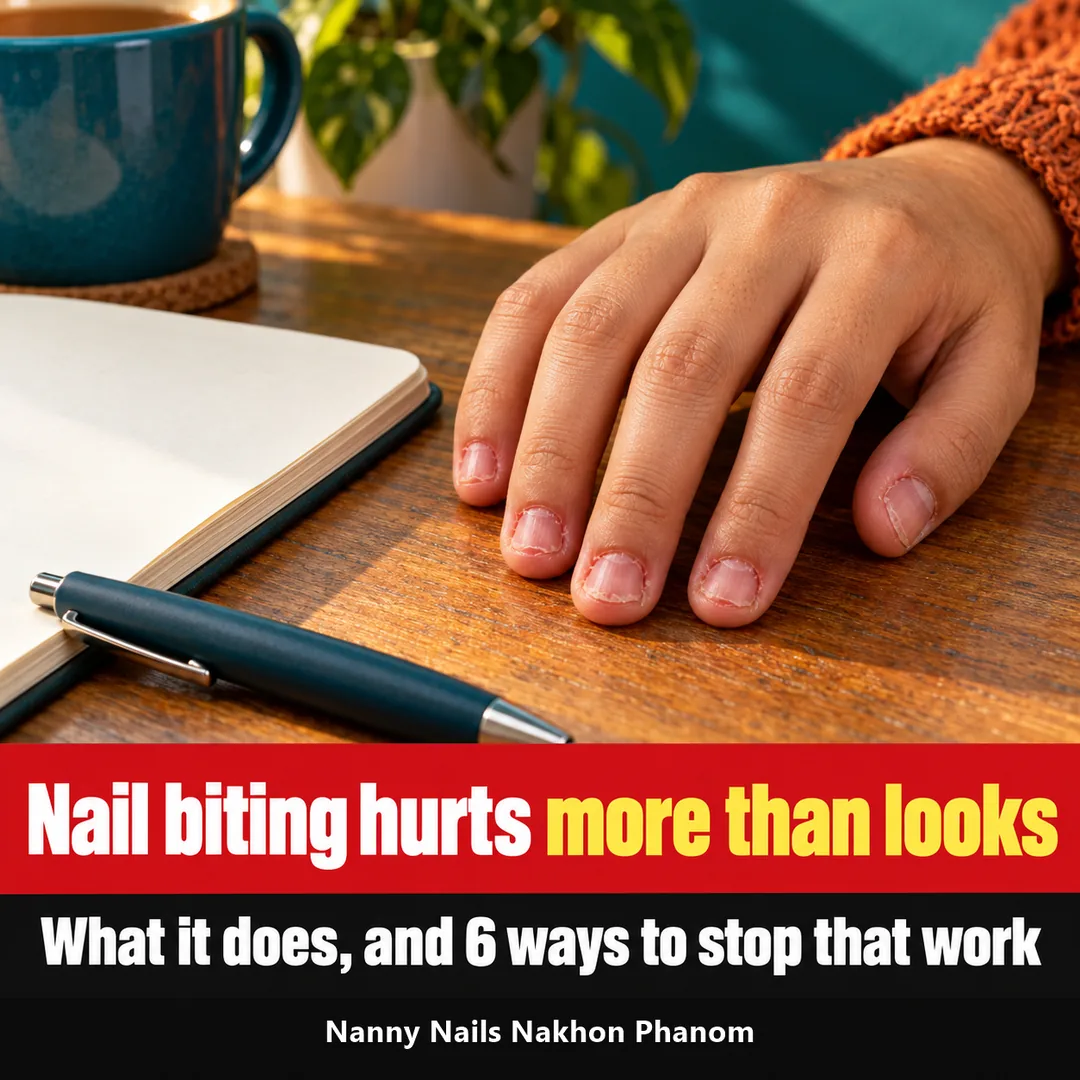
You are watching the big episode of a series, or waiting for a work reply, and suddenly realise your index finger has been in your mouth for a while. The little bit of nail that had just grown past your fingertip is gone again. Most people who bite their nails do not mean to. It happens when the mind drifts. This article looks at what frequent nail biting does to your nails, skin, teeth and confidence, the things many people do that quietly make the biting worse, and 6 ways to stop that we recommend.
If you have quit several times and keep coming back to it, please do not be hard on yourself. Nail biting is very common in children and adults alike, and there are real emotional reasons it is hard to shake. Once you understand what drives it, it gets much easier to pick the approach that works for you.
Why we bite without noticing
Doctors call chronic nail biting onychophagia, which sounds alarming but simply means nail eating. It is a common habit tied to stress or nerves that shows up in both children and adults. Around 20 to 30 percent of people, or more, bite chronically and cannot stop on their own.
It is hard to stop because biting genuinely calms you for a moment. It is a way of soothing yourself. These are the situations where people tend to bite:
- When stressed or anxious waiting for exam results, before a job interview, stuck in traffic when you are already late
- When bored waiting in a queue, waiting for a bus, scrolling your phone
- When watching TV or concentrating the hands are free, the mind is busy, and a finger drifts to the mouth
- When you find a hangnail or a rough edge you only mean to tidy it, and end up biting the whole nail
Notice that most of these happen when you are not thinking about your nails at all. That is why simply deciding not to bite is rarely enough: when it actually happens, your attention is somewhere else.
What nail biting does, beyond untidy nails
Most people know biting makes nails look bad, but the real effects go deeper. These are the ones that show up most.
1. Nails grow back misshapen, ridged or uneven
Repeated biting can make the skin around your nails sore and can damage the tissue that makes nails grow, so the nails come in looking abnormal. Repeated trauma to the cuticle and nail bed leads to uneven growth, ridges and frequent hangnails, and the more often you bite, the more slowly your nails recover.
In plain terms, the nail is not only short for a while. Sometimes the new nail carries the marks of the biting with it.
2. Infection around the nail
Teeth do not cut cleanly like clippers. They leave small tears at the tip of the nail and in the skin beside it. These little wounds let bacteria, viruses and fungi in, which can lead to an inflamed nail fold called paronychia. Signs are pain, swelling and tenderness around the nail, and skin that is red and warm to the touch. In more serious cases pus can collect underneath.
People who bite can also get a fungal infection of the nail itself. If a nail turns cloudy, thick or discoloured, do not paint over it to hide it. Have a doctor look first.
3. Germs travel back and forth between hands and mouth
Your hands touch everything all day, from money and handrails to your phone, and the space under your nails holds on to dirt. Chronic biting passes bacteria and viruses from your mouth to your fingers, and from your nails to your face and mouth. Swallowing bitten nails can also cause stomach infections.
4. Chipped teeth and a tired jaw
This one surprises people. Nail biting can chip teeth, and holding your jaw forward for long periods while biting puts pressure on it, which is associated with jaw problems. Heavy biters can develop jaw pain, misaligned front teeth and damage to the tooth roots.
5. The feelings nobody sees
There is an emotional side too. Many chronic biters feel ashamed, anxious or low in confidence. Some hide their hands under the table in meetings, curl their fingers in photos, or avoid handshakes. And many never go to a nail salon because they worry what the technician will think. We will come back to that at the end.
Things that quietly make you bite more
This is where people who really want to stop slip up most, because each of these sounds helpful but actually sends you back to biting sooner.
- Letting nails grow long to prove you have quit We advise the opposite: keep nails short and filed smooth. Less nail means less to bite and less temptation. A long, rough edge is bait.
- Using your teeth on a hangnail or a split edge A hangnail is a physical trigger. You mean to tidy one bit and end up biting the whole finger. Snip just the loose piece with cuticle scissors instead.
- Ordering yourself to stop on all 10 fingers in a single day Slip on one finger and it feels like total failure, so you give up. Stopping one group of nails at a time works better.
- Scolding yourself, or your child, every time Biting usually comes from stress to begin with. More scolding adds more stress, and the cycle speeds up.
- Never noticing when you bite If you do not know whether you bite when bored, stressed or watching a screen, you cannot prepare for it.
- Leaving nails bare and rough while trying to quit People tend to bite less when their nails look nice or when they have paid for a salon manicure. Nails with nothing to lose are easier to bite.
6 ways to stop biting your nails that actually work
All six are what we tell customers who want to stop biting, with how to do each one in everyday life. You do not need to do them all at once. Pick the 2 or 3 that fit your life best.
1. Keep nails short and the edges smooth
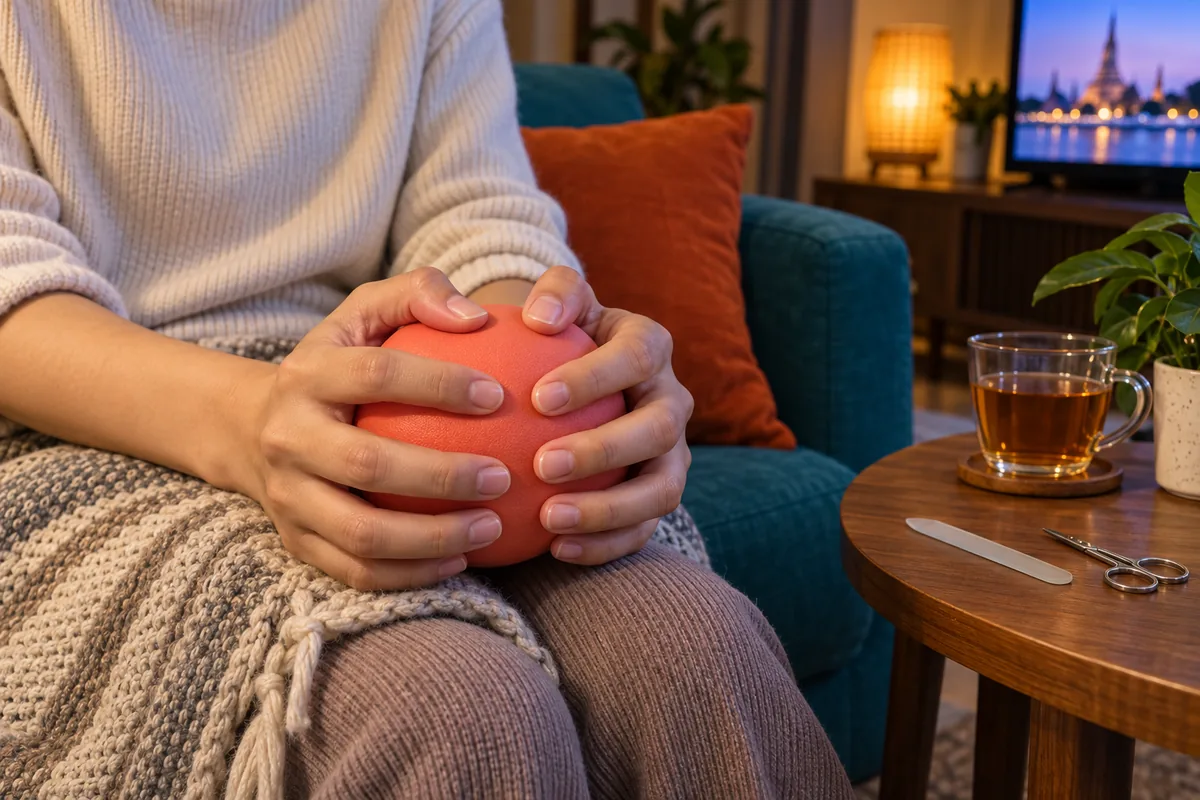
Trim after a shower when nails are soft, then file the edges round and smooth with no sharp corners. A smooth edge gives your teeth nothing to catch. Keep a small file in your bag, and file instead of biting the moment you feel a rough edge.
2. Use a bitter-tasting nail coating
Bitter nail coatings are sold widely. When a finger goes into your mouth and tastes bitter, you notice straight away. It helps some people, but the results are inconsistent, so it works best as a reminder alongside other methods rather than on its own.
3. Paint your nails or have them done
We say it plainly: you are less likely to bite nails that look nice, or that you have paid to have done at a salon. If you are not ready for that, wrapping fingertips in tape or wearing thin gloves while watching TV works the same way, by putting something between your teeth and your nails.
4. Give your hands something else to do
Replace biting with a habit that does no harm, such as squeezing a stress ball or using a fidget toy. Keep one next to the sofa or on your desk, wherever you tend to bite, so your hands have a job while your mind is busy.
5. Note down when you bite
Find your own triggers, which might be hangnails, boredom, stress or anxiety. Jot a quick note on your phone for a week: when you bit, what you were doing, how you felt. Once you see a pattern, such as biting every time you watch a series, you can put the stress ball next to you before you press play.
6. Stop one group of fingers at a time
Start with the fingers you bite least, say both thumbs, and aim to leave only those two alone this week. Once that works, add the index fingers, then the middle fingers. This gradual approach works because small wins give you the energy to keep going, unlike quitting all 10 at once, where one slip can knock your motivation.
If your child bites their nails, the same steps apply, but swap the scolding for letting them choose their own squeeze toy, or a sticker for every day the thumbs survive. Many children who bite mildly grow out of it.
When to see a doctor
Most nail biting is just a habit, but some situations should not be handled at home.
- Swelling, redness, heat, pain or pus around a nail See a doctor if it does not improve within a few days, or if it is severe.
- You have diabetes or circulation problems Even a small wound around the nail is worth having checked sooner than usual.
- A nail turning cloudy, thick, discoloured, or changing shape over time If biting leads to a skin or nail infection, see a doctor.
- You have tried many times and cannot stop For some people, nail biting can be a sign of a deeper psychological or emotional problem. Chronic biting counts as a body-focused repetitive behaviour (BFRB), which has treatments such as habit-reversal training with a therapist. Asking for help is nothing to be embarrassed about.
- Jaw pain, chipped teeth or teeth starting to shift See a dentist.
How getting your nails done can help you stop
Tip 3 is the reason many nail biters finally start to stop after their first manicure. Nails coated in gel polish are harder than bare nails, the edges are smooth and give your teeth nothing to catch, and when you look down and see a colour you chose yourself shining on your fingertips, the feeling of not wanting to ruin it pulls your finger away from your mouth faster than any warning.
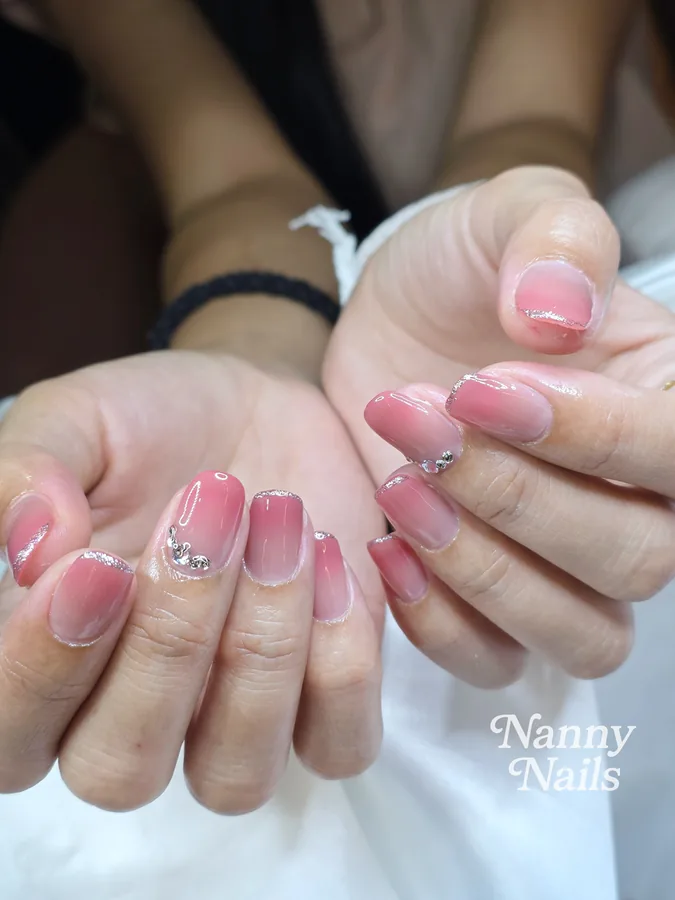
A glossy deep colour like this looks neat even on very short nails.
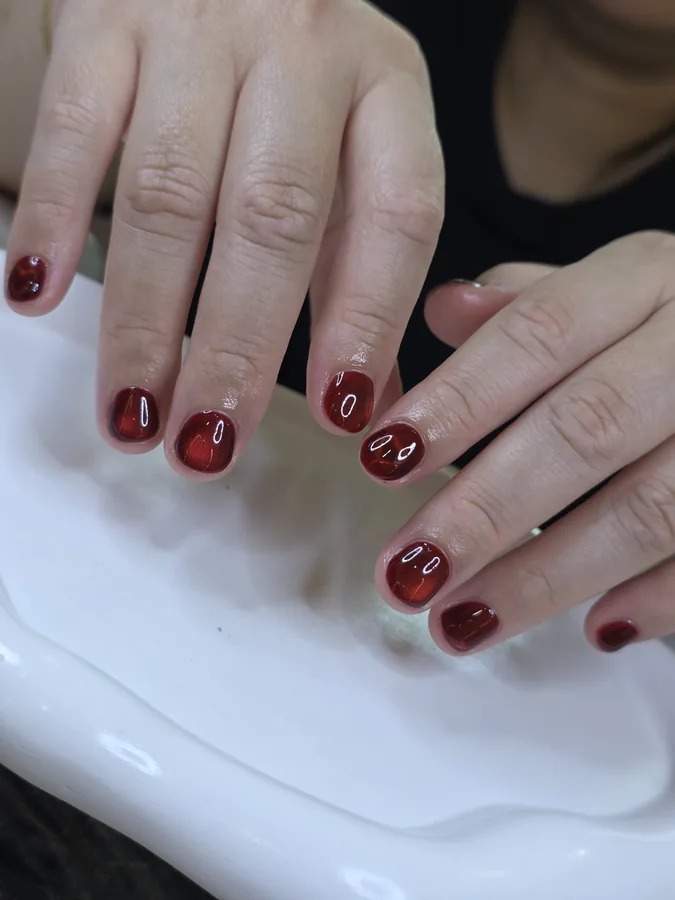
If you like something sweeter, a pink ombre with a touch of glitter makes short nails look deliberately styled rather than bitten.
Or deep green with one glitter accent nail, which looks grown up and goes easily with work clothes.
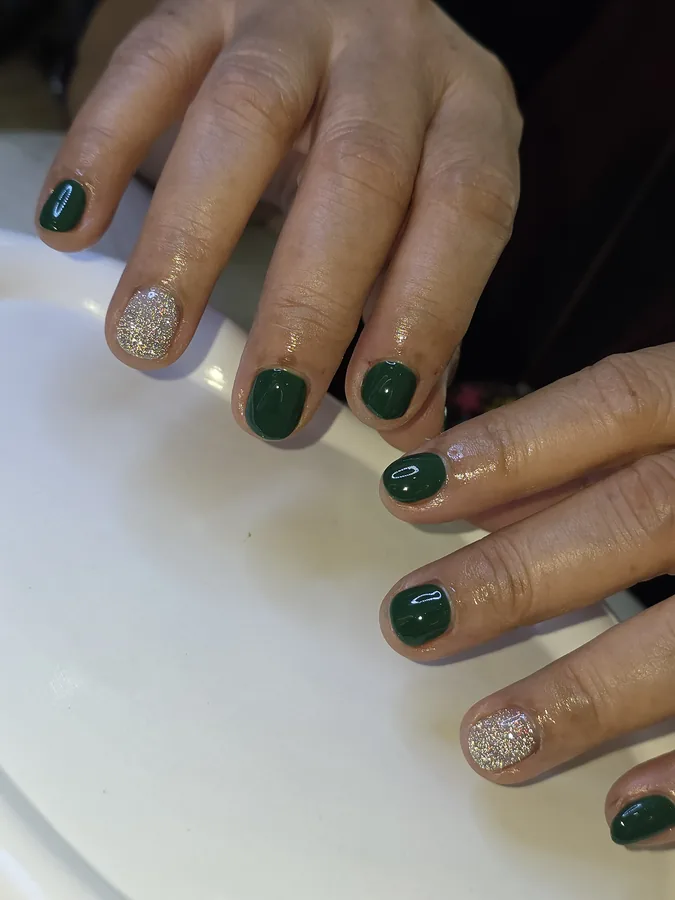
What worries nail biters most is whether a salon will take nails this short, or whether they have to grow them out first. We do bitten nails in every case, and we usually recommend strengthening the nail surface so nails left thin by biting become sturdier. How it is done, what to prepare and what it costs are covered separately in Bitten nails: can you get gel, and how long do you have to wait?. For more short nail designs, see Gel nails on short nails, with 15 real designs.
What customers say about the technician
(The technician is thorough and really good. She never rushes and always checks you're happy first. Clearly skilled.)Google review by Nooknik SU
(Beautiful work. She's so patient. Honest, natural colours.)Google review by CI EL
Read all our reviews on the reviews page.
One finger is enough to start
Biting your nails does not mean you lack discipline. It is how the mind copes with stress and boredom. But the harm is real: nails that grow back misshapen, infections around the nail, chipped teeth, and the urge to hide your hands. What works is changing your surroundings so biting gets harder: keep nails short, file them smooth, give your hands something to do, learn when you bite, and stop one group of fingers at a time. If the skin around a nail gets inflamed, or you truly cannot stop on your own, see a doctor. There is no shame in it.
For other everyday habits that damage nails without you noticing, read 6 habits that damage your nails, and for peeling cuticles you are tempted to pick, read Peeling cuticles: why pulling them hurts.
FAQ
What are the side effects of biting your nails?
Repeated biting makes the skin around the nails sore, can damage the tissue that makes nails grow so they come in misshapen and ridged, opens the way for infection around the nail, passes germs between mouth and hands, and can chip teeth or strain the jaw.
Why is nail biting so hard to stop?
Because biting calms you for a moment. People tend to bite when stressed, bored, watching TV or concentrating, all times when they are not thinking about their nails. Willpower alone is rarely enough, so it helps to change your surroundings to make biting harder.
How do I stop biting my nails?
There are 6 steps: keep nails short, use a bitter-tasting coating, paint your nails, have them done or cover them with tape, give your hands something else to do, identify your triggers, and stop gradually one group of nails at a time.
When should I see a doctor about nail biting?
If the skin around a nail is swollen, red, hot, painful or has pus and does not improve within a few days, if you have diabetes or circulation problems, if a nail changes colour or thickens, or if you have tried many times and cannot stop, which can be linked to a treatable emotional issue.
Can I get gel nails if I bite my nails very short?
Yes. Nanny Nails does bitten nails in every case and recommends strengthening the nail surface with a rubber base or builder gel. If there are open wounds or inflammation around the nail, let them heal first. See our article on gel nails for bitten nails for details.
What is the salon’s 7-day care period?
If work done at the salon lifts or peels within 7 days, bring it back and we will fix it for free.
Where is the salon and how do I book?
We are in Ban Noi Tai, Soi 7/1, Mueang Nakhon Phanom. Open every day, nail appointments 09:00 to 18:00, 3 bookings a day. Book on LINE @nannynails or call +66 99 002 8935.
Send us a photo of your hands first
Send a photo of your hands as they are now on LINE, no need to wait for your nails to grow. We will tell you whether plain gel colour suits your nails or whether they would do better with a rubber base or builder gel layer underneath. Feel free to send a colour you like too. We take 3 bookings a day, between 09:00 and 18:00.
Read more