Nails Turned White and Flaky After Using Nail Polish Remover? 5 Mistakes People Make When Removing Polish
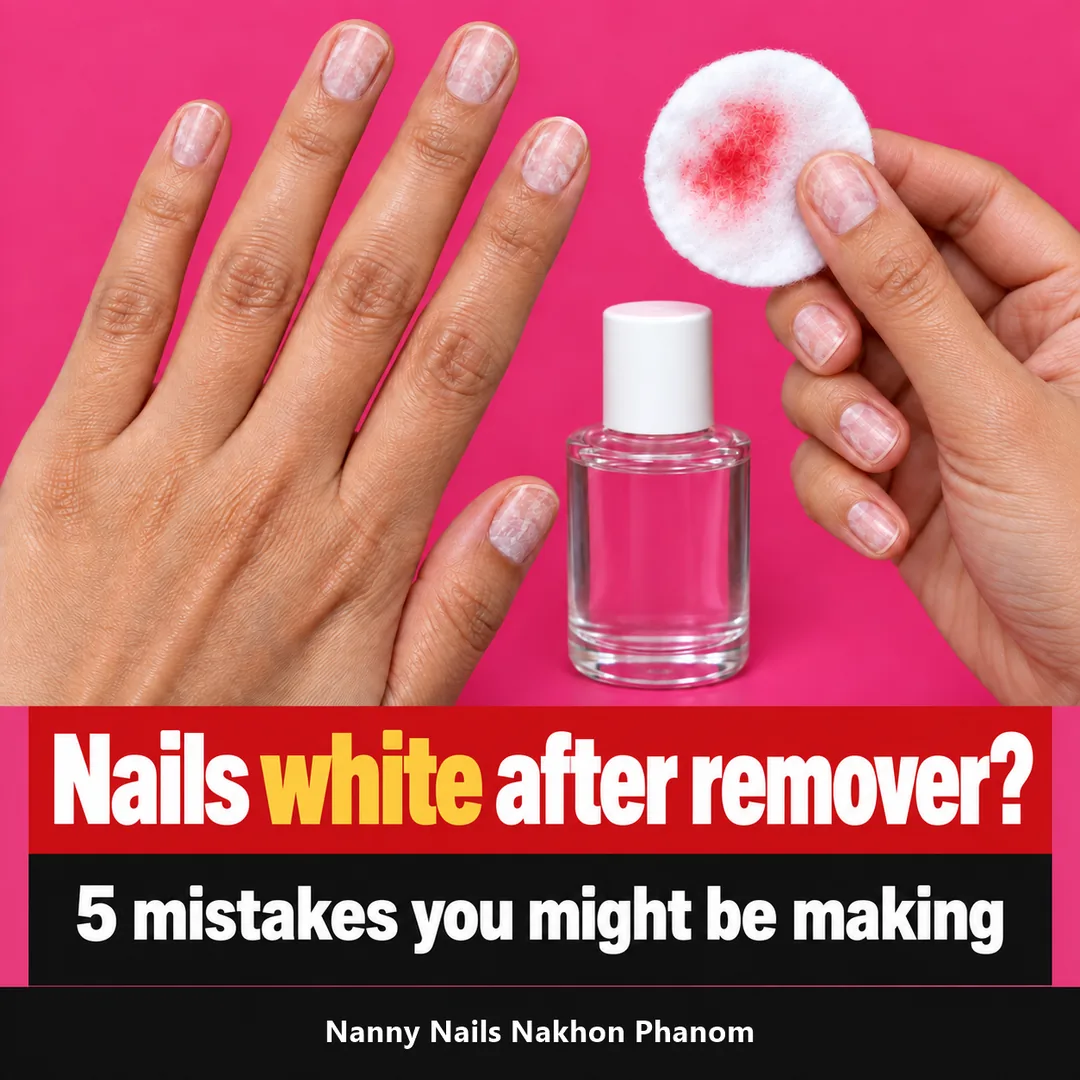
The polish you painted on yourself two weeks ago has started chipping at the tips, so on the way home from work you stop at a convenience store, grab a small bottle of nail polish remover and a bag of cotton pads. That night you rub until the colour is gone. But after washing your hands, the nails look dull and white, flaky, as if dusted with powder, and wiping does not help. This article explains where that white film comes from, how acetone and acetone-free removers differ, and the 5 things most people get wrong when removing polish without realising it.
Let us say this up front: white, flaky nails after removing polish are usually about the very top layer of the nail drying out and coming away. It does not mean your nails are ruined for good, and it does not mean the bottle was fake. The cause is usually how the remover was used rather than the remover itself, and that can be fixed from the very next bottle.
Why do nails turn white and flaky after removing polish?
Nails are made of a protein called keratin, laid down in many thin layers. The top layer is where polish grips. So when you remove polish, two things happen at once.
- The remover draws moisture out of the nail. Repeated use of acetone on the nails can make them brittle. A dried-out nail surface looks cloudy, not clear or glossy.
- The polish pulls some of the top layer off with it. Polish that is stuck firmly to the nail often takes the very top layer of keratin with it in patches as it is wiped or rubbed away. That area becomes rough and reflects light unevenly, so you see white patches like powder.
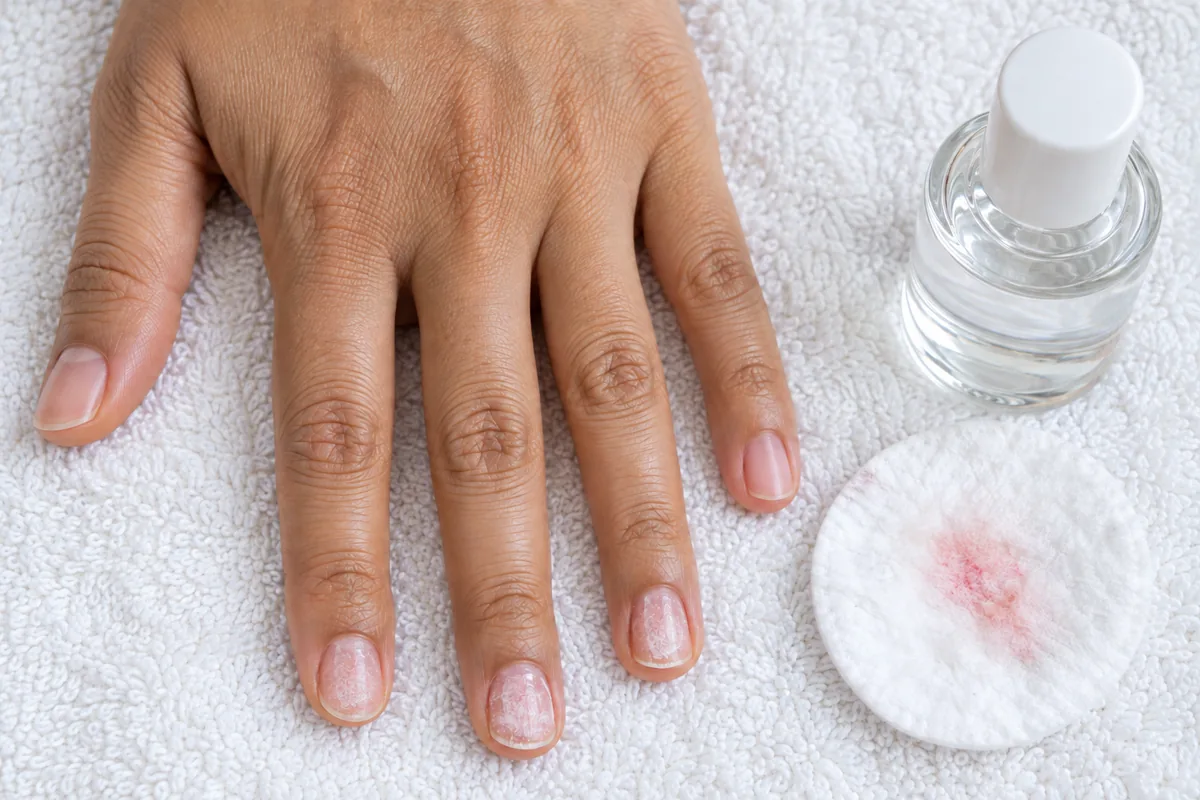
The picture above shows what many people see. This kind of whitening belongs to a group called pseudoleukonychia (soo-doh-loo-koh-NIK-ee-uh). Sounds complicated? In plain terms, it is a nail that looks white because of its surface, not because the nail factory under the cuticle is making faulty nail. Two things in this group are common: keratin deposits caused by nail polish, and fungus on the nail surface. That second one is the one worth telling apart, and we cover how later in the article.
The good news is that the whiteness sits in the top layer and does not reach the root of the nail. New nail growing from the base comes out normal. If you stop repeating the cause, the white part is gradually pushed out to the tip and can be trimmed away.
Acetone vs acetone-free nail polish remover: what is the difference?
Acetone is a solvent that dissolves nail polish quickly and strongly. Removers on the market fall roughly into two groups, and you can tell them apart from the label on the back of the bottle.
| Point | With acetone / Acetone-free |
|---|---|
| The label says | acetone listed in the ingredients / non-acetone or acetone free |
| Removing regular polish | fast, a few wipes / slower, needs a longer press |
| Removing gel polish | yes, when soaked and wrapped properly / barely dissolves it |
| How drying it is | very drying if used often / still drying, it is also a solvent |
| Best for | dark shades, glitter, gel / light regular polish, used now and then |
A common misunderstanding is that acetone-free means chemical-free. Acetone-free removers use other solvents instead, such as ethyl acetate, butyl acetate or certain alcohols. They are gentler than acetone, but they can still draw moisture from the nail. And because they work more slowly, many people rub harder and longer, and end up with white nails just the same.
Is a small bottle from the convenience store OK to use?
Yes. The small bottles that are easy to find in convenience stores or pharmacies come both with and without acetone. The bottle size tells you nothing about quality. What matters is turning the bottle over to read the label before you buy, and choosing one that matches what is on your nails.
- Light regular polish you painted yourself: any bottle will do, acetone-free is enough, as long as you use it the right way.
- Dark shades, reds, glitter: a formula with acetone comes off more easily, with less rubbing.
- Gel polish from a salon: it has to be a remover with acetone, and it has to be soaked and wrapped, not wiped like regular polish.
Most white-nail problems do not come from buying the wrong brand. They come from the 5 points below. See which ones you are doing.
5 mistakes people make when removing polish
1. Using a remover that does not match the polish
The most common one is using an acetone-free remover on gel polish. The gel does not dissolve, so you keep rubbing, then pick at it with another nail or scrape with a file, and the real nail surface comes off in flakes. Acetone is the most effective way to remove gel polish at home, and safer than picking or filing it off.
The other side of it: people who wear light regular polish and take it off every week with a strong remover dry their nails out more than they need to. Match the remover to the job: a gentle formula for regular polish, an acetone formula with soaking for gel.
2. Rubbing back and forth until the cotton is dry
The familiar picture: pour remover onto cotton, rub back and forth over the nail until the cotton dries, pour again, rub again, several rounds per nail. Every rub is friction on a nail surface already softened by the remover, so the top layer comes away with the cotton easily. The longer you rub, the drier the nail gets.
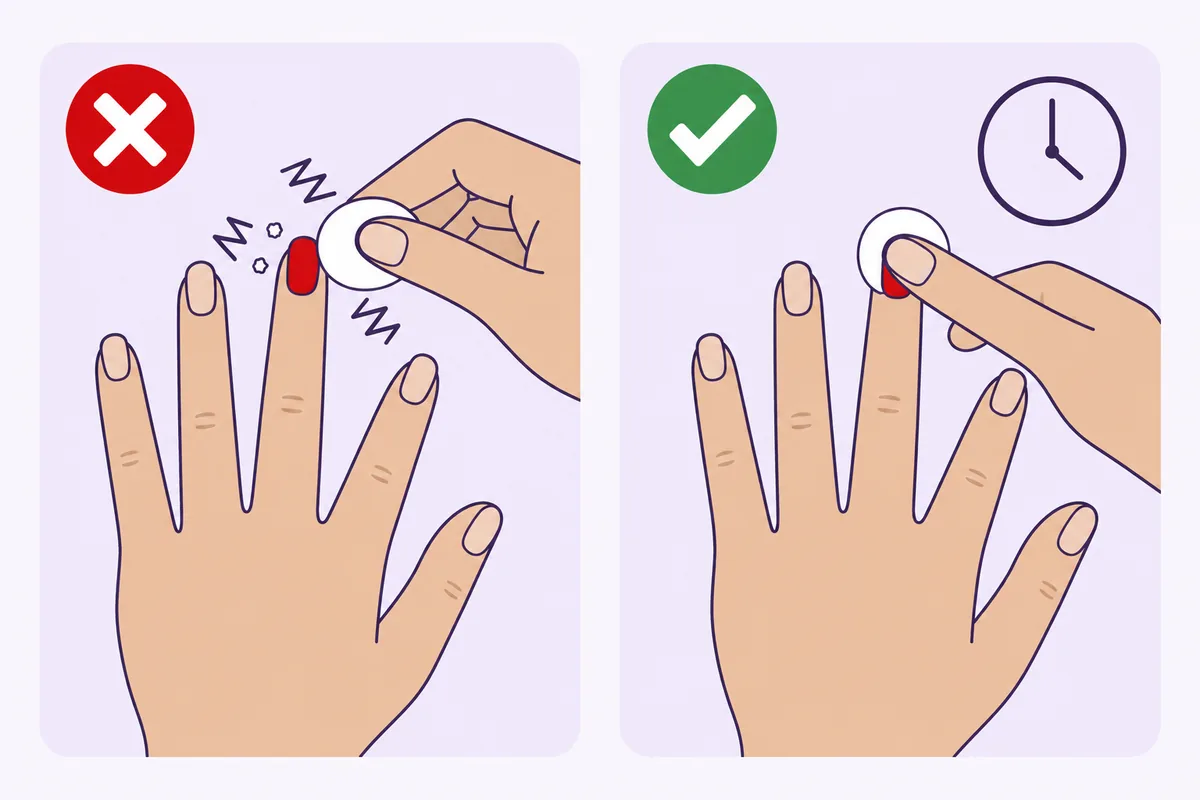
A better way is to lay the soaked cotton on the nail and press and hold it for a while so the remover can soften the polish. Then wipe once from the base to the tip. Once or twice instead of ten circular rubs, and you use less remover too.
3. Soaking whole fingers or flooding the skin with remover
Some people pour remover into a cup and dip their whole fingertips in, or drip so much that it runs over the whole finger. Remover does not only dry the nail, it dries the cuticles and the skin around it too. If you soak in acetone, soak only your fingertips, not whole hands or fingers, and apply a thin layer of petroleum jelly to the cuticles and surrounding skin first to protect them. Acetone can also irritate the skin, with redness, itching and burning.
Cuticle skin that dries until it cracks turns into hangnails that snag on hair and clothes, and makes the next colour look less neat. We cover peeling cuticles separately in peeling skin around the nails: 5 mistakes.
4. Stopping as soon as the polish is off: no hand wash, no moisturiser
Many people wipe off the last of the colour and get up to do something else, leaving remover on the nails and in the corners, or they wash their hands but put nothing on afterwards. Nails that have just been through remover are drier than usual. If you do not put moisture back, the cloudy white look becomes more obvious over the following days.
Apply a moisturising product such as petroleum jelly to the nails and cuticles several times a day, and after an acetone removal, rub petroleum jelly into the cuticles and the skin around the nails every day for 7 days. It takes less than a minute, and it makes a real difference.
5. Seeing white flakes and rushing to scrape, buff, or paint over them
When the nail turns white, the first instinct is to take a file or buffer and polish the white away, or to paint a new colour straight over it. Neither deals with the cause. The white patch is the dried, softened top layer of the nail, so however much you buff off is exactly how much thinner you make your real nail. And painting over it right away, then removing it again a few days later, just takes you back through mistakes 1 to 4.
After gel polish comes off, go without polish for one to two weeks or longer if you can, to give the nails time to recover, and avoid excessive use of nail polish. If your nails are white right now, a break is the most worthwhile thing you can give them.
How to remove regular polish without turning your nails white
For regular polish painted at home, these steps take about as long as the usual rubbing, but leave the nails much less dry.
- Open a window and sit away from the stove or any flame. Use remover in a well-ventilated area, away from flames, cigarettes and heat.
- Put cream or petroleum jelly around the nails. On the cuticles and the sides of the nail, taking care not to put it on the nail itself.
- Wet the cotton just enough, not dripping. Cut the cotton to roughly the size of the nail so it touches less of the surrounding skin.
- Lay it on and press and hold for a moment. Let the polish soften first. No need to rush into rubbing.
- Wipe once from base to tip. If some is left, press again rather than rubbing in circles.
- Wash your hands with a mild soap and dry them well. Do not leave remover sitting in the corners of the nails.
- Apply nail oil or hand cream. Massage it into the cuticles too, then close the bottle tightly and keep it out of children's reach.
Do not overlook the part about children. Swallowing acetone can cause vomiting and seizures and can be dangerous for young children.
Gel nail polish remover: which kind do you need?
Gel polish does not air-dry like regular polish. It is hardened under a lamp, so it does not dissolve as easily as regular polish. The remover has to contain acetone, and it needs time to soak in, which means laying soaked cotton on the nail and wrapping the fingertip, not wiping and rubbing as you would with regular polish.
People who rub gel directly with a small bottle of remover usually end up in the same place: the gel just goes dull and stays put, they rub until the finger turns red, and in the end they pick it off, which is the fastest way to thin out the nail. The full at-home steps for gel, from filing the top coat and wrapping in foil to pushing the gel off, are in a separate article: can you remove gel nails at home without damage.
Nails already white and flaky: what to do next
- Give remover a rest. For now, do not paint and remove again and again. Let the nail surface recover.
- Apply oil or cream several times a day, especially after washing your hands and before bed. White patches that come from dryness usually look better once the nail is moisturised.
- Trim the nails a little shorter. Dry, thin tips tear easily, and keeping them short helps you get through this stage.
- Wear gloves when washing dishes and doing laundry. Water and detergent dry the nails out all over again.
- Do not scrape or buff. Let the white part grow out and trim it away with your usual nail trims.
If the nails are not just white but thin enough to bend, or splitting into layers, read brittle nails that split easily: causes and care, which covers caring for thin nails in more detail.
When white is more than dryness: signs to see a doctor
White patches from remover and polish and fungus on the nail surface sit in the same group, and they are hard to tell apart by eye. If you notice any of the following, do not guess. Have a doctor look.
- You have rested from remover and moisturised for several weeks and the white patches are no better, or are spreading.
- The nail becomes thicker, crumbly, turns powdery when scraped, or starts turning yellow.
- The skin around the nail turns red, swollen, itchy, stings or breaks out every time you use remover. This may be irritation or an allergy; stop using it and ask a doctor.
- The nail lifts away from the skin underneath, or there is pus.
This is also why the salon does not paint over nails that are thick, yellow or look like they may have a fungus. The nail process adds moisture to the nail, both water and remover, which could help a fungus spread. See a doctor first, and once they say it is fine, come back for colour. More on yellow nails and fungus in what causes yellow nails.
Gel removal at the salon: how is it different from doing it yourself?
Nanny Nails does not do gel fills. Customers who come back for a new set have the old one removed and a fresh set done every time, so removal is something done every single day, and the owner does every job herself. Compared with removing it yourself at home, three things are different.
- You do not have to guess which remover suits which nails. Gel polish, PVC extensions and builder gel each come off differently, and the technician works to what is on your nails. At the salon, gel polish is taken down with a nail drill first and then wrapped in acetone.
- Someone sees your nails before the new colour goes on. If a nail looks like it may have a fungus, the salon will ask you to see a doctor first and will not paint over it.
- Removal and a new set in the same appointment. The nail surface is prepared by pushing back the cuticle first and then trimming the excess skin, base coat goes on before colour on every job, and the gel is cured under a UV lamp.
| Removal at the salon | Price |
|---|---|
| Remove gel polish, then a new set | 5 baht per nail (50 baht for a full hand) |
| Remove PVC extensions, then a new set | 10 baht per nail (100 baht for a full hand) |
| Gel removal only, nail break (includes shaping) | 100 baht |
| PVC, hard gel or acrylic removal only | 150 baht |
| Gel polish, hands, 1 colour (includes shaping, base and top coat) | 200 baht |
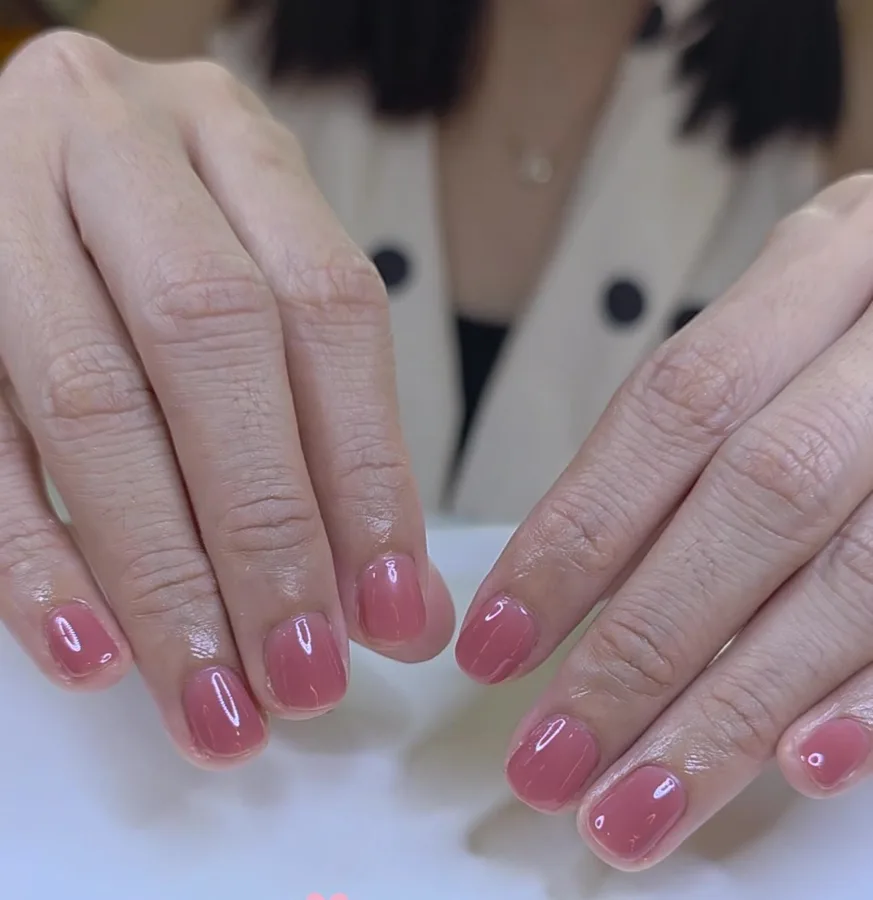
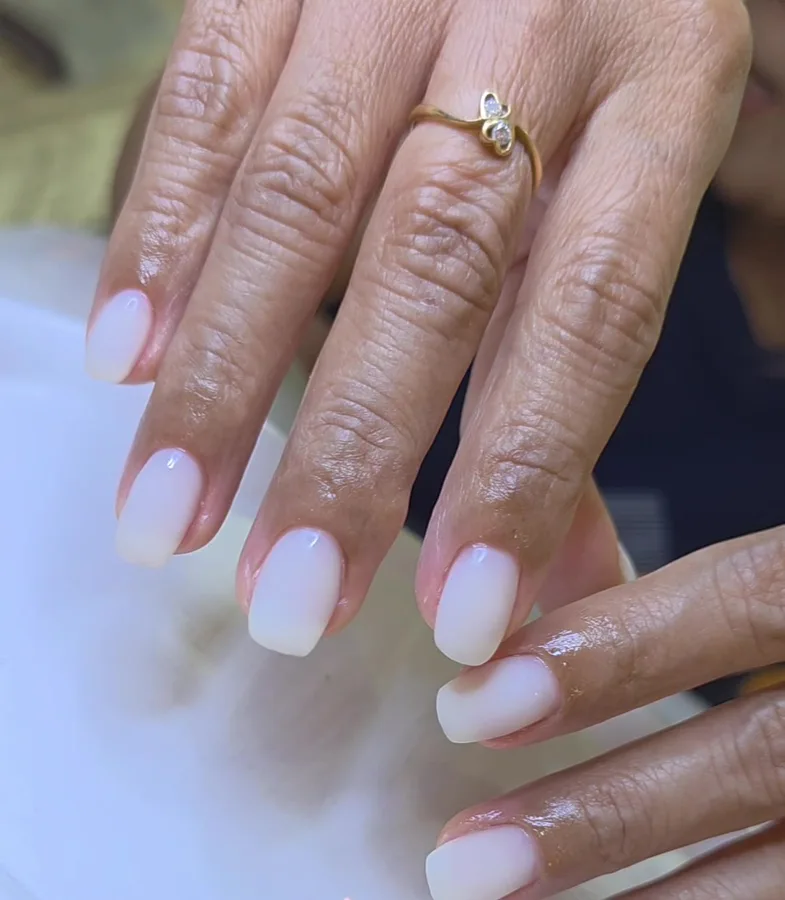
If your nails are still strong and only the surface is dry, most of the time you can go straight into a new set. If they are very thin and you would like to rest them, you can have the gel removed only and go home to care for them first. And for anyone who wants neat hands without having to take polish off at home all the time, a milky white or sheer pink like this is another shade customers choose often, easy to wear to work every day.
Every job done at the salon comes with our 7-day care period, so you can go home and use your hands as normal with peace of mind. The full menu is on our services and prices page.
What customers say about our gentle hands
(Beautiful nails, such a gentle touch. Highly recommended.)Facebook review by Walailak Zeetrong
(She did a really good job. Gentle hands, lovely work, and so much fun to chat with. Recommended.)Google review by อังค์วรา ไชยมาตย์
Read all reviews on our reviews page.
Your next bottle, without the white nails
Next time you stand in front of the nail polish remover shelf, you will know to turn the bottle over and read the label first. A gentle formula for regular polish; acetone plus soaking and wrapping for gel, never rubbing. At home, press and hold the cotton instead of rubbing in circles, protect the skin around the nails first, and wash and moisturise every time. That is all it takes to stop your nails turning white and flaky.
There are more habits that damage nails without you noticing; read on in 6 habits that damage your nails, or find your next long-lasting colour in our gallery.
FAQ
Why do my nails turn white and flaky after using nail polish remover?
Remover draws moisture from the nail surface, and when the polish is wiped off it often takes the very top layer of keratin with it. That spot becomes rough and looks powdery white. Rubbing hard in circles, using a lot of remover, or not moisturising afterwards all make it more visible.
What is the difference between acetone and acetone-free nail polish remover?
Acetone removers dissolve polish quickly and strongly and can remove gel, but they are very drying if used often. Acetone-free removers use other solvents instead. They are gentler but slower, suit light regular polish, and barely dissolve gel.
Can a small bottle of remover from a convenience store take off gel nails?
Check the label. If it contains acetone it can remove gel, but you have to lay soaked cotton on the nail and wrap the fingertip, not wipe and rub as you would regular polish. If it is acetone-free, gel barely dissolves and rubbing only damages the nail surface.
Is white on my nails after removing polish a fungus?
Usually it is just the top layer of the nail drying out, and it tends to improve with a break from remover and regular moisturising. If it does not improve after several weeks, spreads, or the nail turns thick, crumbly or yellow, have a doctor look, as a surface fungus can look similar.
How do I remove polish without my nails turning white?
Work in a well-ventilated place, put cream or petroleum jelly around the nails first, lay soaked cotton on the nail and press and hold until the polish softens, then wipe once from base to tip without rubbing in circles. Wash your hands and apply oil or cream every time.
How much does gel removal cost at the salon?
Removing gel polish and doing a new set is 5 baht per nail, 50 baht for a full hand. Gel removal only, to rest the nails, including shaping, is 100 baht. For PVC extensions, removal plus a new set is 100 baht, and removal only for PVC, hard gel or acrylic is 150 baht.
What is the salon’s 7-day care period?
If work done at the salon lifts or peels within 7 days, bring it back and we will fix it for free.
Where is the salon and how do I book?
We are in Ban Noi Tai, Soi 7/1, Mueang Nakhon Phanom. Open every day, nail appointments 09:00 to 18:00, 3 bookings a day. Book on LINE @nannynails or call +66 99 002 8935.
Send us a photo of your nails as they are now
Send a photo of your hands on LINE, whether the nails turned white and flaky after removing polish or still have old gel on. We will tell you whether it is better to remove it only and rest the nails first, or remove it and do a new colour in the same appointment, with the price. We take 3 bookings a day, between 09:00 and 18:00.
Read more