Wrong Shoes, Wrecked Toenails: 6 Habits That Make Toenails Thick, Yellow and Wavy

The hot season arrives, you pull out your favourite sandals, and your big toenail catches your eye. It looks thicker than it used to, a cloudy yellowish colour, with ripples and waves across the surface. The sandals go back in the cupboard and closed shoes come out instead. This article explains what causes thick toenails, why toenails turn yellow and wavy, how much your shoes and small daily habits have to do with it, and which signs are worth showing a doctor.
Toenails do not get damaged in a single day. Most of the time it is small squeezes and knocks, repeated every day, plus damp shoes, until one day you look down and see the result. The good news is that many of these things are yours to change once you know what you are doing without realising it.
What do shoes have to do with thick, yellow, wavy toenails?
A nail grows from a hidden area under the skin at its base called the matrix. Think of it as the factory that makes your nail. If that factory gets pressed or knocked again and again, the nail it produces will not be as smooth as before. It can grow thicker, ridged or misshapen.
Toes live in exactly that position every day. When you walk or run, your toes slide forward into the front of the shoe with every step, and the narrower the toe box, the more they are squeezed all day long. Injury is a leading cause of misshapen nails, and fungal infections cause about half of them. Fungus, too, loves the damp inside a shoe.
There is another reason damaged toenails seem to take forever to improve: toenails grow very slowly. Replacing a whole toenail takes about 12 to 18 months, so a mark made today stays with you for a year or more. The sooner you drop the habits that hurt your nails, the sooner smoother nail starts growing out.
6 habits that damage toenails without you noticing
Count how many of these you do. Nobody does them on purpose, because each one feels completely ordinary.
1. Wearing pointed, narrow-toed shoes all day
Pointed pumps, high heels or slim-toed sneakers look great, but worn every day from morning to evening, they keep your toes crammed together in the tip of the shoe. The big toe and second toe take the most pressure, because they are the longest and reach the front of the shoe first.
Wearing high heels with a narrow toe box over time can make the foot take the shape of the shoe, leading to bunions, hammer toes and corns. Repeated small injuries from poorly fitted footwear are one cause of big toenails that become thick, cloudy yellow-brown and curved out of shape, a problem seen most often in older adults.
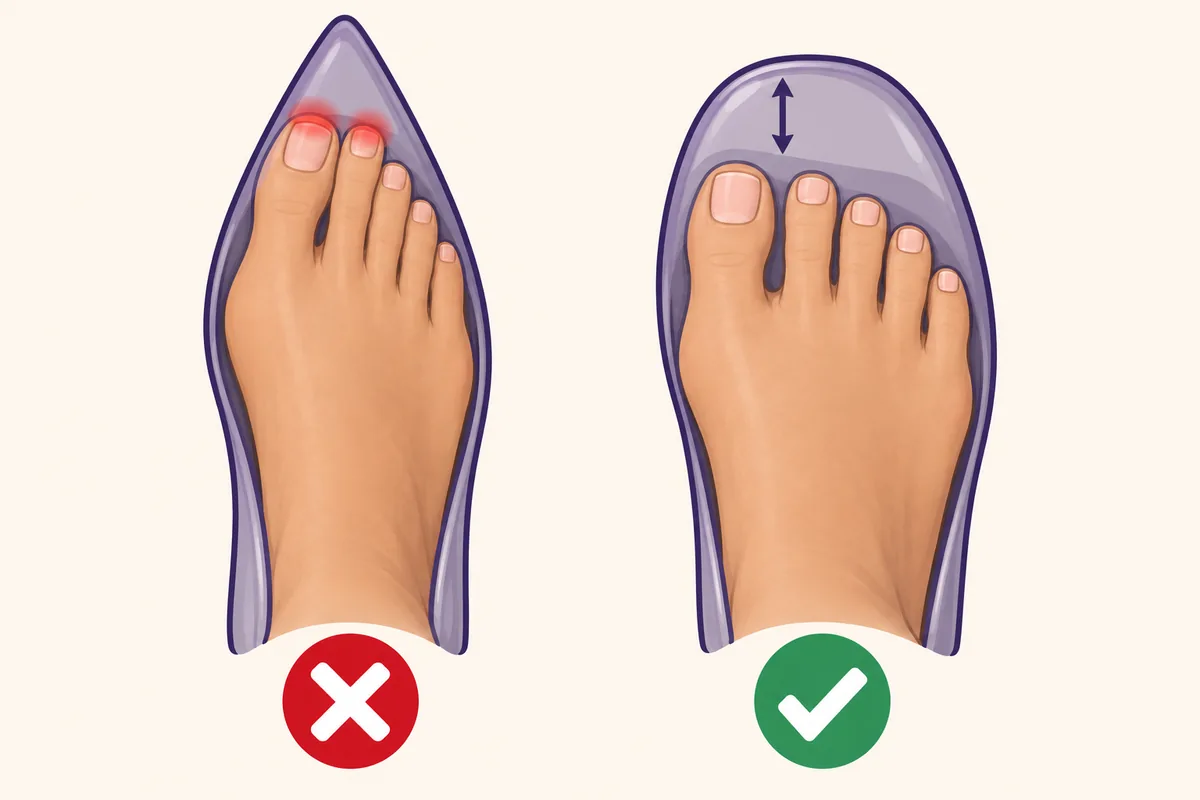
You do not have to give up your pretty shoes. Keep them for special days, and let a shoe with a wide, round or square toe box, where your toes can lie flat, do the everyday walking.
2. Walking, running or going downhill in shoes that are too tight or too loose
People who run, hike or spend all day on their feet at work often end up with a dark, bruised big toenail. It even has a nickname, runner's toe. It comes from repeated pressure, friction and impact. When the toe box is too small, the toes hit the front of the shoe with every step, and running downhill pushes the foot forward even more.
Loose shoes are not safe either, because the foot slides around inside, especially when it is sweaty. The result can be bleeding under the nail that shows up black, a thickened nail, and for some people a nail that loosens and comes off.
A common mistake is pulling off a loose nail yourself. We warn that this can tear and scar the nail bed, and the new nail may then grow in deformed. Leave it and have a doctor look at it instead.
What helps: running shoes properly fitted to your feet, laces tied snugly so the foot does not slide, moisture-wicking socks, and toenails trimmed short.
3. Leaving toenails long, or cutting deep curves into the corners
A toenail that sticks out past the tip of the toe hits the shoe before the toe does, so every step pushes the nail back towards its base a little. Long toenails are one cause of runner's toe. On the other side, cutting so short that you see the skin, or curving deep into the corners, raises the risk of an ingrown nail instead.
The middle path we recommend is to trim after a bath while the nail is soft, and to cut toenails straight across, level with the tip of the toe. The full step-by-step with safe shapes is in How to cut your nails so they do not grow in.
4. Leaving polish on for months without a base coat
Toenail polish lasts longer than polish on fingernails, because toenails grow slowly and do not get much wear. So many people keep a red or dark colour on for months without ever giving the nails a break. Wearing red or dark polish without a base coat is one of the things that turns nails yellow.
Something fewer people know: nail polish traps moisture on the nail, and fungus thrives on moisture, so painting over a nail that already has fungus may make it worse. Even more important, polish that never comes off hides what is happening underneath. Many people only notice when they finally remove it and find a thick, cloudy nail.
The fix is simple. Use a base coat under every colour, and every time you remove your polish, look at your bare nails for a few days before painting again. If the yellow is only a stain, the surface stays smooth and the thickness normal. Care tips for that are in What causes yellow nails: 7 everyday habits.
5. Letting your feet stay damp and wearing the same shoes every day
Thailand is hot, so feet inside closed shoes all day sweat easily. If damp socks never get changed, the same pair of shoes is worn every day so it never dries out inside, or feet are not dried properly after a shower, they spend the whole day somewhere warm and wet, which is exactly where fungus is happiest. People who sweat a lot, people whose nails have been injured, people with diabetes and older adults are at higher risk of toenail fungus. About half of people over 70 have it.
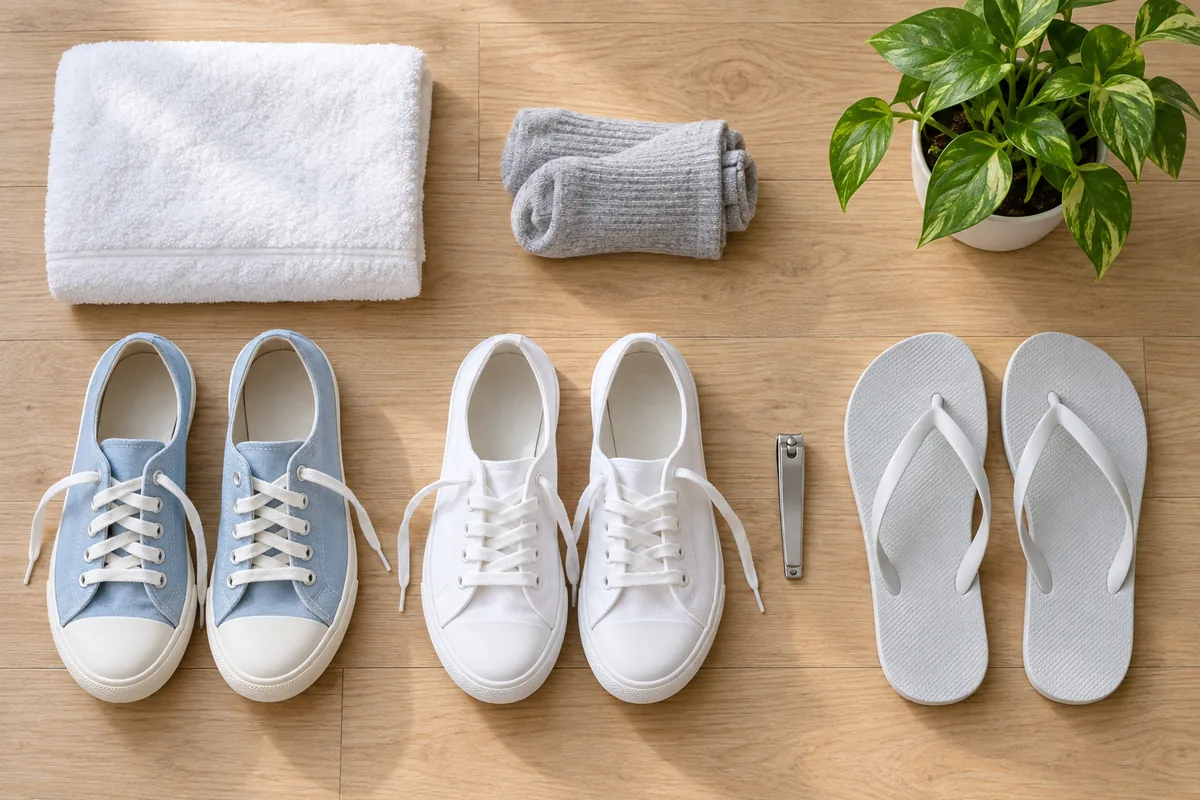
There are several ways to prevent nail fungus. The ones you can start today:
- Dry your feet properly after every shower, including between the toes
- Wear moisture-wicking socks and change them as soon as they get damp
- Own at least 2 pairs of shoes and alternate them so each pair has about 24 hours to dry before you wear it again
- Choose breathable shoes such as canvas or mesh
- Wear sandals in shared bathrooms, around pools and in gym showers
- Never share nail clippers, towels or shoes
6. Seeing a nail turn thick and yellow, then fixing it yourself by scraping, filing or painting over it
This one comes from embarrassment. The nail looks bad, so out comes a file to thin it down, the debris under the nail gets scraped out, the thick nail gets hacked at with small fingernail clippers, or a dark polish goes on to hide it, all before anyone knows why the nail turned thick and yellow in the first place.
The problem is that a thick yellow nail from knocks and a nail with fungus are hard to tell apart by eye. Toenail fungus makes the nail thick, turns it white, yellow or brown, gives it a cloudy, chalky look and sometimes lifts it from the skin, which looks a lot like a nail thickened by shoes. If it is fungus and you scrape or file it, that tool can carry the fungus to other nails, and painting over it keeps the nail even damper.
The better move is to stop working on it yourself and let a doctor find out what it is. For a first check on whether it is just a stain or might be fungus, see the section on stains versus fungus in What causes yellow nails.
Thick, yellow or wavy: what each one can mean
This table only gives an overview. It does not replace an examination. The same change can have several causes, and many people have more than one at once.
| What you see on the toenail | What it can be linked to |
|---|---|
| Big toenail getting thicker and curved | Repeated pressure and knocks from shoes, getting older, fungus, psoriasis, poor circulation |
| Even yellow across the whole nail, smooth surface, normal thickness | Usually a stain from dark polish worn without a base coat |
| Cloudy yellow, thick, crumbly, debris under the nail | Possibly fungus, worth a doctor's check |
| Waves or grooves running across the nail | Growth pausing for a while, for example after the nail was knocked or after an illness with a high fever |
| Raised lines running from base to tip | Mostly part of getting older and harmless |
| Dark under the nail after hard walking or running | Bleeding under the nail from impact, as in runner's toe |
Should wavy toenails worry you?
Wavy toenails with grooves running across usually mean the nail stopped growing for a while. Grooves like this can come from injury, infection or an illness with a high fever, and that they grow out on their own. On toenails, repeated knocks from shoes are a frequent culprit. Lines running lengthwise tend to become more visible with age. How to tell the two apart, and which ones to show a doctor, is covered in Vertical and horizontal nail ridges.
How to choose shoes that do not wreck your toenails
This is the part you control the most:
- Shop for shoes in the late afternoon or evening. Feet can swell by up to about 8% during the day, so shoes that fit in the morning may pinch in the afternoon
- Leave about half an inch, roughly 1.3 cm, between the tip of your longest toe and the front of the shoe. For some people the longest toe is the second toe, not the big toe
- Pick a round or square toe box so your toes lie flat instead of being pushed together
- Stand up while your feet are measured, because body weight spreads the foot, and wear socks as thick as the ones you will actually use
- Lace running and walking shoes snugly so your foot does not slide into the front
- Save pointed heels for special occasions, not for the pair you wear every day
Signs to see a doctor without waiting
- A toenail that keeps getting thicker, cloudy yellow or brown, crumbly, with debris underneath
- A nail lifting away from the skin or loose enough to come off
- A nail so thick it hurts in shoes, or you can no longer cut it yourself
- Swelling, redness, warmth or pus around the nail, or an ingrown nail
- Darkness under the nail when you cannot remember knocking it, or a new dark brown or black line on the nail
- Changes on several nails at once, or an itchy, peeling rash between the toes as well
If you have diabetes or poor circulation in your feet
This group needs more care than most, because the feet may feel pain later and small wounds heal slowly. Check your feet every day, cut toenails straight across and smooth the edges with a file, have a doctor or podiatrist look after your nails if you cannot reach your feet comfortably, and see a doctor for thickened yellow nails or suspected fungus. Do not soak your feet for long either. People in this group should not cut or scrape thick toenails themselves.
What a nail salon can and cannot do
To be upfront: we only do fingernails and toenails. We do not offer foot spas, we do not scrub heels, and we do not cut ingrown nails. Cracked heels, which often come with dry feet in the cool season, have their own article: What causes cracked heels.
One more thing we would like you to understand. If a toenail is thick and yellow enough that it might be fungus, we will not paint over it. It is not that we do not want you in the chair. The nail process adds moisture to the nail, from water and from polish remover, which could help a fungus spread, and colour on top would stop you from seeing whether the nail is getting better or worse. See a doctor first, and once the doctor says it is fine, come back and we will do your colour. We are happy to wait.
Toenails smooth again? Paint them for sandal season
Once you have changed your shoes, dropped the habits that hurt your nails and new nail starts growing out smoother, you will want to wear sandals again. This is where gel colour helps. Neatly shaped toenails with a coat of colour make feet look cared for straight away.
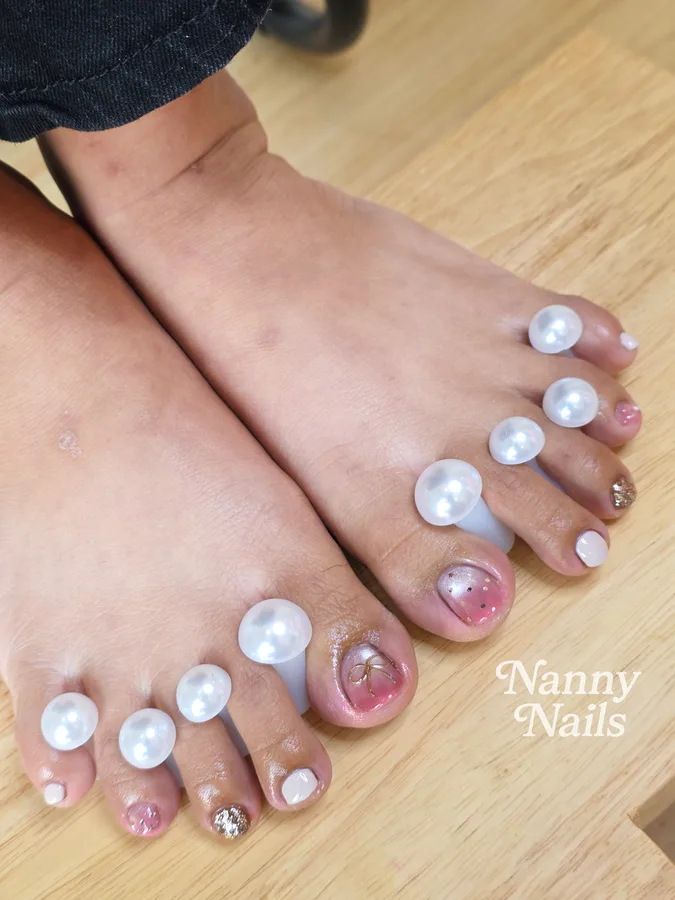
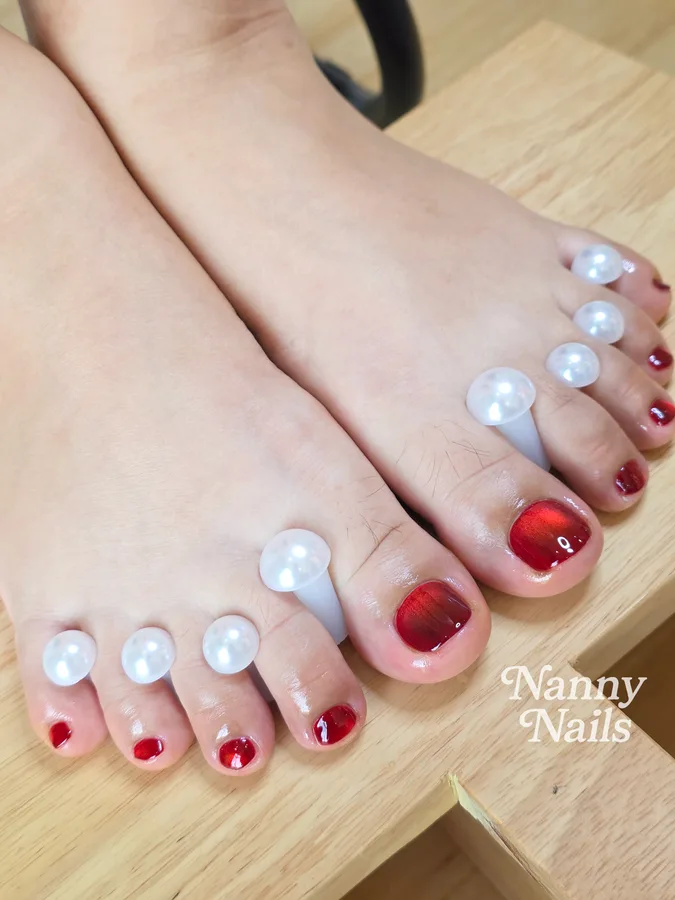
These two are real work from our salon. On the left, pink and white with gold glitter and a bow painted on the big toe. On the right, red cat eye. Either one with sandals or open-toed shoes makes your feet look much brighter. If you prefer something simple, a mauve pink like the photo below goes with every day and every pair of shoes.
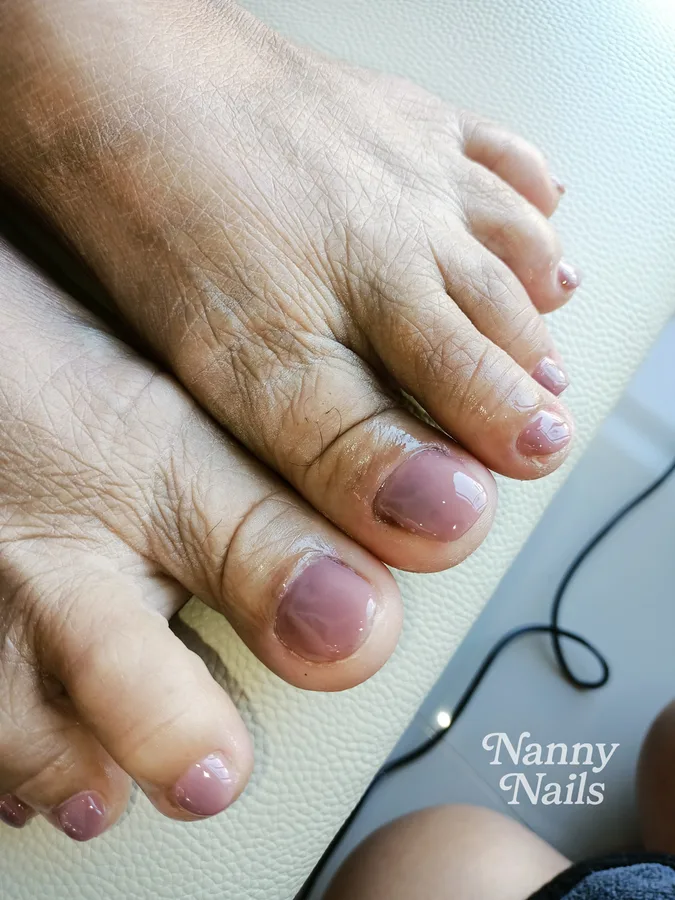
We apply a base coat before the colour on every job, which is the step that keeps dark pigment from staining the nail, and shaping plus top coat are included in the price.
| Toenail colour (all ten toes) | Price |
|---|---|
| Gel, 1 colour | 250 baht |
| Gel, 2 to 3 colours | 300 baht |
| Glitter, flash, swirl or pearl colours | 300 baht |
| Cat eye, French tips, ombre or metallic | 400 baht |
For painted designs, rhinestones or extra details like the left photo, send us a picture first and we will quote the price. The full menu is on our services and prices page, and you can see toenail colours our customers chose in the gallery. Every job comes with our 7-day care period.
What customers say about us
(The nail artist is meticulous and very good, never rushes, always checks the customer is happy first, and is very skilled.)Google review by Nooknik SU
(Lovely colours, smooth and careful painting, and it does not take long. I love it. I get my nails done every time I come to Nakhon Phanom.)Google review by CHERRY ST
Read all our reviews on the reviews page.
Good toenails start with the shoes you wear every day
Thick, yellow, wavy toenails are mostly not bad luck. They come from narrow toe boxes, repeated knocks while walking and running, nails left too long, polish worn for months without a base coat, damp feet, and fixing nails yourself without knowing the cause. Change them one at a time and the new nail will slowly grow out smoother. It takes a year, but every month you will see the healthier part move a little further out. Whenever something looks uncertain, let a doctor see it first. Then, when your nails are ready, pick a colour you love for those feet.
FAQ
What causes thick toenails?
Common causes are repeated pressure and knocks from narrow or badly fitting shoes, hard walking or running, getting older, and fungus, which causes about half of misshapen nails. Conditions such as psoriasis or poor circulation can also thicken nails. If you are not sure, ask a doctor.
What causes yellow toenails?
If the yellow is even across the whole nail, the surface smooth and the thickness normal, it is usually a stain from dark polish worn without a base coat. If it is cloudy, thick, crumbly or has debris underneath, it may be fungus and a doctor should look at it.
What causes wavy toenails?
Grooves running across the nail usually mean growth paused for a while, for example after a knock or an illness with a high fever, and they grow out on their own. Lengthwise lines tend to show more with age. If new grooves keep appearing or the colour changes too, see a doctor.
Is it OK to leave toenail polish on for a long time?
Dark polish without a base coat can stain nails yellow, and polish traps moisture on the nail. Use a base coat under every colour, and when you remove polish, look at your bare nails before repainting so you notice early if a nail starts turning thick or cloudy.
Can I get gel polish on thick, yellow toenails?
If it looks like fungus, we will not paint over it, because the nail process adds moisture to the nail and could help a fungus spread. See a doctor first, and once the doctor says it is fine, come back for your colour.
What is the salon’s 7-day care period?
If work done at the salon lifts or peels within 7 days, bring it back and we will fix it for free.
Where is the salon and how do I book?
We are in Ban Noi Tai, Soi 7/1, Mueang Nakhon Phanom. Open every day, nail appointments 09:00 to 18:00, 3 bookings a day. Book on LINE @nannynails or call +66 99 002 8935.
Toenails ready? Let us pick a colour
Take a photo of your toenails as they are now, or of the shoes you plan to wear, and send it on LINE. We will suggest 2 or 3 options, from an everyday nude to a bright red or a cat eye. If your nails look thick and yellow, we will tell you honestly to see a doctor first. We take 3 bookings a day, between 09:00 and 18:00.
Read more