What Causes Cracked Heels? 6 Mistakes That Make Them Crack Again Every Year

Every year when the cool, dry wind reaches Nakhon Phanom at the end of the year, the same thing happens. Your heels turn dry and flaky, the hard edge snags on the bed sheet, and before long there are thin cracks, some deep enough to sting when you walk. A few weeks of cream and they settle down, and then next year they are back. This article explains what causes cracked heels, the 6 things many people do every day without realising they keep the cracks coming back, how to treat them, what to put on them, and when to see a doctor.
Cracked heels do not mean you neglect yourself. People who scrub their heels every week get them too. Very often the problem is a small habit that looks helpful but actually leaves the heel skin thicker and drier than before. Once you know where it goes wrong, the fix is much simpler, and your heels no longer have to crack every cool season.
What causes cracked heels?
The short answer: heel skin that is both dry and thick, pressed hard over and over every day.
The skin on your heels is different from the rest of your body. It is thicker and has almost no oil glands to keep it supple. When you stand or walk, your body weight pushes the fat pad under the heel outwards. If the skin around the rim is soft, it stretches along. If it has dried into a hard, thick rim, it cannot stretch fast enough and it splits. A split that gets pressed with every step slowly gets deeper.
Put simply, cracked heels come from skin that has lost water, together with an overly thick outer layer, and the pressure and friction of walking make the cracks deeper.
Who gets them more easily?
- People who stand or walk all day, especially on hard floors, such as shop staff, market vendors, teachers and nurses.
- Older adults, because skin holds less moisture with age.
- People carrying more body weight, which means more pressure on the heel.
- Anyone in cool, dry weather, like the end of the year into the new year, when skin loses water faster than in the rainy season.
- People with certain skin or health conditions, such as eczema, psoriasis, athlete's foot, thyroid problems and diabetes.
6 mistakes that make your heels crack again every year
These are very common, because none of them looks harmful. Count how many you are doing right now.
1. Wearing flip-flops or open-back shoes almost all year
Thailand is hot, so flip-flops are most people's everyday shoes. But shoes with nothing around the heel let the fat pad spread sideways with every step, so the rim of the heel is being pulled apart all day. Walking barefoot on tiled floors at home does the same: nothing supports the heel at all.
You do not have to give up flip-flops. When your heels start to feel dry, switch to shoes with a closed back on days you walk a lot, and wear soft house slippers instead of going barefoot.
2. Scraping the heel with a blade or scrubbing until it turns red
When you see a thick white rim, it is tempting to get rid of it all at once. Some people use a razor, scissors or a bladed heel scraper. Others scrub hard with a pumice stone while the skin is still dry. The result is skin thinned down to a wound that germs can get into, and skin that has been scraped hard often builds thick skin back faster than before.
The advice is to soak your feet first so the skin softens, then rub gently with a loofah or foot scrubber, taking a little off over several days rather than everything in one go.
3. Long hot soaks and harsh soap every day
Very warm water feels lovely, but hot water and strong soap strip away what little natural oil the skin has left. The longer you soak and the more often you wash, the drier your skin feels once you towel off.
Soaking is fine. Just keep the water comfortably warm, about 10 minutes is enough, then pat dry and put cream on straight away while the skin is still soft.
4. Only using cream once the heels have cracked, and only a thin lotion
Many people grab their body lotion and use it on their heels only on the days they start to sting. A thin lotion sinks in fast, but it is not enough for thick, very dry heel skin. Heels need a thick cream that seals water in, and they need it every day, not only after they crack.
Which creams actually help is covered further down.
5. Stopping as soon as the cracks heal
This is the main reason heels crack again every year. Once the cracks close, we forget the cream and let thick skin build up again. When the cool wind comes, the skin dries out quickly and that thick rim, already waiting, splits straight away.
Healed heels still need cream, just less of it. Put some on once a day after your shower and rub gently once a week, and the thick rim never gets the chance to form.
6. Assuming it is just dry skin when it might be something else
Most cracked heels really do come from dry skin. But some people do everything right and still see no change, because the cause is something else: athlete's foot, which often itches and flakes as well, psoriasis, eczema, a thyroid problem that dries the skin all over, or diabetes, which dries the skin on the feet and dulls feeling.
If you have cared for your heels consistently for about a month with no improvement, or you have itchy rashes elsewhere too, have a doctor take a look instead of carrying on with cream.
How to fix cracked heels: a bedtime routine you can do yourself
These steps take under 15 minutes and you can do them every night before bed.
- Soak your feet in warm water for about 10 minutes. Plain water or a mild soap is fine. Pat dry.
- Rub your heels gently with a pumice stone, loofah or foot brush, removing only skin that comes away easily. Stop if it stings or turns red.
- Apply a thick cream straight away, all around the rim of the heel and into the cracks.
- Sleep in thin cotton socks. They keep the cream on your skin all night and off your sheets.
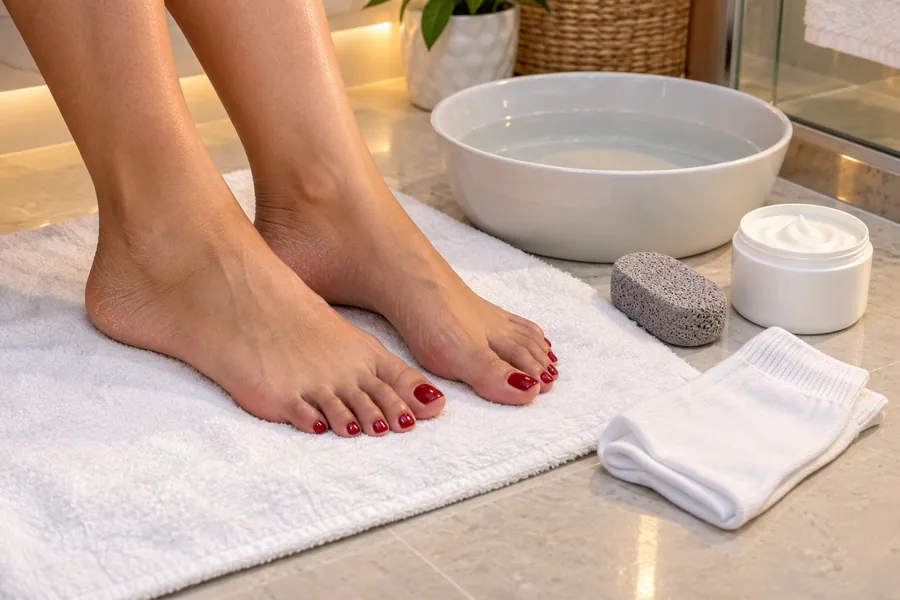
Done every night, most people notice softer heels within a few weeks, and shallow cracks gradually close. The key is doing it consistently. Once every few days rarely shows much change.
If you have an open wound or a little blood, skip the rubbing step until it has closed. And if you have diabetes, do not soak or scrub your feet yourself. Read the diabetes section below first.
What to put on cracked heels
There are many heel creams on the shelf, and it is easier to read the ingredients than the brand names. These are the ingredients that work:
| Ingredient | How it helps |
|---|---|
| Urea | Draws water into the skin and softens thick skin. Urea-based creams are fine for regular use. |
| Salicylic acid, lactic acid or other AHAs | Help dead skin come away more easily. |
| Glycerin | Draws moisture into the skin. |
| Petroleum jelly or an oil-based cream | Seals the surface so water does not escape. A good last layer before your socks. |
Worth knowing: creams with urea or exfoliating acids can sting or irritate a little. use them no more than twice a day, and they should not go on open wounds. These creams come in different strengths, so ask a pharmacist which one suits your heels. If over-the-counter products are not enough, a doctor can prescribe something stronger.
As for the popular question of whether cracked heels mean you are low on vitamins, there is a lot to say about that, so it has its own article: Cracked heels and vitamin deficiency: is it true?
When should cracked heels see a doctor?
Most cracked heels can be looked after at home, but some signs should not wait.
- Cracks deep enough to show red flesh, or that bleed.
- Swelling, redness, warmth, pus or growing pain, which may mean infection.
- Pain that makes walking hard or gets in the way of work every day.
- No improvement after about a month of consistent care.
- Itchy, peeling rashes between the toes or elsewhere on the body.
If you have diabetes, take more care than most
People with diabetes may have reduced nerve function in the feet, feel pain later, and heal more slowly than usual. A small crack in the heel can turn into an infected wound before you notice. Foot-care advice for people with diabetes includes:
- Check your feet every day: the tops, soles, heels and between the toes. Use a mirror or ask someone at home if bending down is hard.
- Moisturise your feet every day, but not between the toes, because trapped moisture there invites fungal infection.
- Do not soak your feet for long, as it dries the skin further.
- Do not scrape or cut hard skin yourself.
If you have diabetes and your heels start to crack, talk to the doctor or nurse who looks after your diabetes early, rather than waiting for a wound.
How to stop your heels cracking next year
The key is starting before your heels crack, not fixing them afterwards.
- Start using cream seriously at the end of the rainy season, before the cool wind arrives. Skin that is already moisturised copes much better with dry air.
- Apply cream after every shower, while the skin is still slightly damp. That is when it absorbs best.
- Rub gently once a week, rather than waiting for a hard rim to form.
- Wear shoes with a closed back on days you walk a lot, and slippers at home instead of bare feet.
- If you stand for long hours, add cushioning, such as soft soles or heel pads, to reduce pressure.
- Keep shower water comfortably warm and use a mild soap that does not leave your skin tight.
If your hands dry out and crack along with your heels in the cool season, the causes are similar. Read more in What causes dry hands.
Heels healed? A little extra so your feet look cared for
Once their heels feel soft again, most people start wearing open-toe shoes again. The quickest way to make feet look cared for is the toenails. Neatly trimmed toenails with a gel colour make your feet look fresh straight away in sandals or open-toe heels.
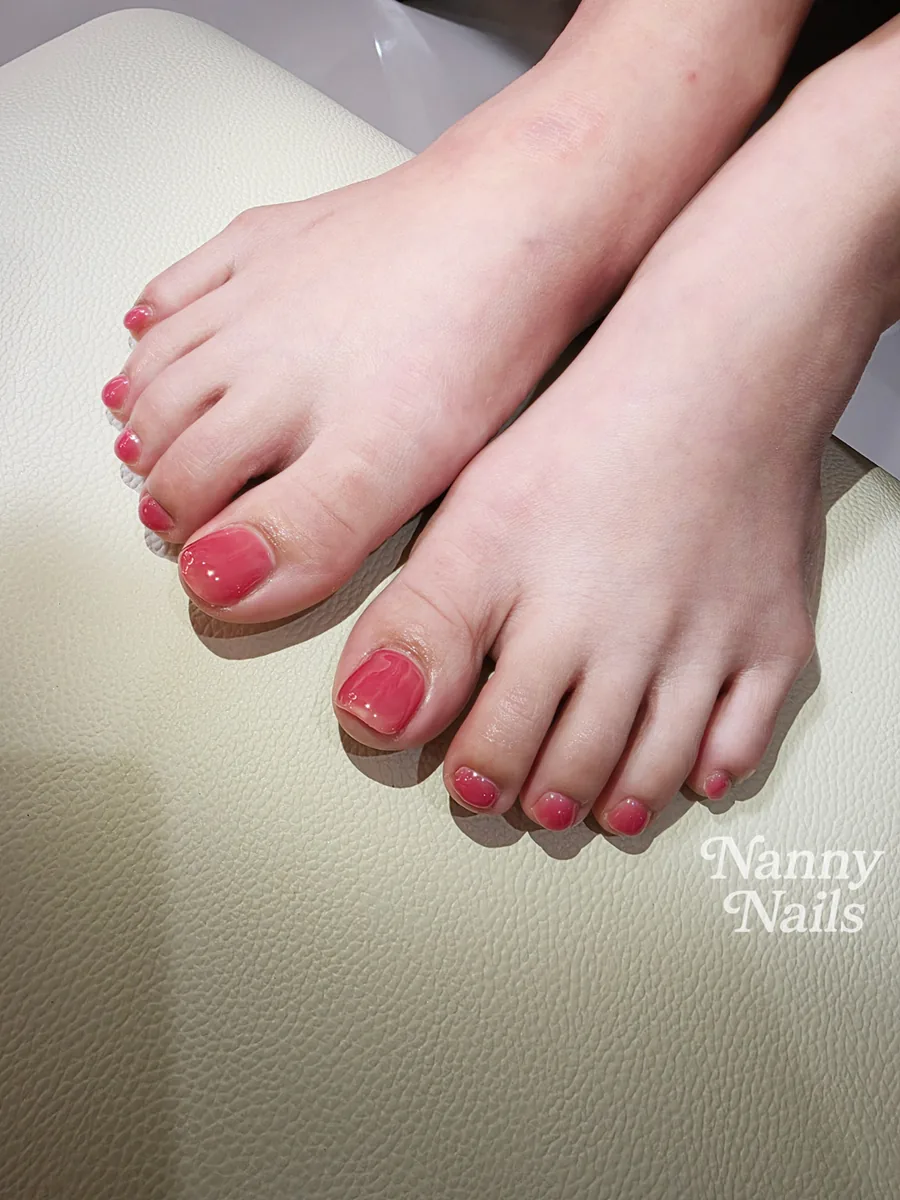
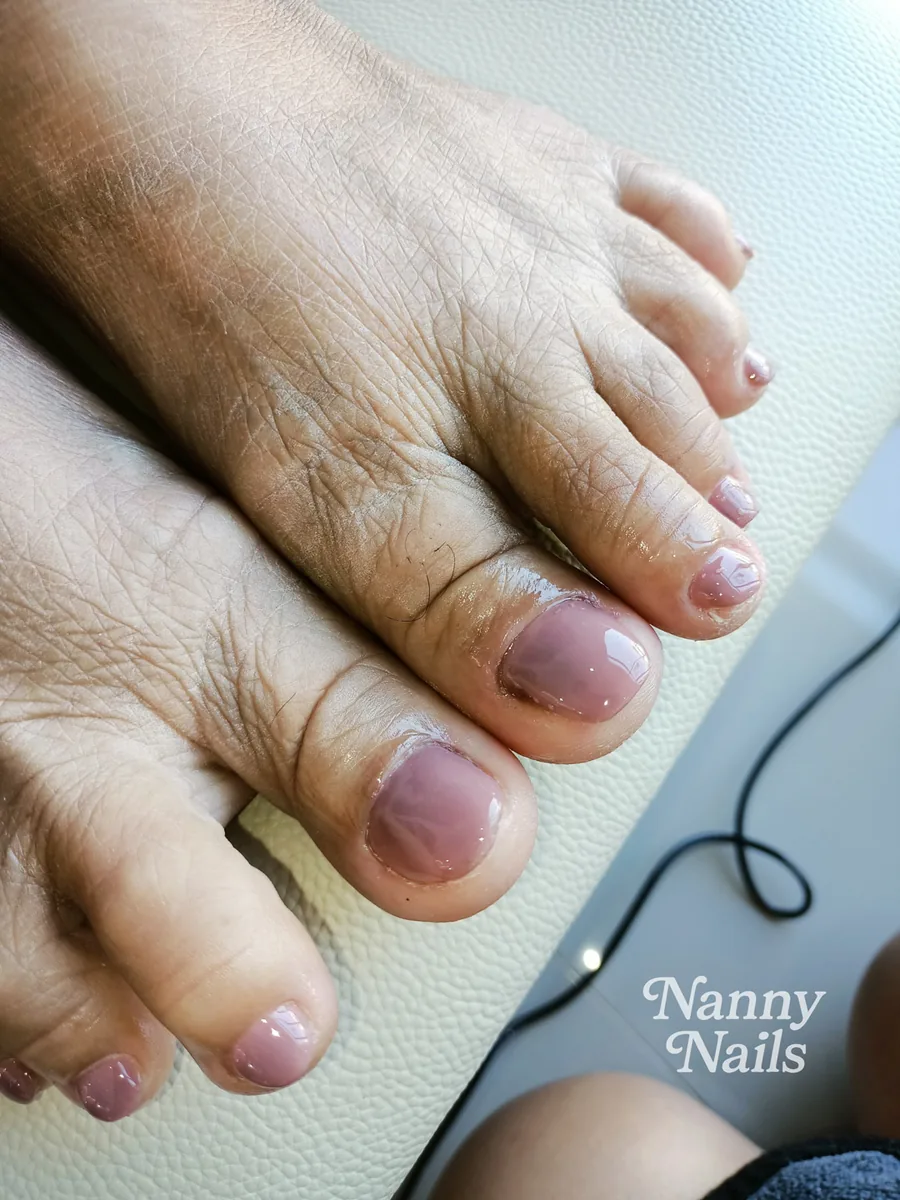
We only do nails, not foot spas or heel scrubbing. Gel colour on toenails starts at 250 baht, including trimming and shaping, base coat and top coat. Gel lasts longer on toenails than on fingernails, because toenails grow more slowly. Read more in How long do gel nails last? If you have an open wound on your foot, or a thick, yellow toenail you suspect is fungal, let it heal first and then come in.
See toenail colours our customers have chosen in the design gallery.
Heels you can walk on comfortably all through the cool season
Heels that crack every year are not just bad luck or genetics. Most of the time it comes down to shoes, hot water, harsh scraping and stopping care too soon. Fix those and next year you can get through the cool season without flinching every time the bed sheet catches your heel. And if you see signs of infection or you have diabetes, always see a doctor first.
FAQ
What causes cracked heels?
Mostly heel skin that is dry and thick, pressed hard when you stand or walk, so it cannot stretch and splits. Other factors include open-back shoes, going barefoot, long hours on your feet, dry weather, age, body weight and some conditions such as athlete's foot, psoriasis, thyroid problems and diabetes.
How do I fix cracked heels at home?
Soak your feet in warm water for about 10 minutes, pat dry, rub your heels gently with a pumice stone or foot brush, apply a thick cream straight away, and sleep in thin cotton socks. Do it every night. Skip the rubbing if there is an open wound.
What is the best thing to put on cracked heels?
Creams with urea, salicylic acid, lactic acid or other AHAs soften thick skin. Finish with petroleum jelly or an oil-based cream before your socks. Urea and acid creams can sting a little, so use them no more than twice a day, never on open wounds, and ask a pharmacist which strength suits you.
Can I use a razor on my heels?
It is better not to. Blades cause wounds that get infected easily, and hard-scraped skin tends to thicken again quickly. Soften the skin by soaking first, then rub gently and remove a little at a time over several days.
When should I see a doctor about cracked heels?
If the cracks are deep enough to show red flesh or bleed, look swollen, red, warm or have pus, make walking hard, have not improved after about a month of care, or if you have diabetes.
I have diabetes and cracked heels. What should I do?
Check your feet every day, moisturise daily but not between the toes, do not soak your feet for long, do not scrape or cut hard skin yourself, and talk to your diabetes doctor or nurse as soon as your heels start to crack, because a small wound can get infected without you noticing.
Does Nanny Nails do heel scrubbing or foot spas?
No. We only do fingernails and toenails. Gel colour on toenails starts at 250 baht, including trimming, base coat and top coat. If you have an open wound on your foot or a toenail you suspect is fungal, let it heal before you come in.
Heels healed? Get a toenail colour for your open-toe shoes
Send us a photo of your toenails or the shoes you plan to wear on LINE, and we will suggest 2-3 colours, from a quiet nude to a bright red. We only do nails, not foot spas or heel scrubbing. We take just 3 bookings a day.
Read more