Are UV Nail Lamps Dangerous? What Frequent Gel Manicures Really Risk
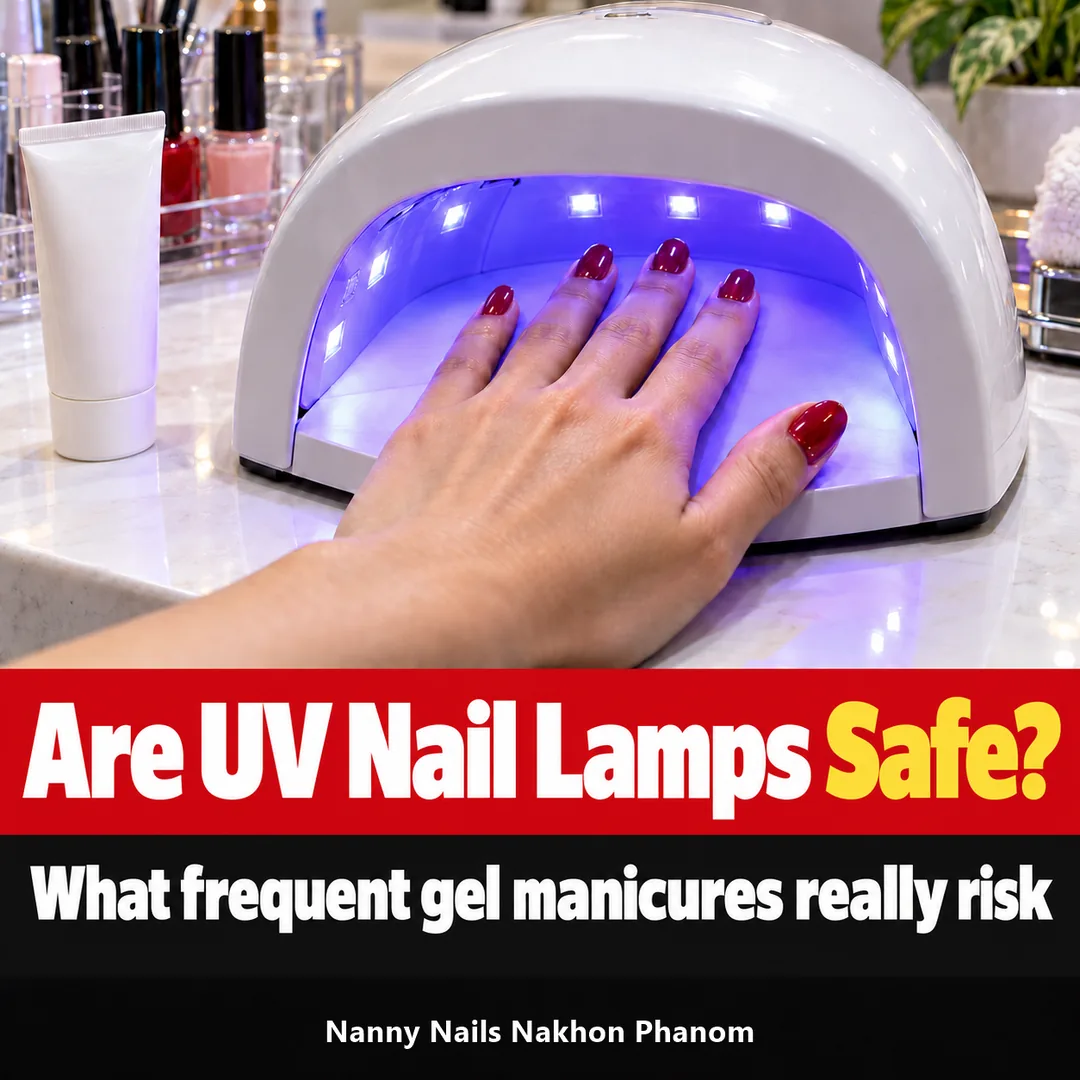
You slide your hand into the lamp, the violet light comes on over your fingertips, and you suddenly remember a clip saying nail lamps cause cancer. Part of you wants pretty nails; part of you is starting to worry. This article tells you plainly what is actually true, what nobody knows yet, how UV and LED lamps differ, why some people become allergic to gel, and how people who get gel nails often can protect themselves.
Nail lamps always seem to split people into two camps. One says they are very dangerous and you should never use them. The other says there is nothing to worry about and you can do it every week. The truth sits in the middle, and knowing it is reassuring, because the things that protect you are simple habits you can repeat every time you get your nails done.
Are UV nail lamps dangerous? The short answer
Nail lamps do give off UVA light, and over time UVA contributes to premature skin ageing and to skin cancer risk. With what we know today, though, the risk from occasional gel manicures is low.
Low is not zero. Each session exposes your hands to only a little light, but it adds up. If you get gel nails every two or three weeks for years, it makes sense to protect your skin, and that is easy to do. The how-to is further down.
Beyond the light, there are two more everyday risks you can actually feel: thinner nails from removing gel the wrong way, and allergy to the gel itself. Both are easy to avoid once you know about them.
Belief 1: frequent lamp use means you will get skin cancer
Where the belief comes from
The story most people share comes from an experiment in January 2023, where human skin cells and mouse cells were put in dishes and placed inside a UV nail dryer.
- One 20-minute session killed roughly 20-30% of the cells.
- Three back-to-back 20-minute sessions killed roughly 65-70%.
- The surviving cells showed DNA damage and mutations of the kind found in human skin cancers.
That sounds frightening, which is why news outlets in Thailand and abroad ran big headlines about it.
What is actually true
What most reports left out is that this was a test on cells in a dish, not on people. Real skin has protective outer layers, and a real manicure uses the lamp for a few minutes at a time, not 20 minutes straight. A dish test cannot tell us about real people. You would have to follow a large number of people before saying how much skin cancer risk actually rises, and that takes at least a decade.
The UVA from a gel manicure every two weeks probably is not enough to raise skin cancer risk significantly. The risk looks low, but nobody yet knows the long-term effect for people who have used lamps regularly since their teens.
Put simply, the 2023 experiment did not prove that gel manicures cause cancer. It is a reason to use the lamp knowingly and to protect your skin first.
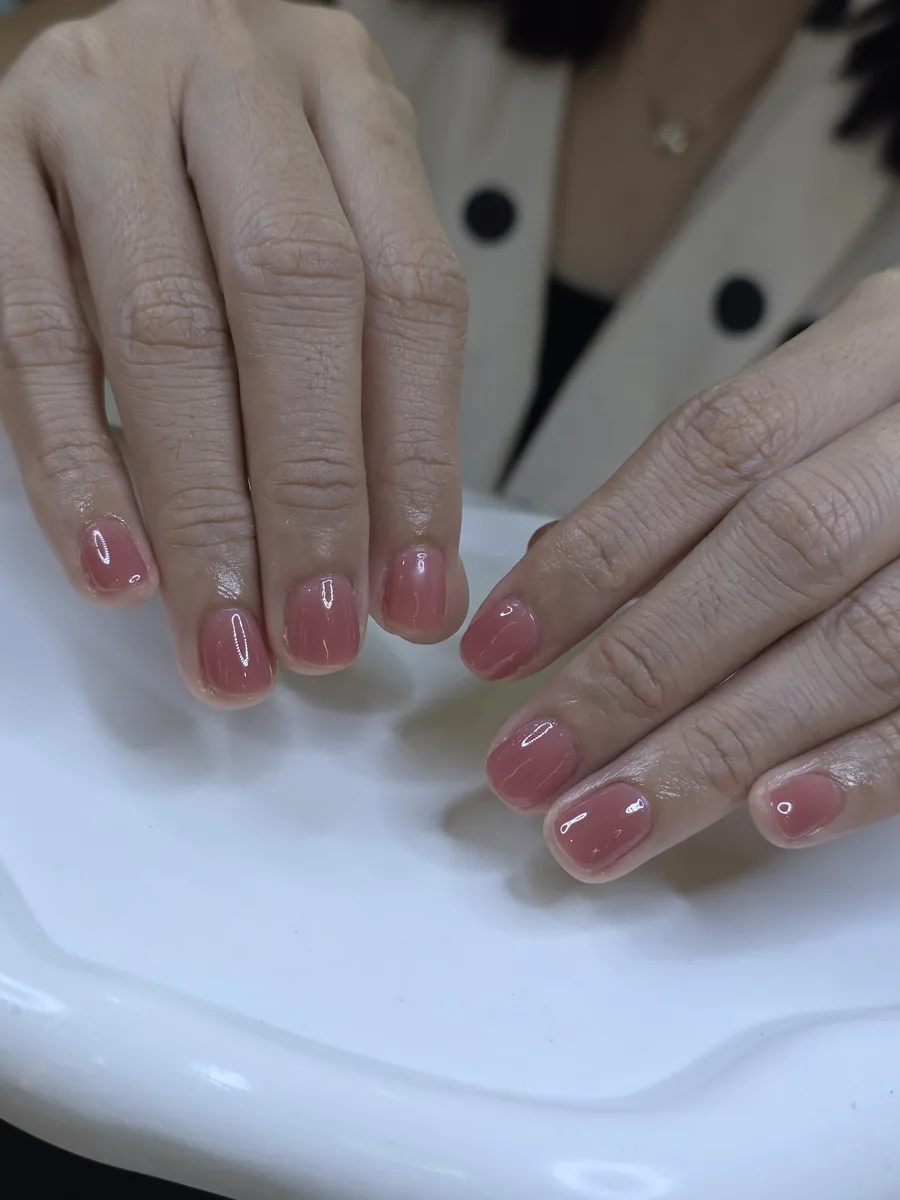
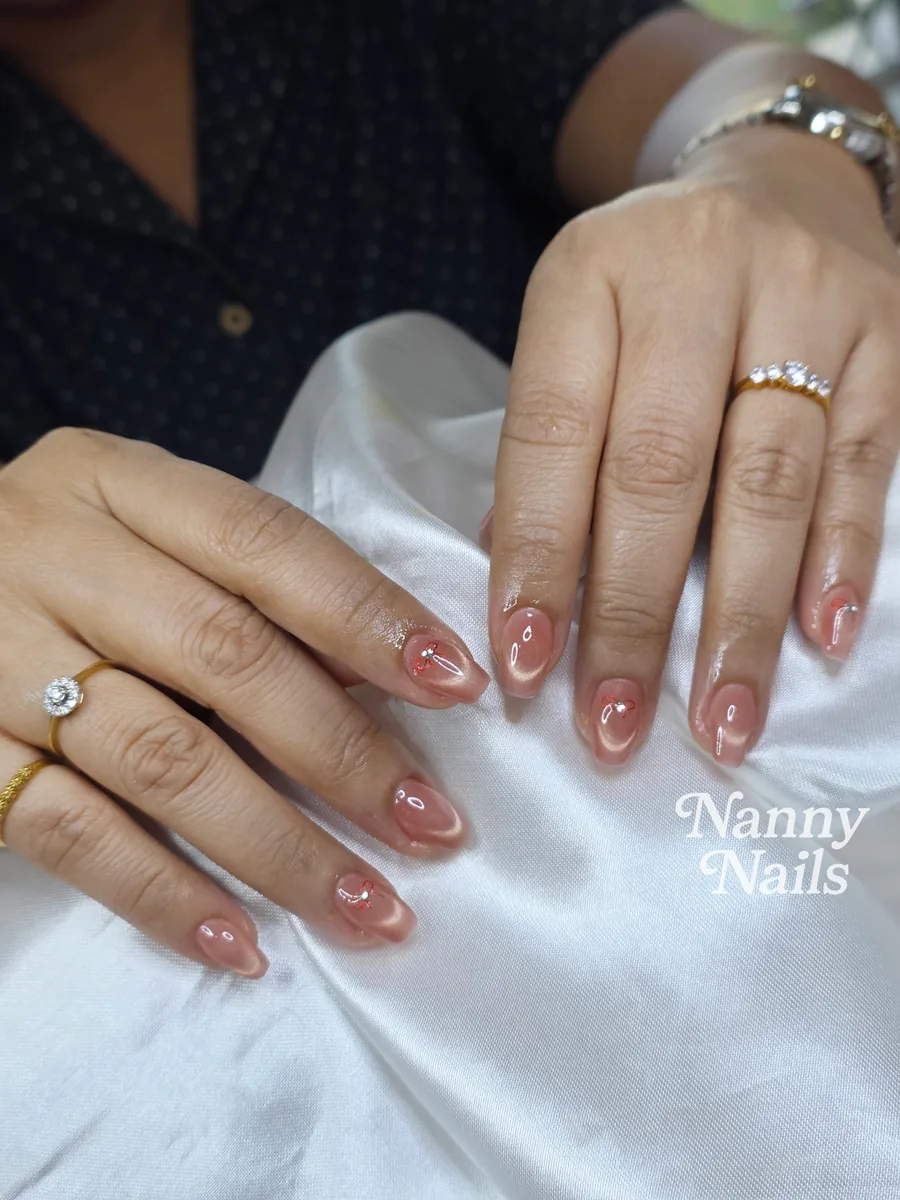
Belief 2: LED lamps have no UV, so they are safer
Where the belief comes from
The names do the work. UV makes people think of harsh sunlight; LED makes them think of the light bulbs at home. So some people pick salons with LED lamps, assuming there is no UV involved at all.
What is actually true
Both UV and LED gel lamps emit ultraviolet light, mostly UVA. The names refer to the type of bulb, not to whether UV is present. Gel only hardens under light in this range; without UV, the gel would not set.
So whichever lamp a salon uses, protecting your skin works the same way. What matters is not the name on the lamp but what you do for your hands before you put them in.
Belief 3: the lamp light is what thins your nails
Where the belief comes from
After several rounds of gel, people take it off and find thin, soft, flaky nails. The lamp is the scariest-looking step, so it gets the blame.
What is actually true
Gel manicures can make nails brittle, peeling and cracked. But most of the damage comes at removal, so we always tell customers: do not pick or peel gel that has started to lift, let us remove it properly, and give your nails breaks.
Picture seeing a tiny lifted edge and peeling it off. The part of the gel that is still firmly bonded pulls the top layer of your natural nail away with it. Do that a few times and the nail keeps getting thinner.
If you want to take gel off at home, read Can you remove gel nails at home? And if your nails are already brittle, see what causes brittle nails and how to care for them.
Belief 4: a gel allergy is an allergy to UV light
Where the belief comes from
Some people get itchy, red skin or small bumps around their nails after a manicure and assume they reacted to the lamp, since it is the one unfamiliar part.
What is actually true
The common allergy from gel nails is to chemicals in the gel itself, a family called (meth)acrylates. The one most often involved is HEMA. About 2.4% of people who go for skin allergy testing turn out to be allergic to at least one of these chemicals.
The main causes are:
- Uncured gel touching the skin. Gel that spreads onto the skin around the nail before it is cured is where sensitisation starts.
- DIY home kits. People doing their own nails tend to get gel on their skin and under-cure it.
- A lamp that does not match the gel. The gel does not set fully, which raises the risk further.
Watch for itching around the nails, swollen nail folds, small blisters and peeling skin. Many people do not realise the rash can also show up on the eyelids, face or neck, because we touch those areas often. Once you are allergic to these chemicals, it usually lasts for life, and the same family of chemicals is used in some dental and medical materials. If you have had a reaction like this, tell your doctor and dentist every time.
What about people who react to light? Skin sensitivity to light varies from person to person, but the allergy that most often comes with gel nails is the allergy to the gel. If you get a rash after every manicure, see a dermatologist so you know what you are reacting to, rather than guessing.
Frequent gel manicures: what are the real risks?
Putting it all together, people who get gel nails regularly should know about these four real risks:
- UVA building up on the backs of your hands. The risk per session is low, but it accumulates. Your hands already get sun every day; the lamp adds to that.
- Thin, brittle nails. Mostly from picking or removing gel the wrong way.
- Allergy to the gel. Caused by uncured gel touching the skin.
- Not seeing your natural nails for long stretches. If something is wrong under the colour, such as thick yellow nails or a fungal infection, you notice it late. See what causes yellow nails.
So how often is reasonable? We suggest going without polish for one to two weeks or longer from time to time, and switching to regular polish if you keep having nail problems. A gel manicure every two weeks probably does not raise skin cancer risk much. You can choose the rhythm that suits you; what you should not skip is protecting your skin every time.
Before your hand goes in the lamp: how to protect it
These are the steps we recommend to customers, and anyone can do them with things they already have.
- Put sunscreen on the backs of your hands before your appointment. Choose a broad-spectrum (UVA and UVB), water-resistant sunscreen with SPF 30 or higher on the backs of your hands only. Keep it off your nails and the skin around them, because cream on the nail stops gel from gripping well.
- Or wear fingerless gloves. Dark, opaque fabric gloves with the fingertips cut off shade the backs of your hands.
- Tell your nail artist straight away if it feels hot. Some people feel a brief warm flash while gel cures. That is normal for gel. If it gets too hot, take your hand out for a moment and finish curing afterwards.
- Do not pick or peel lifted gel. This one habit protects your natural nails more than anything else.
- Moisturise your nails and cuticles. Between manicures, apply petroleum jelly or a moisturiser to your nails and cuticles several times a day to reduce brittleness.
Who should take extra care
- People who have had skin cancer or have it in the family, who have fair skin that burns easily, or who have had a lot of sun over their lifetime. Take extra care and ask a dermatologist before making gel manicures a habit.
- Anyone who has had an itchy rash or blisters after gel nails. Stop and have a doctor check it first.
- People with very thin nails or recurring nail problems. Give your nails a break, or use a strengthening layer; see rubber base vs builder gel.
- Expectant mothers. The information and our salon policy are different; read Can you get gel nails while pregnant?
The lamp at Nanny Nails
We use a UV lamp, and we would rather say so up front. As explained above, both UV and LED lamps give off UVA, so skin protection works the same way, and you can prepare before you leave home.
- Put sunscreen on your hands before you set off. Backs of your hands only, and keep it off your nails, because cream on the nail stops gel from gripping well.
- Fingerless gloves. Bring a pair to wear while curing and mention it when we start.
- We push back and tidy the cuticles before colour. That keeps colour off the skin, so gel does not spread onto the skin around the nail.
- Base, colour and top coat go on in thin layers. Each one is cured under the lamp. Thin layers set more completely than thick ones.
Every set is covered by our 7-day care period. If you see an edge lifting, there is no need to pick at it; just message us and we will take a look, so your natural nail does not get thinner for no reason.
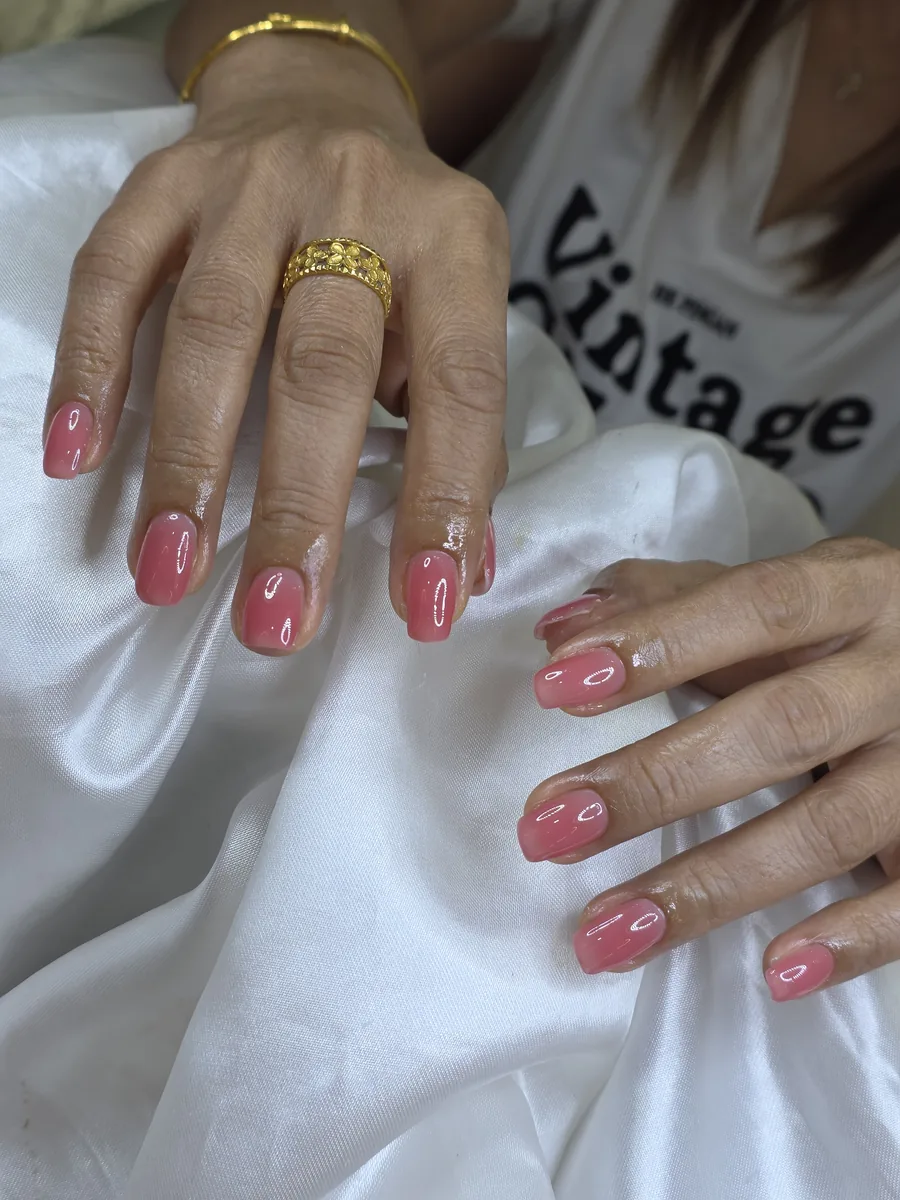
| Service | Price |
|---|---|
| Gel colour, hands, 1 colour | 200 baht |
| Gel colour, hands, 2-3 colours | 250 baht |
| Rubber base for thin nails | 200 baht (colour not included) |
| Builder gel for extra strength | 250 baht (colour not included) |
See the full menu on our services and prices page.
Signs you should see a doctor
- Itching, swelling or blisters around your nails after a manicure, or a rash on your eyelids, face or neck that comes back after every set.
- A nail separating from the skin underneath, pain, or pus.
- A new spot or mole on the back of your hand, or an existing one changing colour or size.
- A dark line or band under a nail that was not there before.
If your nails change in unusual ways or a problem does not go away, see a dermatologist. Do not cover it up with colour.
Pretty nails, with peace of mind
Nail lamps are not the villain the clips make them out to be, but they are not something to ignore either. Sunscreen on the backs of your hands (not your nails) before you leave home, no picking at gel, and the occasional break for your nails. With that, you can put your hand in the lamp knowing you are looking after yourself, and pretty nails go back to being simply fun.
Pick your next colour in our design gallery, or if you are wondering how often to book, read How long do gel nails last?
FAQ
Are UV nail lamps dangerous?
Nail lamps give off UVA, which over time can age the skin and add to skin cancer risk. The risk from occasional gel manicures is low. Use sunscreen on your hands or fingerless gloves every time.
UV or LED nail lamp: which is safer?
Both give off UVA. LED lamps are not UV-free, so protection is the same: a broad-spectrum sunscreen with SPF 30 or higher, or fingerless gloves.
Did the 2023 news prove nail lamps cause cancer?
The experiment used cells in dishes and found the light killed cells and damaged DNA. It was not done on people. You would need to follow a large number of people before the risk can be measured.
What does a gel nail allergy look like?
Itching around the nails, swollen nail folds, blisters and peeling skin. Some people get a rash on the eyelids, face or neck. It is usually an allergy to (meth)acrylates in the gel, not to the light. Stop and see a doctor if it happens.
How often is it OK to get gel nails?
We suggest giving nails a break of one to two weeks from time to time. A gel manicure every two weeks probably does not raise skin cancer risk much. Choose based on your nails, but protect your skin every time.
What if my gel lifts within 7 days?
Every set has a 7-day care period. If the colour chips or peels within 7 days, bring your nails in and we will fix them free of charge. Do not pick at it. Message LINE @nannynails to arrange a time.
Want gel nails with peace of mind? Talk to us first
Send a photo of your nails on LINE and we will tell you whether they are ready for a simple gel colour or would do better with a rubber base first. Sunscreen on the backs of your hands before you come is fine, just keep it off your nails. We take just 3 bookings a day.
Read more