Dry, Flaky, Peeling Hands From Washing Dishes Every Day: How to Look After Them
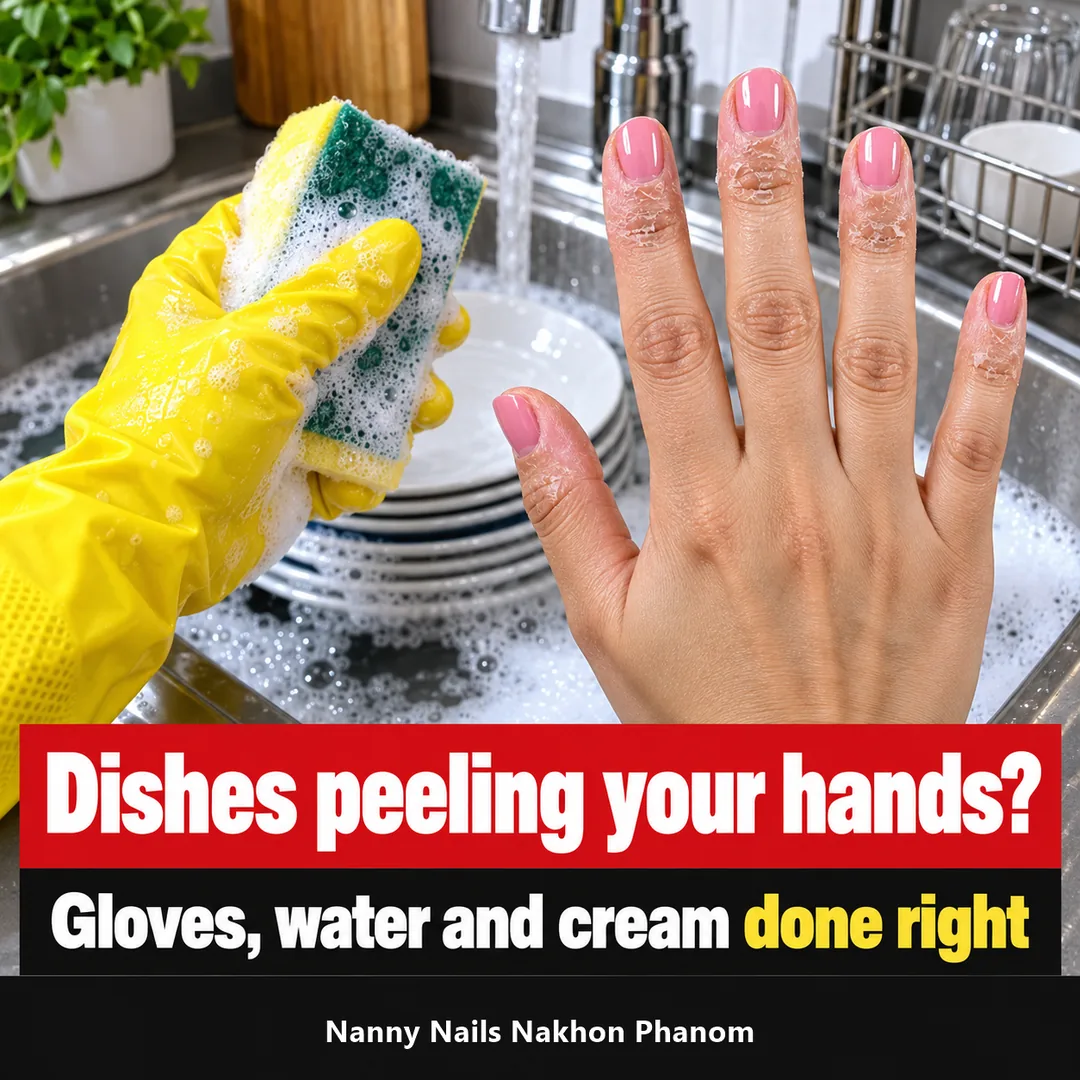
You finish the dinner dishes and your fingertips feel tight, as if the skin is being pulled. The next morning, the skin on your fingertips starts peeling off in little white flakes. It catches in your hair when you tie it up and snags on fabric when you do up buttons. You put cream on, and it still peels again every week. Lots of people who wash up every day go through this, and most of the time it is not the dishwashing itself but small mistakes in how it is done. This guide covers why hands get dry and flaky, how to look after them when you wash dishes every day, from gloves and washing-up liquid to water temperature and when to put cream on, and which kinds of peeling mean it is time to see a doctor.
You do not need to stop washing up or buy anything expensive. What needs to change are the small details by the sink: gloves worn the right way, water that is not too hot, and cream applied at the right moment. Get those right and the new skin that grows in will slowly become smoother, and your fingertips stop catching on everything.
Why do hands get dry and peel into flakes?
The outermost layer of your skin is coated with natural oils that keep water in and keep irritants out. Washing-up liquid is made to dissolve grease. However well it dissolves the grease on your plates, it dissolves the oils on your hands just as well.
When your hands go from wet to dry many times a day, that outer layer loses water, turns dry and stiff, then flakes away in white bits. You usually see it first on the fingertips, the knuckles and between the fingers, because those spots are in constant contact with the soap and it tends to linger there.
When the skin becomes irritated enough to get inflamed, it is called irritant contact dermatitis. It comes from frequent contact with water, soap, detergent or cleaning products, and it is common in people whose hands are wet all day. A reaction to an irritant usually appears within 48 hours of contact, sometimes straight away.
Other causes of peeling hands
Washing up is not the only reason hands peel. It can also come from:
- Dry air and cold wind. At the end of the year skin loses water faster, and hands that were only dry start to peel.
- Allergic contact dermatitis. A reaction to a specific substance. Some people develop a hand rash from natural rubber (latex) gloves, which means the gloves you wear for protection can turn out to be the cause.
- Hand eczema. People who had eczema as children are more likely to get inflamed skin on their hands than others.
- Palms peeling in rings in the hot season. This is a condition that starts as tiny air-filled blisters that burst, leaving rings of peeling skin on the palms and fingers. It is common in summer and in people with sweaty palms, and it is usually harmless.
- Fungal infection and psoriasis. Both can make skin flaky too, but they are treated differently, so a doctor needs to tell them apart.
Many of these look so alike that you cannot tell them apart by eye. If you follow everything in this article and your hands still do not improve, that is your sign to have a doctor take a look. If the peeling is mostly the skin around your nails, read Peeling cuticles that hurt when you pull them: 5 mistakes people make with their cuticles.
Washing dishes every day: 5 mistakes people make without realising
Most people whose hands peel from washing up are not neglecting them. Plenty already wear gloves and use hand cream. It is the details that slip. As you read, see which of these matches the sink at your place.
1. Wearing gloves, but the wrong way
Rubber gloves help more than anything else, but worn the wrong way they can do the opposite.
- Short cuffs that let water in. Soapy water trapped inside a glove soaks your hand for longer than washing bare-handed would. Choose gloves that reach halfway up your forearm, and fold the cuff outward so drips cannot run in.
- Wearing them until your hands sweat. Hands sitting damp inside gloves for a long time can get irritated too. Choose cotton-lined gloves, or a thin pair of cotton gloves worn underneath.
- Putting on gloves that are wet inside. After use, rinse the outside, take them off, turn them inside out and let them dry. If they are torn or leaking, replace them.
- A rubber allergy. If your hands get redder and itchier with rubber gloves on, you may be allergic to natural rubber. Switch to nitrile or vinyl gloves and mention it to your doctor.
- Washing up with your rings on. Take rings off first, because soap gets trapped underneath and the skin there gets irritated before anywhere else.
2. Pouring washing-up liquid straight onto the sponge
Squirting neat washing-up liquid onto a sponge and squeezing until the suds pour over your hand is quick, but your skin gets the full-strength soap every single time. Mix the liquid into a bowl of water first and dip the sponge in. The plates come out just as clean.
As for which product to use, choose gentle, fragrance-free and dye-free products for anything that touches your skin. If one particular brand makes your hands peel worse every time, write the name down, switch to another, and tell your doctor if you end up getting checked.
3. Washing up in hot water with your hands in it
Hot water shifts grease well, and it shifts the oils on your skin just as well. Use comfortably warm water for your hands, not hot. If a greasy pan really needs hot water, let your gloves take the heat. Do not soak bare hands in it.
4. Letting your hands air-dry, or waiting until they are bone dry for cream
This is the most common slip. You finish the dishes, shake your hands, wipe them on your apron and move on to something else, while the soap left on your skin keeps on working.
What we always tell customers is to rinse your hands once more with clean water, pat them so they stay slightly damp, then apply cream straight away. The cream locks in the water still on your skin. Pick a thick cream in a tube or tub, containing petrolatum or mineral oil, fragrance-free and dye-free, and keep it right next to the sink so you never forget. Use moisturiser often and generously, smoothing it on in the direction the hair grows instead of rubbing hard.
5. Picking or pulling off the flakes
A flake sticking out is very tempting to pull off. But peeling skin is still attached to the healthy skin underneath, and pulling it usually tears past the edge of the flake. You are left with a raw red patch that stings every time it meets soap, and it can get infected.
Cream softens the flakes so they come away on their own. If a piece is loose and really catching on fabric, use clean nail clippers to trim only the loose part, without cutting into the skin that is still attached.
One round of washing up that does not leave your hands peeling
All of the above in one routine. You could stick it up next to the sink.
- Take off your rings.
- Put on thin cotton gloves, then long-cuff rubber gloves over them, with the cuffs folded outward.
- Mix the washing-up liquid into a bowl of room-temperature or comfortably warm water.
- When you are done, rinse the outside of the gloves, take them off and turn them inside out to dry.
- Rinse your hands with clean water and pat them damp, do not rub.
- Apply a thick cream straight away, right to the fingertips, between the fingers and around the nails.
- At bedtime, put on a thick layer of cream with cotton gloves on overnight.
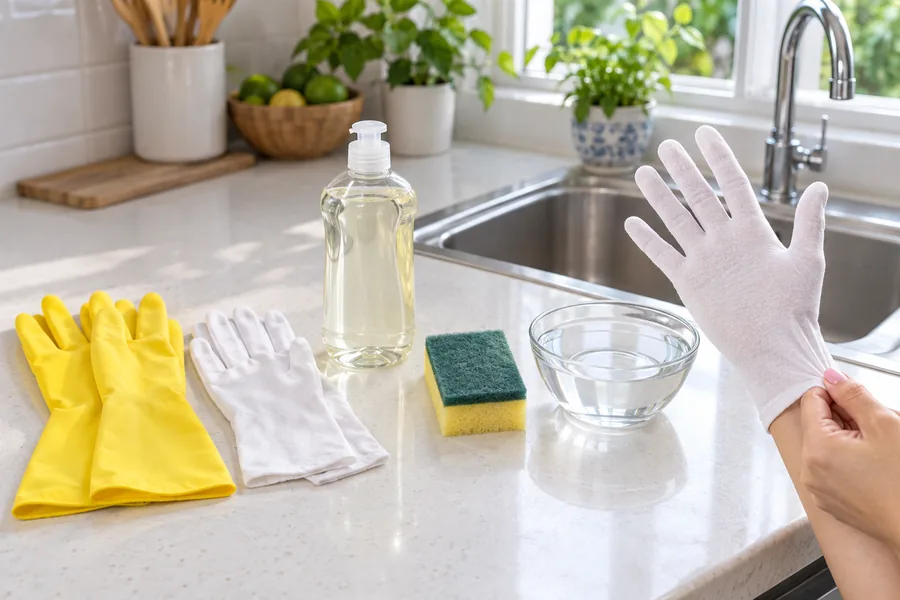
All of this adds less than 2 minutes per wash. Do it after every meal and the outer layer of your skin finally gets a real break from the soap, with time to repair itself.
Do you have to stop washing dishes while your hands are peeling?
No. Just let your gloves do the job instead of your hands every time, and cut down how often your hands get wet, for example by saving the dishes up and washing them in one go rather than a plate at a time all day. If someone at home can share the job, taking turns while your hands are at their worst helps the skin recover faster.
People with hand eczema can often keep working while they avoid whatever is causing it. But if your hands are cracked and bleeding, or too painful to wash up, that is the time to see a doctor, not to push through.
When peeling may be contact dermatitis or eczema, and you should see a doctor
Hand eczema often starts as nothing more than dry, chapped skin before other symptoms follow. Watch for these:
- Red patches, thick scaly skin, burning, or a lot of itching.
- Small, itchy, clear blisters on your fingers or palms.
- Cracks deep enough to hurt, bleed or weep.
- Swelling, heat, pus or a fever. This may be an infection, so see a doctor promptly.
- It lasts a long time, keeps coming back or gets worse even though you are following the routine.
- It flares up every time you wear rubber gloves or touch one particular product.
- Only one hand peels, or it peels in rings with a sharp edge.
See a doctor if symptoms are persistent, keep coming back or are severe. The doctor will help work out the cause, and if it is still unclear, may refer you to a dermatologist, who can run a patch test to find out which substances your skin reacts to. Hand eczema tends to get worse without treatment, so seeing a doctor early beats switching from one cream to the next.
Are dry, peeling hands a sign of vitamin deficiency?
Hands that peel from washing up are almost always reacting to the water and soap they meet every day, not to a lack of vitamins. Nutritional deficiencies that dry out the skin do exist, but they are uncommon in people who eat normally and usually come with other symptoms. For which vitamins are involved and who is at risk, read What causes dry hands? 6 habits that make your hands look older. In short: do not buy high-dose vitamins and take them yourself. If you are worried, ask a doctor for a blood test.
Washing dishes every day, but want your gel nails to last
Good news if you wear gel nails: the gloves that protect your skin protect your nails too. Water and soap seeping under the edge of the gel every day is one of the reasons gel lifts early. Wear gloves every time you wash up and your gel stays glossy for longer. For more care tips, read How long do gel nails last?
- Short to medium length slips into gloves easily, does not poke through them, and the tips take fewer knocks. A good fit if you do a lot of housework.
- Colours that hide everyday wear: nude, soft pink and glitter disguise small scratches and the gap at the base as your nails grow.
- For the first 24 hours: avoid long soaks in hot water, then go back to washing up with gloves as usual.
When we clean up the nail area at the salon, we push the cuticle back first, trim only the excess skin, and keep the colour off the skin. The edge of the gel sits flush with the nail, so water finds it harder to get in. Every set is also covered by our 7-day care period, so if anything does not look right after washing up, just message us and we will take a look.
If the skin around your nails is cracked open, inflamed or blistered right now, have a doctor look at it and let it heal first, then book your nails. Healthy skin makes for neat edges and much nicer nail photos.
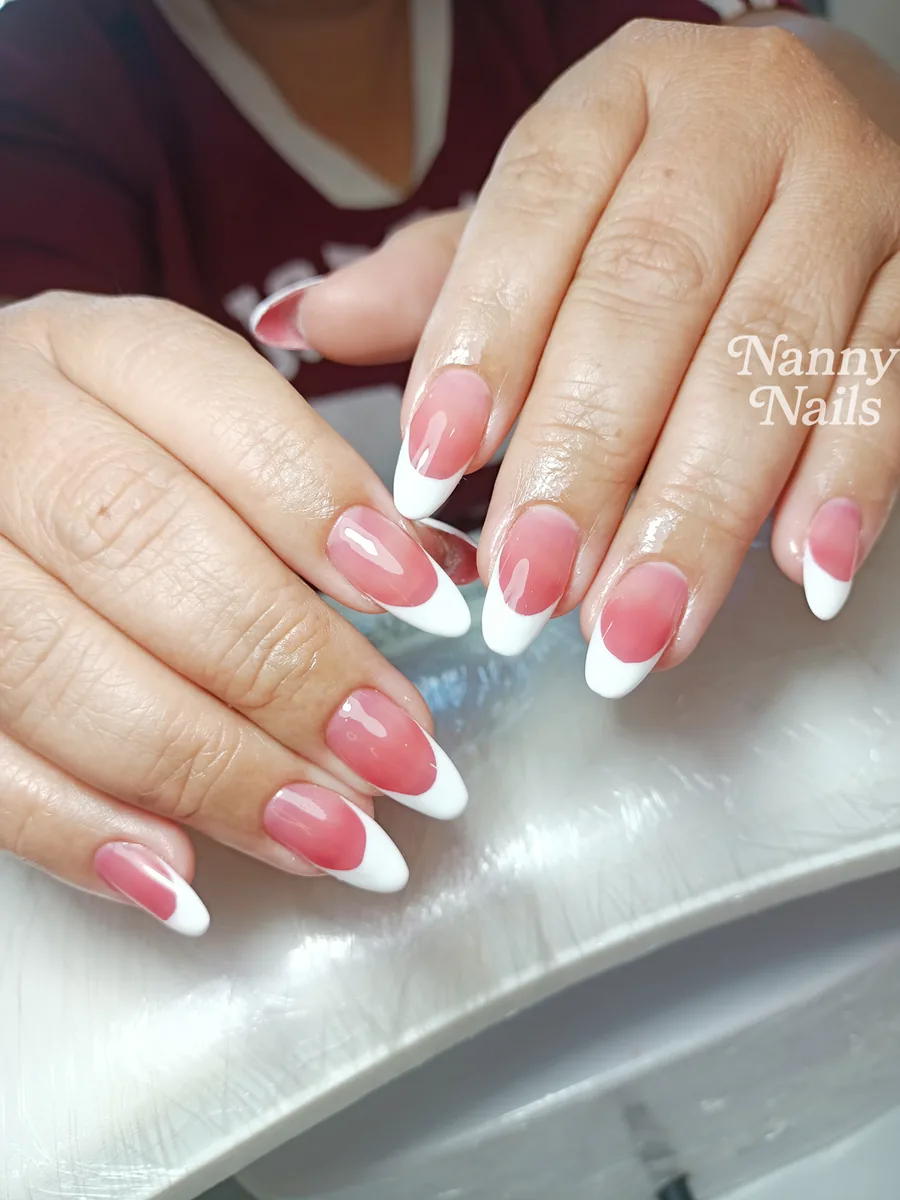
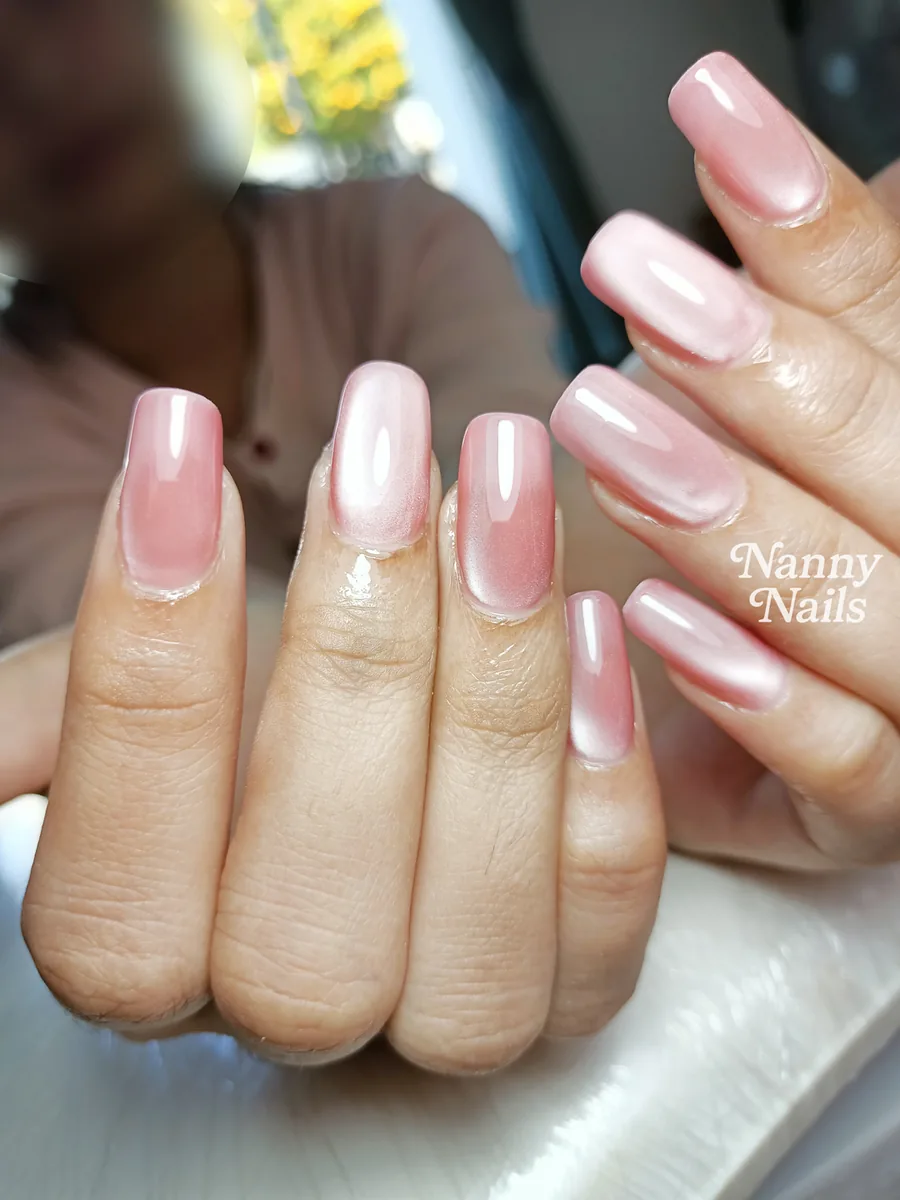
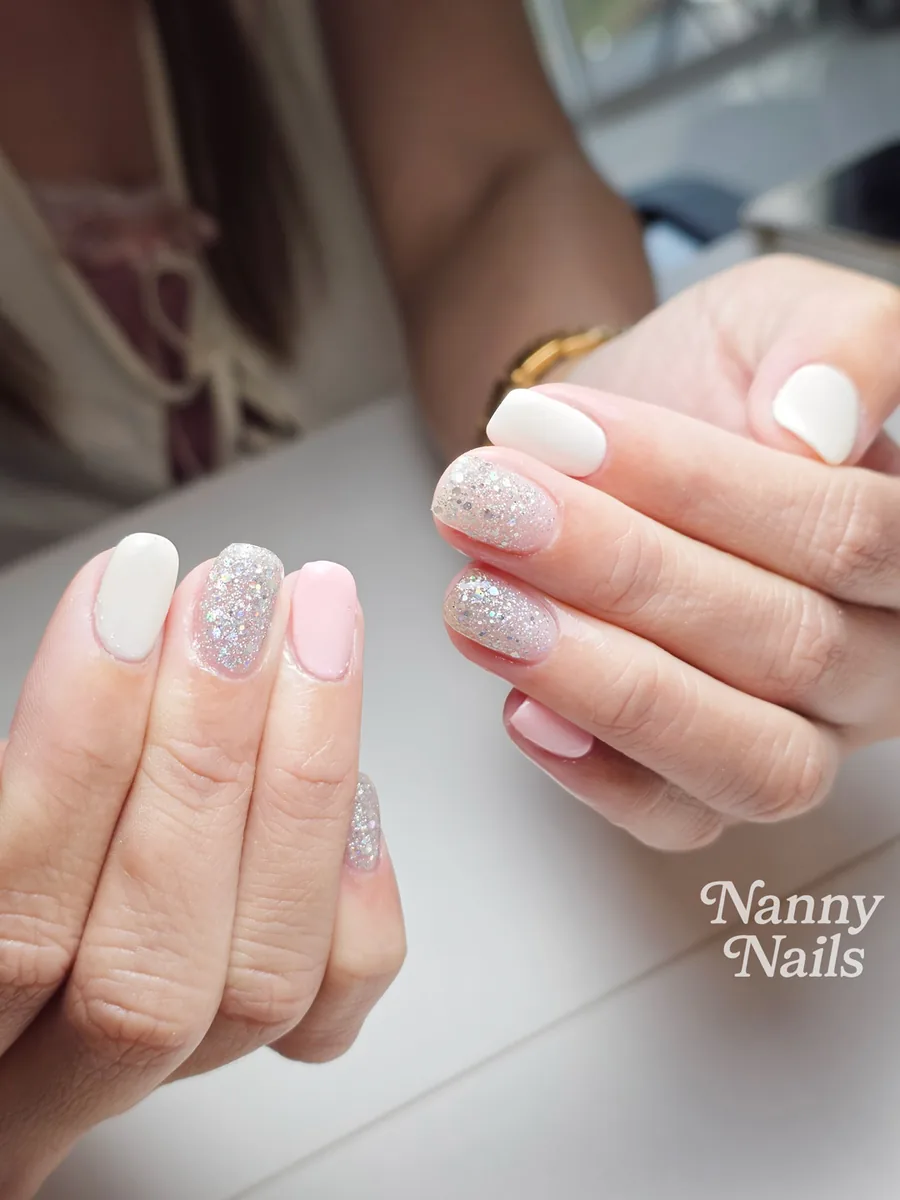
A gel colour on the hands costs 200 baht for one shade, 250 baht for special colours like glitter and pearl, and 400 baht for French tips on a solid colour. Every set includes shaping, base coat and top coat. Find more designs you like in our nail design gallery.
What customers say about our nail artist's gentle hands
Real Google reviews of our salon, in the original Thai with a short English translation.
Read all our reviews on the reviews page.
Finishing the dishes and still wanting to look at your hands
Picture an ordinary weekday dinner. You finish the usual pile of dishes, take off your gloves, rinse your hands, pat them damp and squeeze out some cream from the tube sitting by the sink. Your fingertips are smooth, nothing catches when you tie your hair, and your gel nails are as glossy as day one. All it took was gloves worn properly, water that is not too hot and cream at the right moment.
To find out which other habits dry out your hands and make them look older, read What causes dry hands?
FAQ
What makes hands dry and peel into flakes?
Mostly water and washing-up liquid dissolving the natural oils on the skin. Going from wet to dry many times a day makes the outer layer lose water and flake away. Other causes include dry air, allergic contact dermatitis, hand eczema, fungal infection and psoriasis, which a doctor needs to tell apart.
My hands peel from washing dishes. What should I do?
Take off your rings, wear thin cotton gloves under long-cuff rubber gloves, mix the washing-up liquid into water first, use comfortably warm water, then rinse your hands, pat them damp and apply a thick cream straight away. At night, use a thick layer of cream with cotton gloves.
Why do my hands still peel when I wear gloves?
Water may be getting into the gloves, your hands may be sweating inside them, the gloves may be wet inside, or you may be allergic to natural rubber. Switch to long cuffs, add cotton liners or try nitrile gloves. If it still does not improve, see a doctor.
When should I see a doctor about peeling hands?
If you have red patches, strong itching, blisters, cracks that bleed or weep, swelling, heat or pus, if it lasts or keeps coming back, flares up every time you touch a particular thing, or only one hand is affected.
Are peeling hands a sign of vitamin deficiency?
Usually not. Deficiencies that dry the skin are uncommon in people who eat normally. If you are worried, ask a doctor for a blood test rather than taking high-dose vitamins yourself.
Can I get gel nails if I wash dishes every day?
Yes. Wear gloves every time you wash up and your gel will last longer. Every set from our salon comes with a 7-day care period: if a nail lifts or peels within 7 days, bring it in and we will fix it for free.
Where is the salon and how do I book?
We are at Ban Noi Tai, Soi 7/1, Mueang Nakhon Phanom. We are open every day, with nail appointments from 09:00 to 18:00 and 3 bookings a day. Book on LINE @nannynails or call +66 99 002 8935.
You can wash dishes every day and still have lovely nails. Send us a photo of your hand
Send a photo of your hand or a design you like on LINE @nannynails, and tell us how much housework you do. We will help you pick a length and colour that are easy to live with, whether that is short nude nails, pink or glitter. We take just 3 bookings a day.
Read more