Using Hand Cream Every Day but Your Hands Are Still Dry? You Are Applying It at the Wrong Time

Your favourite hand cream sits on your desk. You use it every morning and every night without fail, yet by two in the afternoon your hands feel as tight as if you had never put anything on them. The skin around your nails is flaky and your knuckles are starting to crack. Many people blame the cream and keep switching to a new tube, when the real problem may be when they apply it. This guide explains why your hands stay dry even though you use hand cream every day, the 5 timing mistakes people make without noticing, a one-day hand cream schedule you can start today, and which texture of cream for dry, cracked hands to use at which time.
The good news is that if moisturising is already a habit, you have done the hardest part. What needs to change is not how hard you try but when you do it. The same tube of cream, used at the right moments, can make a clear difference.
Why are my hands still dry when I use hand cream every day?
The first thing to understand is that hand cream does not add water to your skin by itself. It works with the water that is already in or on your skin at the moment you apply it. The ingredients in moisturisers fall into a few main types:
- Humectants, such as glycerin, urea and lactic acid, draw in water and hold it in the skin.
- Occlusives, such as petroleum jelly, paraffin, mineral oil and dimethicone, form a thin layer on the skin that stops water from evaporating.
- Emollients, such as lanolin and various oils, fill the tiny cracks in dry skin and make it smoother.
Once you see it this way, timing makes sense. Apply cream to bone-dry skin and the sealing layer has no water to keep in. Moisturisers work best in the first 6 hours after you apply them, so applying 2 to 3 times a day may be needed. We recommend at least 3 or 4 times a day, especially after washing your hands. If you only apply in the morning and before bed, the afternoon is when your hands have no protection at all.
If you want to know what strips moisture from your hands in the first place, such as hot water, harsh soap and sun, read what causes dry hands and the 6 habits that make hands look older. This article focuses on one thing only: when to apply hand cream, and how.
5 hand cream timing mistakes people make without noticing
Count how many of these you do as you read. All of them are common among people who moisturise diligently, because at a glance it looks like the cream has gone on, but it is not getting the chance to do its job.
1. Waiting until your hands feel tight before applying
You wash your hands, dry them completely, get on with your work, and only reach for the cream half an hour later when your skin feels tight. By then the water on your skin has evaporated, so the sealing ingredients are just sealing in dry skin.
We suggest drying your hands with a clean towel but leaving some water on them, or letting them air dry until slightly damp, then applying cream or ointment straight away. Applying immediately after bathing works best, because that is when your skin has just taken in water.
Instead: damp, not dripping. One gentle pat with a towel is enough, then squeeze out the cream within a few seconds. Keep a tube next to every sink in your home so you never have to go looking for it.
2. Applying before washing or housework, and thinking you are done
You put on cream in the morning, and ten minutes later you wash the dishes, rinse vegetables or hand-wash some clothes. The cream washes off with the water and detergent, but in your head you have already moisturised today, so you do not apply again.
We recommend applying moisturiser every time you wash your hands, and more often in cold weather, especially after your hands get wet. For jobs that get your hands wet, we suggest putting gloves on before your hands touch water, and if your skin is easily irritated, wearing cotton gloves underneath the waterproof ones.
Instead: treat the cream you apply after a job as the one that counts, not the one before you start. The right order is gloves on, do the job, gloves off, wash your hands, pat damp, then cream. If daily dishwashing has left your fingertips peeling, read the full routine in dry, peeling hands from washing dishes.
3. Using hand sanitiser with nothing after it, or creaming over wet gel
Most people use hand sanitiser more often than they think: before eating, after handling cash, after pressing a lift button. Few follow it with cream. Others rub cream straight into hands still wet with sanitiser, until everything turns sticky.
Hand sanitiser is very drying, so we recommend waiting until the sanitiser has dried, then applying hand cream or ointment immediately. We also suggest always carrying cream along with your sanitiser: every time you use one, use the other.
Instead: keep a small tube of cream in the same bag as your sanitiser. Sanitise, rub until dry, then moisturise. Pair them every time until it becomes a habit.
4. Only applying in the morning and before bed
This is why hands feel dry in the afternoon even when you moisturise every day. Your morning cream has been through several hand washes before lunch, and your bedtime cream helps overnight, but neither covers the middle of the day when your hands work hardest.
We recommend moisturising after every hand wash and whenever your skin feels dry. We suggest at least 3 or 4 times a day, and a moisturiser has its biggest effect in the first 6 hours. All three pieces of advice point the same way: your hands need cream during the day too.
Instead: tie moisturising to things you already do, such as washing your hands before lunch and again when you finish work. That alone means the afternoon is no longer empty.
5. Moisturising with rings on, or putting rings back on while your hands are wet
Few people think of this one. When you wear a ring all the time, water and soap get trapped under it every time you wash, and cream never reaches the skin there. The skin under a ring is often the first place to get dry and irritated.
For people whose hands get dry and irritated easily, we recommend taking rings off before washing your hands, before moisturising and before sleeping, because if the skin under a ring gets wet and stays damp it can cause a flare-up. Then moisturise thoroughly before putting the ring back on.
Instead: keep a small dish next to the sink for your rings. Take them off, wash, pat damp, work cream all around the base of your fingers, let it sink in, then put your rings back on.
A one-day hand cream schedule you can start today
You do not need to moisturise every hour. Just tie it to things that already happen every day, and you will reach 4 or more times a day without having to remember.
- After your morning shower. Pat dry until damp and moisturise your hands straight away.
- Before you leave the house. Put sunscreen on the backs of your hands as well. We suggest SPF 30 or higher on your hands every day, all year, because sun makes the backs of the hands rough and dry, with dark spots and wrinkles.
- After every hand wash during the day. Pat damp, then moisturise. This is the one that helps most.
- After hand sanitiser. Let it dry, then moisturise.
- Before and after housework. Take off your rings, put on gloves before your hands get wet, and when you finish, wash your hands and moisturise.
- Whenever your hands feel tight. Add more right then; there is no need to wait for the next round.
- Before bed. We recommend soaking your hands in warm water for a moment, applying a thick layer of cream or ointment, then sleeping in cotton gloves. A humidifier in the bedroom helps too, if you have one.
This schedule works for calluses too. If you have thick, hard skin at the base of your fingers, the soaking and filing steps are in what causes rough, calloused hands and the 5 habits that make hands hard; then follow this schedule for your cream.
Cream for dry, cracked hands: which texture for which time
Once the timing is right, the texture needs to suit the moment too. Moisturisers split by texture like this:
- Lotions are thin and watery and moisturise the least. Lotions can make irritated, eczema-prone hands worse because they contain too much water.
- Creams are not very greasy and absorb quickly, which makes them good for daytime, when you need to keep using your hands.
- Ointments are thick, greasy and the most moisturising, good for very dry skin and for night. They are best for dry, thick, scaly areas.
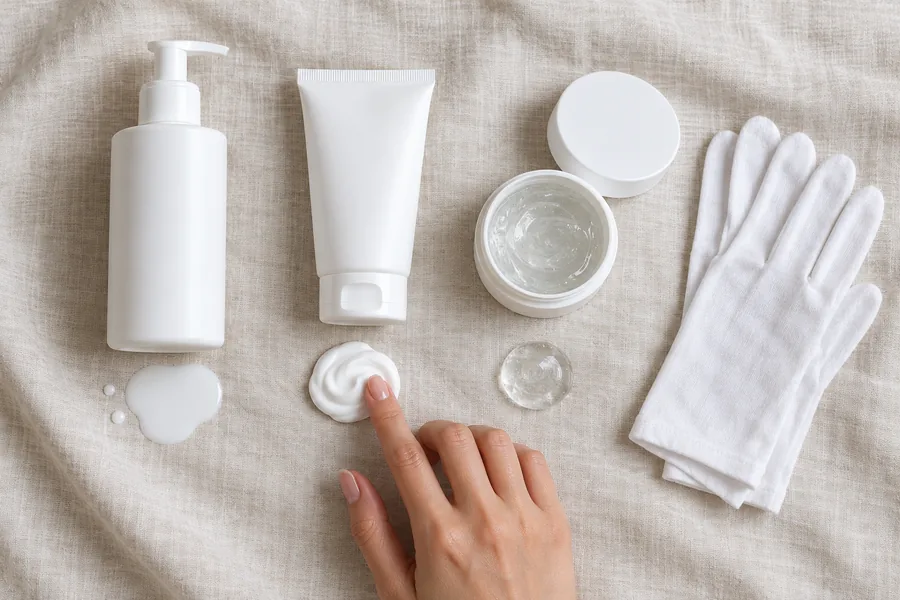
We suggest moisturisers that come in a squeeze tube or a tub rather than a pump bottle, because they feel less irritating on dry, chapped skin. We also suggest looking for ingredients such as glycerin, hyaluronic acid, lactic acid, petrolatum, mineral oil, shea butter, lanolin, jojoba oil and dimethicone. A good cream usually combines ingredients that draw in water with ingredients that seal it in.
Two common mix-ups:
- Fragrance-free is not the same as unscented. We recommend choosing products labelled fragrance-free and avoiding ones labelled unscented, which may contain masking chemicals that irritate the skin.
- Urea and lactic acid sting on cracks. These ingredients often sting when applied to cracked or scratched skin. While your hands are split, use a plain cream or ointment, and go back to them once the cracks have closed. If anything you apply causes burning, stinging, itching or redness, it is best to speak to a pharmacist or doctor.
In short: a cream from a tube in the daytime, and an ointment at night and on cracks.
How to apply hand cream so it works properly
With the timing right, how you apply it matters too. Many people squeeze cream into the palm, rub twice and stop, when the palm is the least dry part of the hand.
- Start with the backs of your hands, then work down the knuckles, the sides of the fingers and between them. Do the palms last.
- Reach the fingertips and the skin around the nails. Work moisturiser right into your fingertips and nails.
- Smooth, do not scrub. We suggest smoothing products gently into the skin in the direction the hair grows, rather than rubbing back and forth.
- Thin and often beats one thick layer and a long wait.
A small safety note: fabric that has been in contact with moisturisers can catch fire easily. If you sleep in cotton gloves over a thick layer of ointment, keep those gloves out of the kitchen and away from flames, and wash them often.
Right timing, but hands still dry and cracked? See a doctor
If you have followed this schedule for at least two or three weeks and nothing has improved, timing may not be the problem. Extremely dry, painful hands that do not get better with moisturiser used throughout the day may be hand eczema, which tends to get worse if it is not treated. Signs a doctor should see:
- Red or dark patches of inflamed, scaly, itchy skin
- Deep, painful cracks, bleeding or weeping skin
- Itchy blisters or a burning feeling
- Pus, swelling or heat, which may mean infection
- Dry skin that will not clear up even with the right care; it may be a condition such as atopic dermatitis or psoriasis
Some people need a prescription cream. Seeing a doctor early gets you back to using your hands normally sooner.
Hand cream and gel nails: when to apply so your gel lasts
People with gel nails often ask whether they can use hand cream. The answer is yes, and you should. Moisturised skin around the nail makes gel nails look much better. There is only one moment to skip.
- On the morning of your appointment, do not put cream or oil on the nail surface. Oil on the nail stops the gel from gripping properly. Moisturising as normal the night before is fine.
- At the salon, the nail-prep step pushes the cuticle back first and then trims the excess skin, so the edge of the nail is neat.
- After your appointment, go straight back to the schedule, work the cream in around the nails, and use cuticle oil so the skin does not flake. Wearing gloves for housework also helps your gel last longer.
The nail colours that make hands look moisturised are the ones close to your skin tone: dusty pink, soft milky white and nude pink make hands look clean and fingers look slimmer.
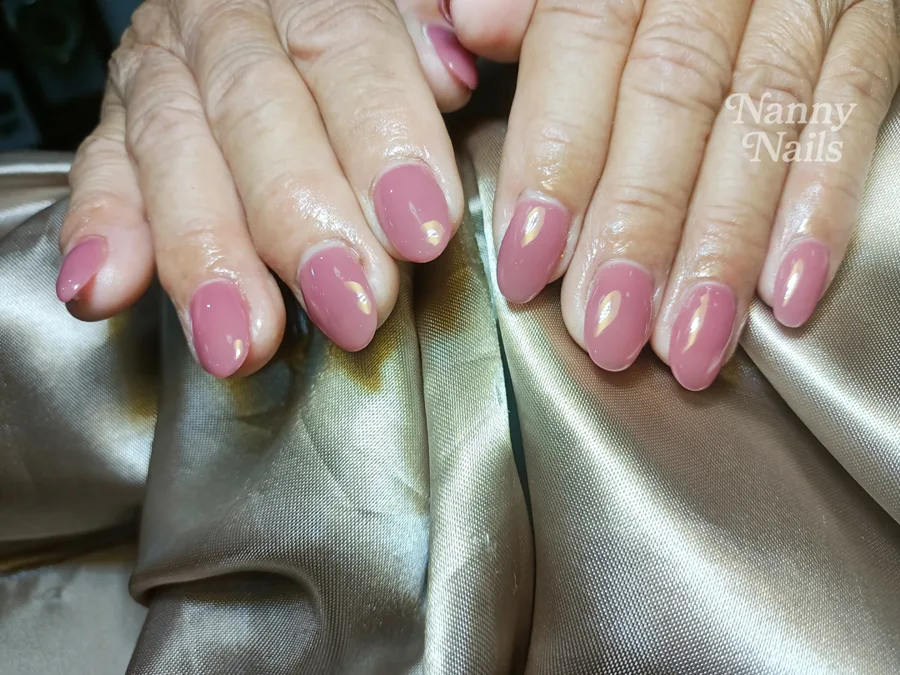
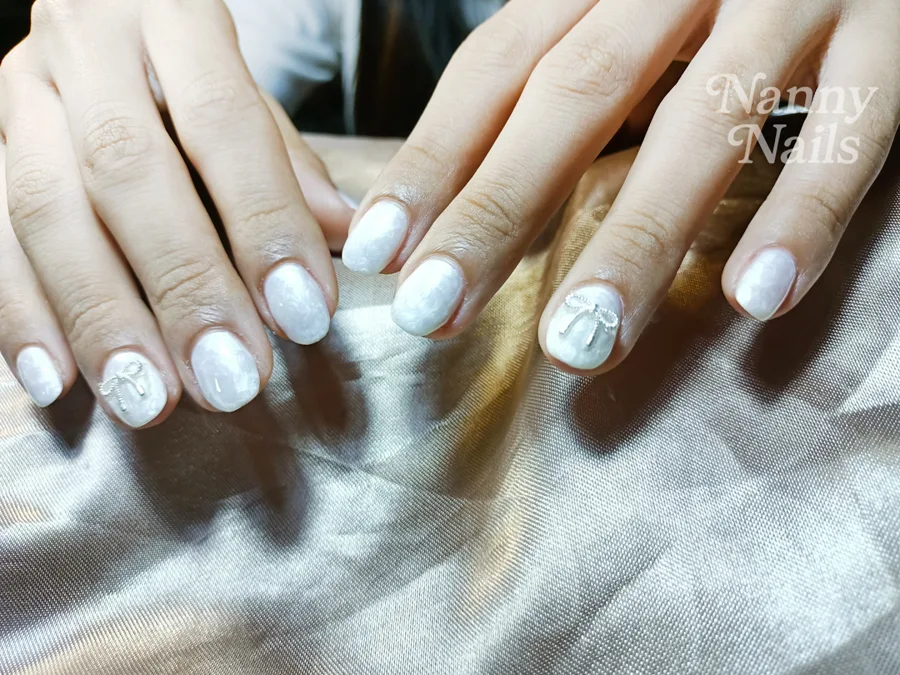
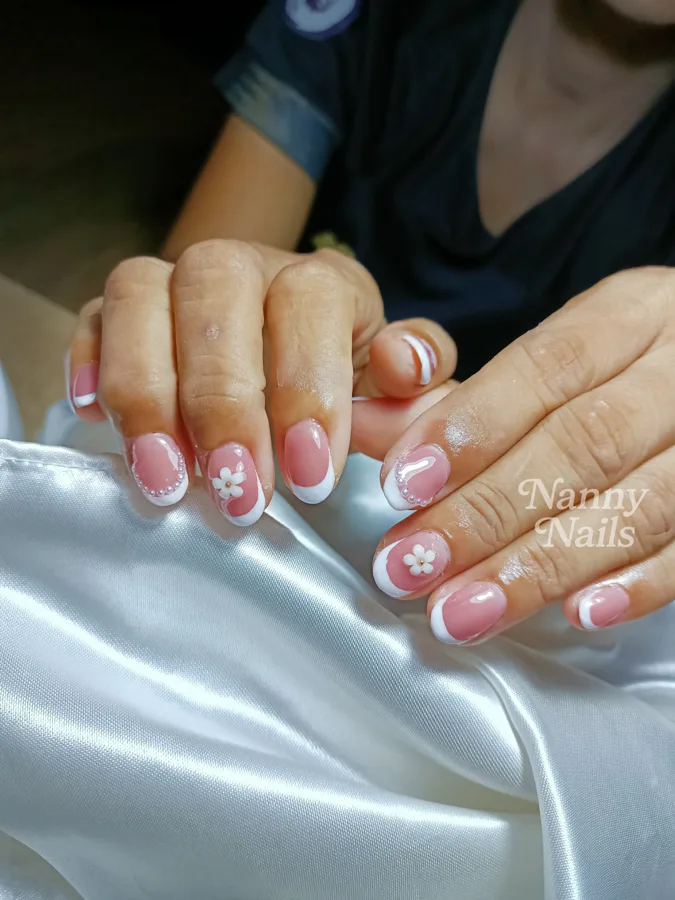
A solid gel colour on the hands is 200 baht for one colour and 250 baht for two to three colours, and every set includes shaping, base coat and top coat. Every set also comes with our 7-day care period. See more designs in our design gallery.
What customers say about how we care
Read all our reviews on the reviews page.
The same tube of cream, different hands
Picture two in the afternoon on an ordinary weekday. You lift your hands to type, the skin around your nails is smooth, your knuckles are not cracked, and you are not rushing for cream because your hands feel tight. The same tube sits in the same place. All that changed was applying it to damp skin, after every hand wash, after sanitiser, with your rings off, and ointment with cotton gloves at night.
If you also have thick, hard skin at the base of your fingers, read what causes calloused hands. If daily dishwashing has left your fingertips peeling, read dry, peeling hands from washing dishes.
FAQ
When is the best time to apply hand cream?
Straight after washing your hands while the skin is still damp, after hand sanitiser has dried, after a shower and before bed. That adds up to 3 or 4 times a day or more, plus any time your hands feel dry.
Why are my hands still dry when I use hand cream every day?
Usually because the cream goes on after the skin is completely dry, only in the morning and at night, before washing without reapplying afterwards, or as a thin lotion on very dry hands. If fixing the timing does not help, see a doctor.
What kind of cream is best for dry, cracked hands?
In the daytime, a fragrance-free cream in a squeeze tube with glycerin, petrolatum or mineral oil. At night and on cracks, a thick ointment. While the skin is cracked, avoid urea and lactic acid, which often sting.
Should I apply hand cream before or after wearing gloves for housework?
The most important time is afterwards: gloves off, wash your hands, pat damp, then moisturise. Before you start, take off your rings and put gloves on before your hands touch water.
Can I use hand cream with gel nails?
Yes, and you should. Work it in around the nails and use cuticle oil. The only exception is the morning of your appointment: skip cream or oil on the nail surface, because oil stops the gel from gripping properly.
What if my gel nails lift or peel after my appointment?
Do not pick or peel them off. Every set from our salon comes with a 7-day care period: if a nail lifts or peels within 7 days, bring it in and we will fix it for free.
Where is the salon and how do I book?
We are at Ban Noi Tai, Soi 7/1, Mueang Nakhon Phanom. We are open every day, with nail appointments from 09:00 to 18:00 and 3 bookings a day. Book on LINE @nannynails or call +66 99 002 8935.
Want a nail colour that makes your hands look moisturised? Send us a photo of your hands
Send a photo of your hands, or a design you like, on LINE @nannynails. Tell us whether you like dusty pink, soft milky white or nude, and whether your nails are short or long. We will suggest colours that suit your skin and give you a price. We take just 3 bookings a day.
Read more