What Causes Rough, Calloused Hands? 5 Habits That Make Your Hands Hard and Tough
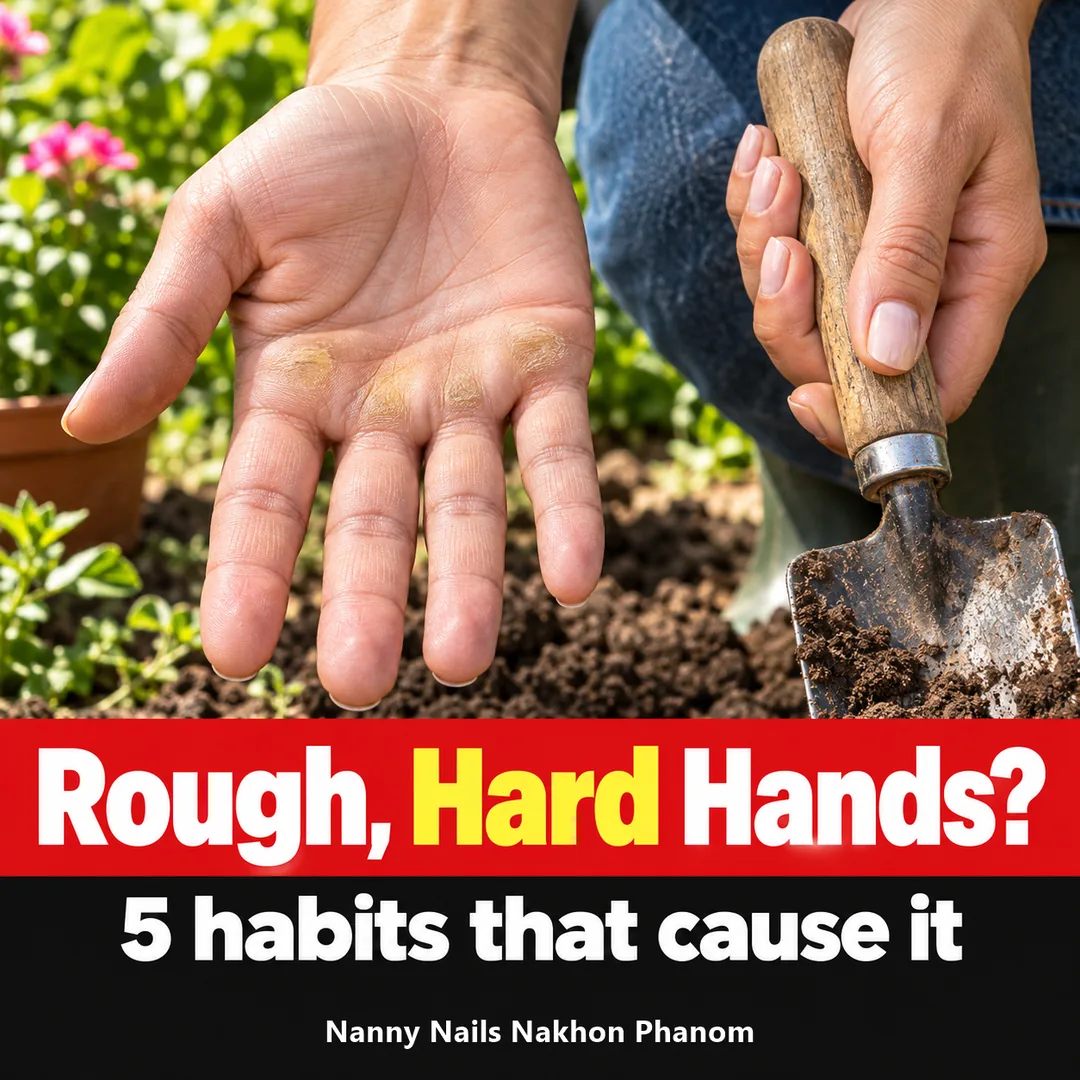
A friend holds your hand and says it feels tough. Or you run your fingers through your hair and a strand catches on the skin at the base of your fingers. You turn your palm up and there it is: a thick, yellowish, hard patch that you can barely feel when you press it. Calluses like this do not appear out of nowhere. They are a record of what your hands do over and over, every day. This guide explains what causes calluses on the hands, the 5 habits that make hands rough and hard without you noticing, how to soften them safely, and which ones a doctor should look at.
The good news is that most calluses are harmless, and they soften over time once you stop whatever keeps thickening them and care for them patiently. What gets people hurt is wanting them gone in a single day: cutting them, scrubbing too hard or picking at them. Those are exactly the habits this article asks you to drop.
What causes calluses on your hands?
A callus is the outer layer of skin grown thick and hard in a patch. Calluses form from repeated friction and pressure on the same spot. It is the body's way of protecting the skin underneath from irritation and injury. Put simply, your skin builds its own armour wherever it gets rubbed the most.
This kind of hard, thick skin can form on the feet and on the hands, and on the hands it often comes from repetitive activities such as weightlifting and playing a musical instrument. Common examples are guitar players' fingertips, and the hands of gymnasts, weightlifters and craftspeople who hold tools all day.
What you might notice:
- Thicker and harder than the skin around it. You can feel it as a patch with a fairly clear edge.
- More yellow or cloudy than normal skin. It looks dull and opaque.
- Less feeling than normal skin. Calluses are usually less sensitive to touch than the skin around them.
- It can crack. When a callus gets very dry it can split into painful cracks, sometimes with redness or blisters.
Calloused hands vs dry hands: what is the difference?
People lump both together as rough hands, but the causes are different, and if you mix them up you end up caring for them the wrong way.
- Calluses are thick, hard patches in specific spots that get rubbed or pressed again and again, such as the base of the fingers, the palm just under the fingers, or the fingertips. The cause is friction.
- Dry hands are rough all over: tight, with white flakes, especially on the backs of the hands and the knuckles. The cause is the natural oils on your skin being washed away by hot water, harsh soap and housework.
Plenty of people have both at once: calluses at the base of the fingers from work, and dry skin across the whole hand from frequent washing. This article focuses on calluses. For dry skin all over the hand, read what causes dry hands and the 6 habits that make hands look older.
Where a callus forms tells you what caused it
Calluses grow where your hand takes the most force. Turn your palm up, look at where yours are, and think about what presses or rubs on that spot during a normal day.
- The palm just under the fingers. This area takes the load when you grip a handle tightly: a hoe, a trowel, a broom, a mop, a handrail or a dumbbell bar at the gym.
- The fingertips. Common in people who press down on instrument strings every day, like guitar players.
- The side of a finger. Where the handle of scissors, a knife or a small tool pushes during long use.
- Across the whole palm. People who do manual work all day, lifting, carrying or gardening, often get a broad thickened area over the palm.
The location points to the cause, and the cause is something you can change. No cream, however good, can outrun friction that keeps happening every day. That is why habits come before creams.
5 habits that make your hands rough and hard
Count how many of these you do as you read. Some make calluses thicker; others make the calluses you already have worse, until they crack and hurt. Each one has a simple alternative.
1. Doing heavy work with bare hands
Gardening in the morning, pulling weeds, digging, sweeping the yard, lifting boxes or lifting weights at the gym, all with bare hands. Each time you grip a handle tightly and it rubs back and forth across your palm, the skin gets the signal to build more armour. Do it every day and the callus grows every day too.
Wear gloves for manual work and keep your hands away from rough materials, which is the most direct way to prevent calluses at the source.
Instead: keep fabric or gardening gloves right next to your tools, so that whenever you pick up a tool, you pick up the gloves too. For weightlifting, use lifting gloves or grip pads. If the job means touching water or cleaning products, use rubber gloves instead.
2. Cutting calluses off with a blade, scissors or nail clippers
A lot of people do this because the result is instant: the thick skin comes off in a sheet and your hand feels smooth for a moment. But a blade cannot tell callus from healthy skin, and going just a little too deep leaves an open wound.
Do not cut or shave calluses yourself. Taking off too much skin can cause bleeding and infection. Hands touch dirty things all day, so a cut on your hand heals more slowly than you would expect, and once it does heal, the same spot keeps getting rubbed and the callus simply comes back.
Instead: soften the callus first, then gently file it down a little at a time with a pumice stone, following the steps in the section on getting rid of calluses below. If a callus is so thick that it hurts, let a doctor deal with it.
3. Scrubbing hard and long while the skin is still dry and stiff
Some people know not to cut, so they scrub instead, rubbing hard on completely dry skin, every day, for a long time, hoping to get it all off quickly. Dry, hard skin does not come away in thin layers. It gets scraped, turns red and stings.
Soak the area in warm water for about 5 to 10 minutes until the skin softens, then rubbing gently with a pumice stone in circles or from side to side, taking care not to remove too much skin, because that can cause bleeding and infection.
Instead: always soak before you file. A few strokes, then stop. If it starts to sting or the skin looks pink, that is enough for the day. A callus that took months to build does not need to disappear in one session.
4. Picking, pulling or biting at calluses when your hands are idle
Scrolling on your phone, waiting in a queue, feeling stressed: your hands find something to do. A slightly lifted edge of callus gets picked, pulled, even bitten, because it feels like tidying up. But a callus does not tear where you want it to. It rips down into healthy skin and leaves a small wound that stings every time it touches water.
It is the same principle as habit 2: taking off too much skin opens the door to bleeding and infection. Biting adds germs from your mouth on top. People often do the same thing to the skin around their nails, too; read more in peeling skin around your nails.
Instead: keep small nail clippers or a nail file in your bag. When you find a lifted edge, trim only the loose part, without pulling and without cutting into skin that is still attached, then put cream on it. If your hands are restless, give them something else to hold, like a glass of water.
5. Leaving calluses dry and never putting anything on them
Many people think a callus is already hard, so cream will not sink in, and they skip it. In fact a dry callus becomes even stiffer and more brittle. Calluses can crack, and those cracks hurt. When the callus sits at the base of a finger that bends all day, every time you make a fist the crack is pulled a little wider.
Moisturise calluses every day with a product containing ingredients that gradually soften thick skin, such as urea, ammonium lactate or salicylic acid. A caution: urea and acid-based creams often sting on skin that is cracked or scratched. If your callus has cracks, use a plain, fragrance-free cream or ointment until they close.
Instead: put cream on your calluses every day after washing your hands and rub it in with small circles so it works into the thick skin. For which moments in the day work best, and which texture to use when, read using hand cream every day but hands still dry? You are applying it at the wrong time.
How to get rid of calluses on your hands, step by step
You probably have nearly everything at home already, and it takes no more than 15 minutes.
- Soak your hands in warm water for 5 to 10 minutes. Comfortably warm, not hot, until the callus softens.
- Pat damp, then file gently with a pumice stone. Rub in circles or from side to side. A few strokes is enough; stop before it stings.
- Rinse and pat dry again, then apply moisturiser straight away while the skin is still slightly damp.
- Choose a cream with urea, ammonium lactate or salicylic acid and use it on the callus every day. If there are cracks or cuts, skip these ingredients for now.
- Deal with the cause. Wear gloves for work, gardening or lifting, or the callus will rebuild as fast as you file it down.
- Be patient. Repeat regularly; there is no need to finish in one go. A callus that took months to thicken takes time to thin out.
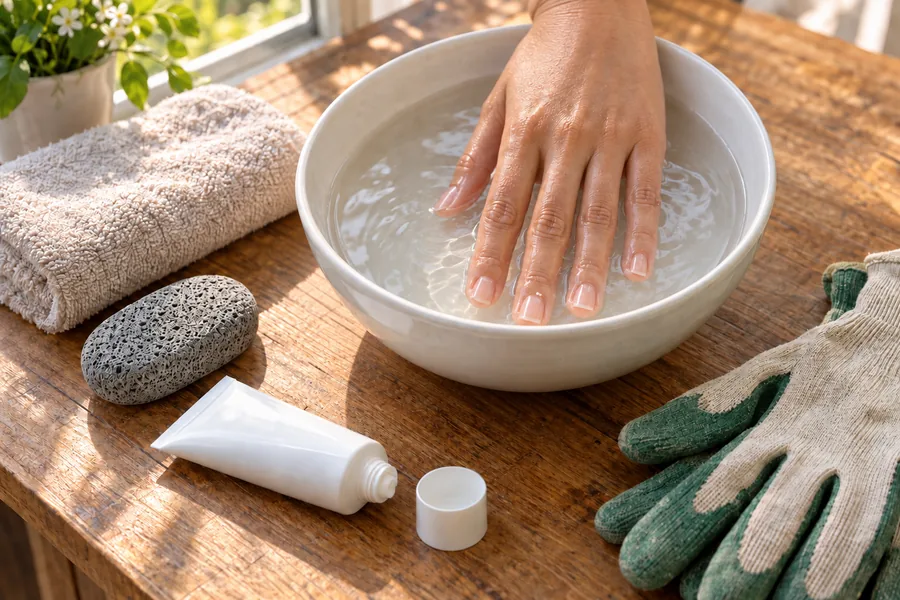
A pumice stone is a personal item. Wash it and let it dry fully after every use, do not share it, and never use it on broken skin.
You do not need to file calluses away completely
Something few people realise: a callus is not the enemy. It forms to protect the skin underneath. If you still do the same work, play the same instrument or lift the same weights every day, filing the callus right down leaves thin skin that blisters or scrapes instead.
A better goal is a callus that is thinner, softer and not cracked. Your hands can still do their job, but they no longer feel scratchy, and there is no hard edge to catch on clothes or hair.
When should you see a doctor about calloused hands?
Ordinary calluses can be cared for at home, but if any of these apply, have a doctor look first rather than filing them yourself.
- You have diabetes, circulation problems or a weakened immune system. People in these groups should not treat calluses themselves, because a small wound can turn into a big problem.
- It is very painful, or so thick that it gets in the way of using your hand.
- It is red, swollen, hot, has pus or is bleeding. It may be infected.
- It has not improved after 3 weeks of home care, or it is getting worse.
- You are not sure it really is a callus. See a doctor when you do not know the cause.
- The thick skin is in red, itchy, scaly patches, with blisters or deep cracks, and moisturising all day does not help. This may be hand eczema, which tends to get worse if it is not treated. Thick, dry skin that will not heal can also be another skin condition.
When do rough hands show the most? In photos of your nails
When people get new nails and take a photo, they usually rest their hand on fabric or hold a glass. In that slightly bent pose, the skin over the knuckles, along the sides of the fingers and around the nails is all in the picture, so calluses or lifted skin show up far more than they do to the naked eye.
A nail salon takes care of the nails. In the nail-prep step at our salon, the cuticle is pushed back first and then the excess skin around the nail is trimmed, so the edge is neat and the colour looks crisp. For calluses on the palm or at the base of the fingers, we do not offer hand scrubs or hand spa treatments; the home steps above are the way to go. A few tips if your hands are calloused and you are about to get your nails done:
- In the days before your appointment, put cream on your calluses and around your nails every day. Softer skin looks better in photos.
- Do not cut or pick the skin around your nails yourself before you come. Fresh cuts around the nail make the work harder; leave it to the nail-prep step.
- On the morning of your appointment, skip cream or oil on the nail surface itself. Oil stops the gel from gripping properly.
- After your appointment, keep wearing gloves for heavy work. Gloves stop calluses forming and keep your gel from chipping.
Nail colour can make hands look softer too. Pearl white, milky pink and nude pink are light shades that make hands look clean, and the eye stops at the nails before it notices the skin.
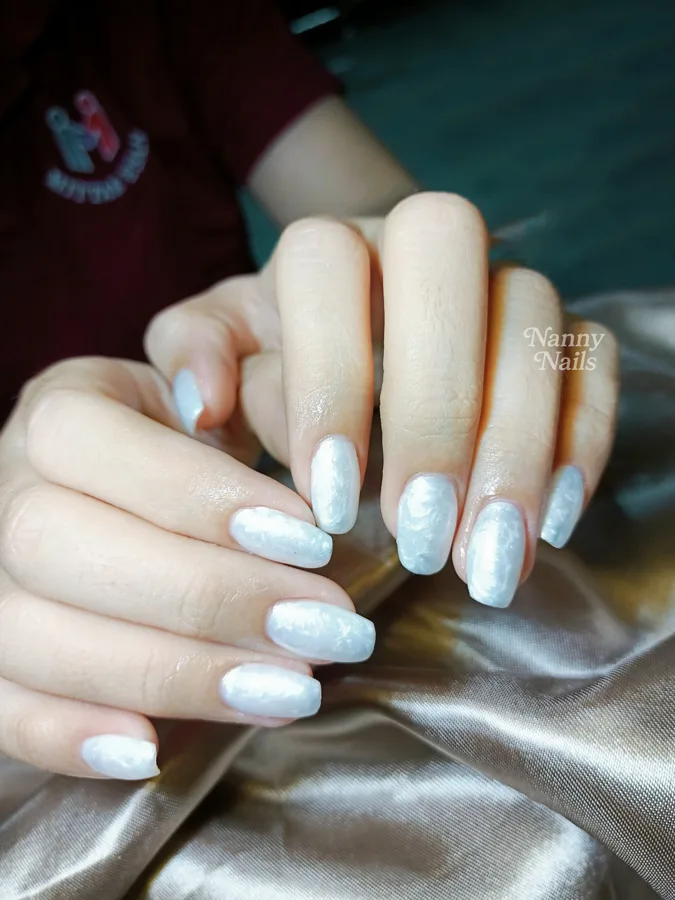
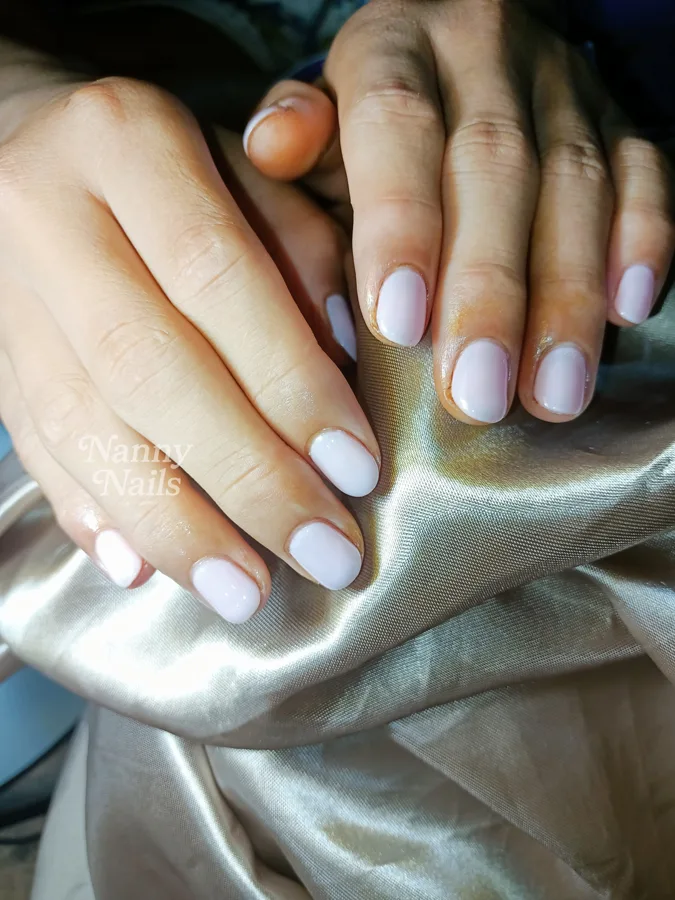
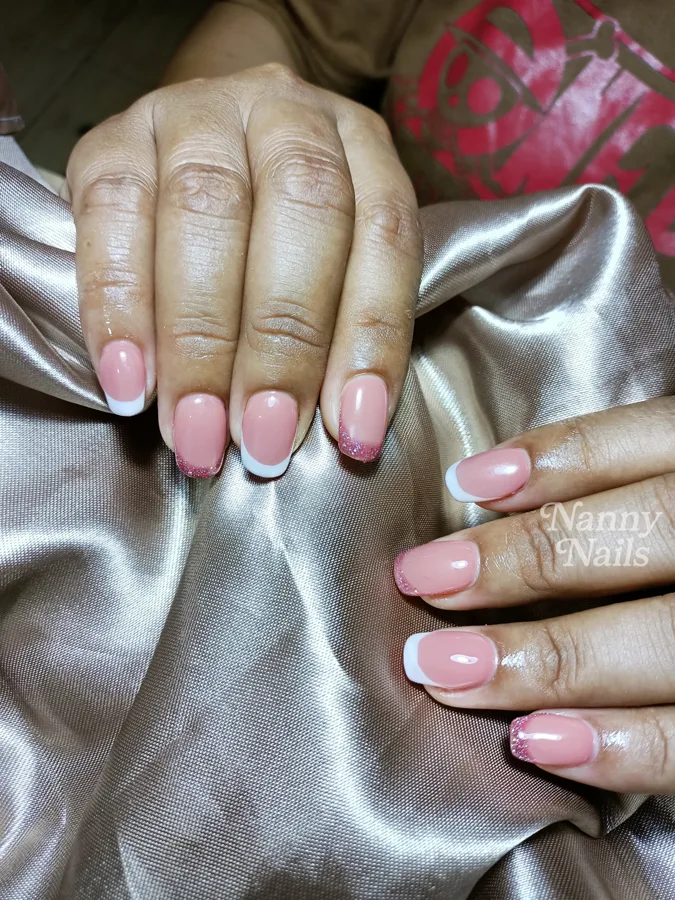
A solid gel colour on the hands is 200 baht for one colour and 250 baht for two to three colours, and every set includes shaping, base coat and top coat. Every set also comes with our 7-day care period. See more designs in the same shades in our design gallery.
What customers say about the nail artist's hands
Read all our reviews on the reviews page.
Hands that feel smooth to hold
Picture the day a friend holds your hand and does not mention how tough it feels, your hair no longer catches on your fingers, and the photo of your new nails shows only the colour you chose. All that changed was gloves for work, no more cutting or picking, soaking before filing, and cream on the callus every day.
If your whole hand feels dry and tight as well, read the causes in what causes dry hands. And if you use hand cream every day and it still is not helping, the timing may be the problem; read applying hand cream at the wrong time.
FAQ
What causes calluses on the hands?
Repeated friction and pressure on the same spot, so the skin thickens to protect itself. They are common in people who grip tools, garden, lift weights or play the guitar without gloves.
How do I get rid of calluses on my hands?
Soak your hands in warm water for 5 to 10 minutes until the skin softens, file gently with a pumice stone, use a cream with urea, ammonium lactate or salicylic acid every day, and wear gloves for work. Never cut or shave them yourself.
What is the difference between calloused hands and dry hands?
Calluses are thick, hard patches in the spots that get rubbed or pressed. Dry hands are rough, tight and flaky all over, from hot water, soap and housework. Many people have both at the same time.
Can I use a urea cream on dry, cracked hands?
Creams with urea or acids often sting on cracks. While your skin is still cracked, use a plain, fragrance-free cream or ointment instead. If the cracks are deep, bleed or do not improve, see a doctor.
When should I see a doctor about calloused hands?
If you have diabetes, circulation problems or a weakened immune system, it is very painful, there is pus or bleeding, it has not improved after 3 weeks, or it comes with red, itchy patches or blisters.
My gel nails chipped or lifted after heavy work. What should I do?
Do not pick or peel them off. Every set from our salon comes with a 7-day care period: if a nail lifts or peels within 7 days, bring it in and we will fix it for free. Wearing gloves for heavy work also helps your gel last longer.
Where is the salon and how do I book?
We are at Ban Noi Tai, Soi 7/1, Mueang Nakhon Phanom. We are open every day, with nail appointments from 09:00 to 18:00 and 3 bookings a day. Book on LINE @nannynails or call +66 99 002 8935.
Want a nail colour that makes your hands look soft and fresh? Send us a photo of your hands
Send a photo of your hands, or a design you like, on LINE @nannynails. Tell us whether you like pearl white, milky pink or nude, and whether your nails are short or long. We will suggest colours that suit your skin and give you a price. We take just 3 bookings a day.
Read more