Gel Nails Lifting Too Soon? Where They Lift Tells You Why, From a Nail Tech
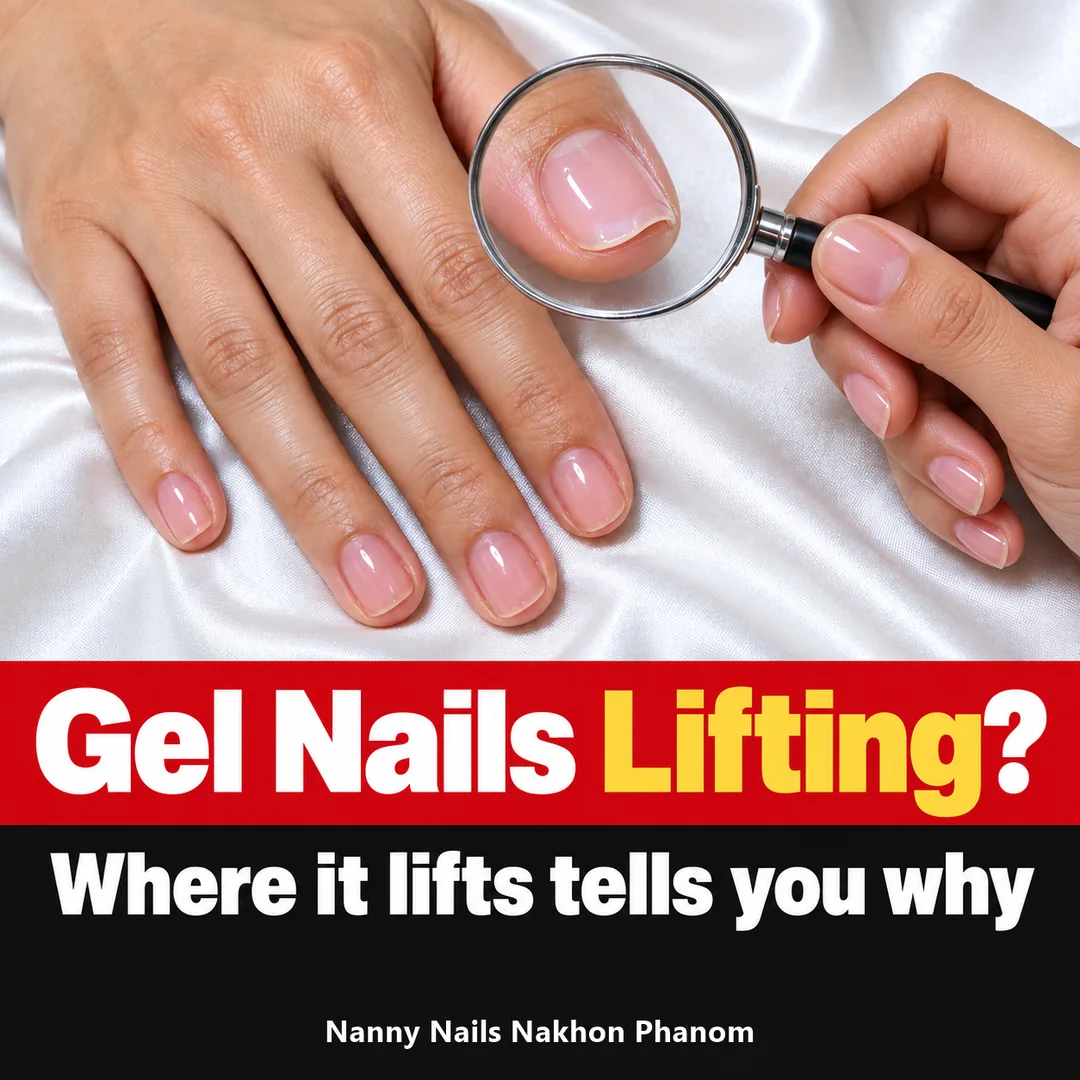
A few days after your manicure, you are scrolling on your phone and notice a thin white line at the base of your middle fingernail. Tilt your hand and there it is: the edge of the gel has started to lift. Worse, your last set lifted in exactly the same spot. The good news is that gel does not lift at random. Where it lifts almost always tells you why. In this guide our nail tech walks you through your own nails, spot by spot: lifting at the cuticle, lifting at the tip, or peeling off in one piece, what causes each one, and what to change next time.
If your gel keeps lifting and you are starting to think your nails just are not made for gel, do not decide that yet. Plenty of people who come to our salon have said the same thing, and once we look at their nails the cause usually turns out to be fixable. Sometimes it is the prep, sometimes the shape of the nail, sometimes the products.
At Nanny Nails, the owner has done every set herself for more than 3 years. Whenever a customer shows us a nail that has lifted, the first thing we look at is not how many nails lifted but where. Gel that lifts in different places has different causes. Once you can read the nail, the next set can be fixed at the source, instead of switching salons or colours without knowing what went wrong.
Lifting at the cuticle usually comes from poor nail prep, or colour flooding onto the skin.
Lifting at the tip usually comes from an unsealed free edge, or nails so short the edge is hard to seal.
Peeling off in one piece usually comes from very thin nails with nothing to grip, under-cured gel, or the quality of the colour.
First, look at your nails: where is it lifting?
Before you can find the cause, you need to know which kind of lifting you have. It is easy to check and you do not need any tools.
- Stand somewhere bright. Daylight from a window or a ceiling light is enough.
- Tilt each finger slowly. Where the gel has lifted you will see a white or silvery shine, because there is air trapped underneath. Where it is still well attached, the surface looks smooth and even.
- Notice which edge the shine starts from. The cuticle side, the tip, or is the whole layer loose like a sticker that has lost its glue?
- Make a note of which finger it is. If the same finger lifts every time, that is very useful for your nail tech.
What you should not do while checking is pry or press the lifted edge with another nail just to see how far it goes. The gel can pull the top layer of your natural nail away with it. Just look, then compare your nail with the picture below.
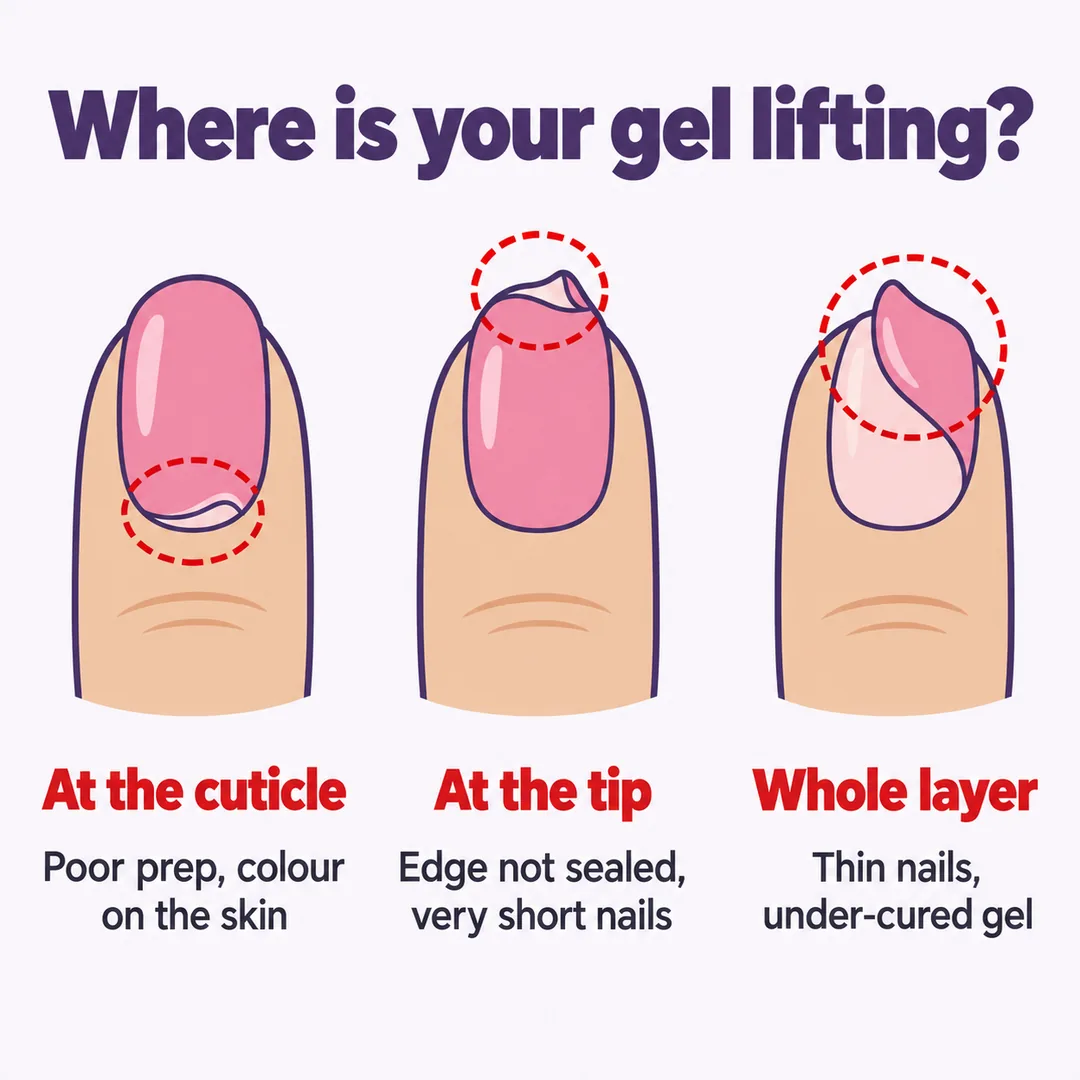
Type 1: gel lifting at the cuticle
What you see is a white line along the base of the nail, next to the cuticle. Some people feel a little ridge when they run a finger over it, or their hair catches at the base of the nail when they wash it. Left alone, water slowly seeps in and pushes the gel further up.
In our experience, lifting at the cuticle comes down to two things.
Poor nail prep
Near the base of the nail there is a very thin, clear layer of skin stuck to the nail plate, almost invisible to the eye. If it is not cleared away before the base coat, the gel bonds to that skin instead of to the nail. When that skin naturally sheds, the gel lifts with it. Oil from your hands and moisture left on the nail can also stop the gel from gripping properly.
Colour flooding onto the cuticle
This is when the gel colour goes over the edge of the nail and onto the skin at the base. Gel bonds well to nail, but not to skin, because skin moves, stretches and is always a little oily. Wherever colour sits on skin, it lifts first. Once that edge lifts, it acts like a lever and the lifting spreads under the gel that was holding fine.
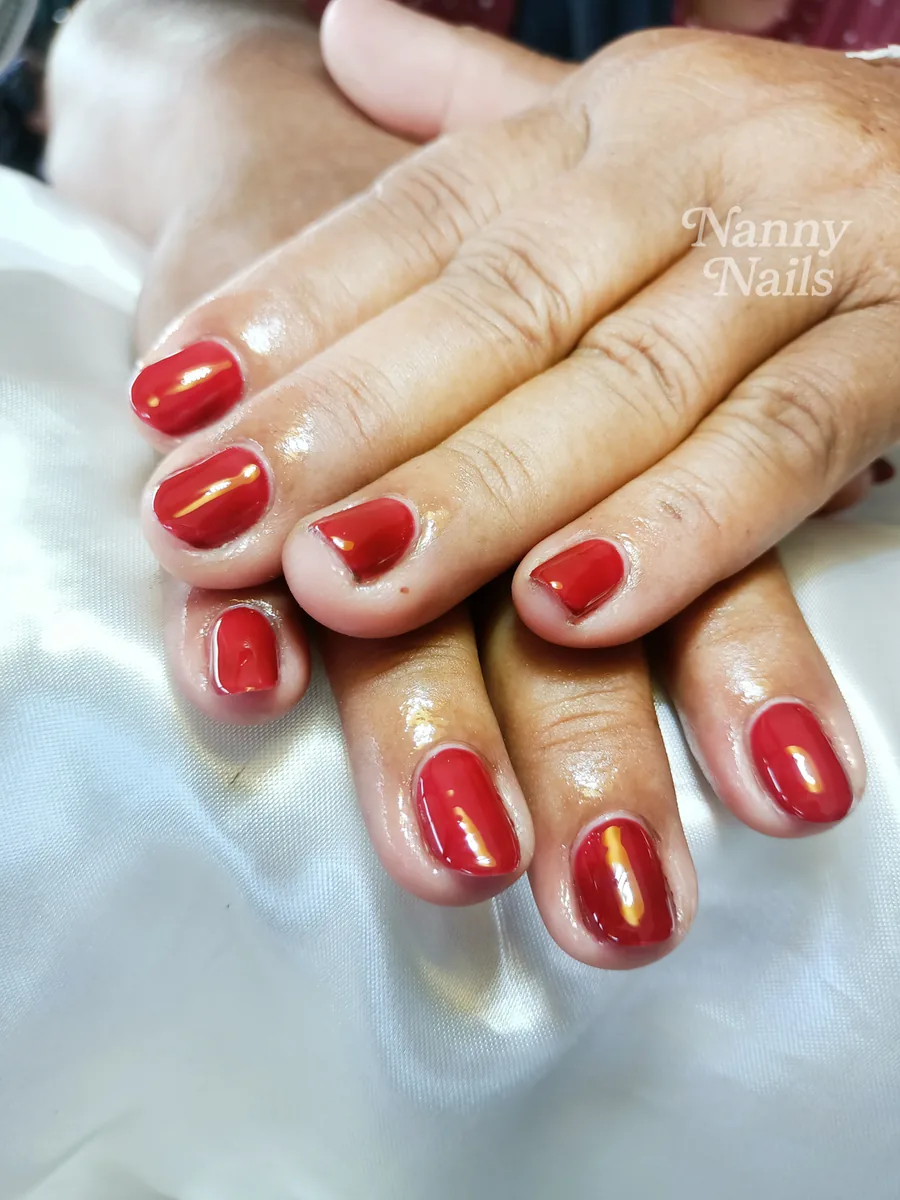
To prevent lifting at the cuticle, we push the cuticle back first and then trim the excess skin, so the nail is clean right to the edge. Then we apply the colour with a hairline gap from the skin, so all of it sits on the natural nail. If your gel often lifts at the base, tell your nail tech next time. She will know straight away which step needs extra care.
Type 2: gel lifting or chipping at the tip
Here the tip chips, the gel at the free edge lifts, or you can see your natural nail showing through at the end. Many people blame how hard they use their hands, and that does play a part. But in our experience the main causes are usually these two.
The free edge was not sealed
Sealing, or capping, the free edge means brushing the base, colour and top coat over the very edge of the tip on every layer, as if wrapping it. The tip takes more knocks than any other part of the nail: typing on your phone, picking things up, doing up buttons. If the layers stop on the surface without wrapping the edge, every knock lands right on that seam, and the gel chips or lifts from the tip inward.
Nails so short the edge is hard to seal
If your nails are so short that there is almost no free edge past the fingertip, there is nothing for the tech to wrap the colour around. However careful she is, the tip cannot be fully sealed. Short nails look lovely with gel, but when they are cut right down to the skin, the tip becomes the weakest point of the set.
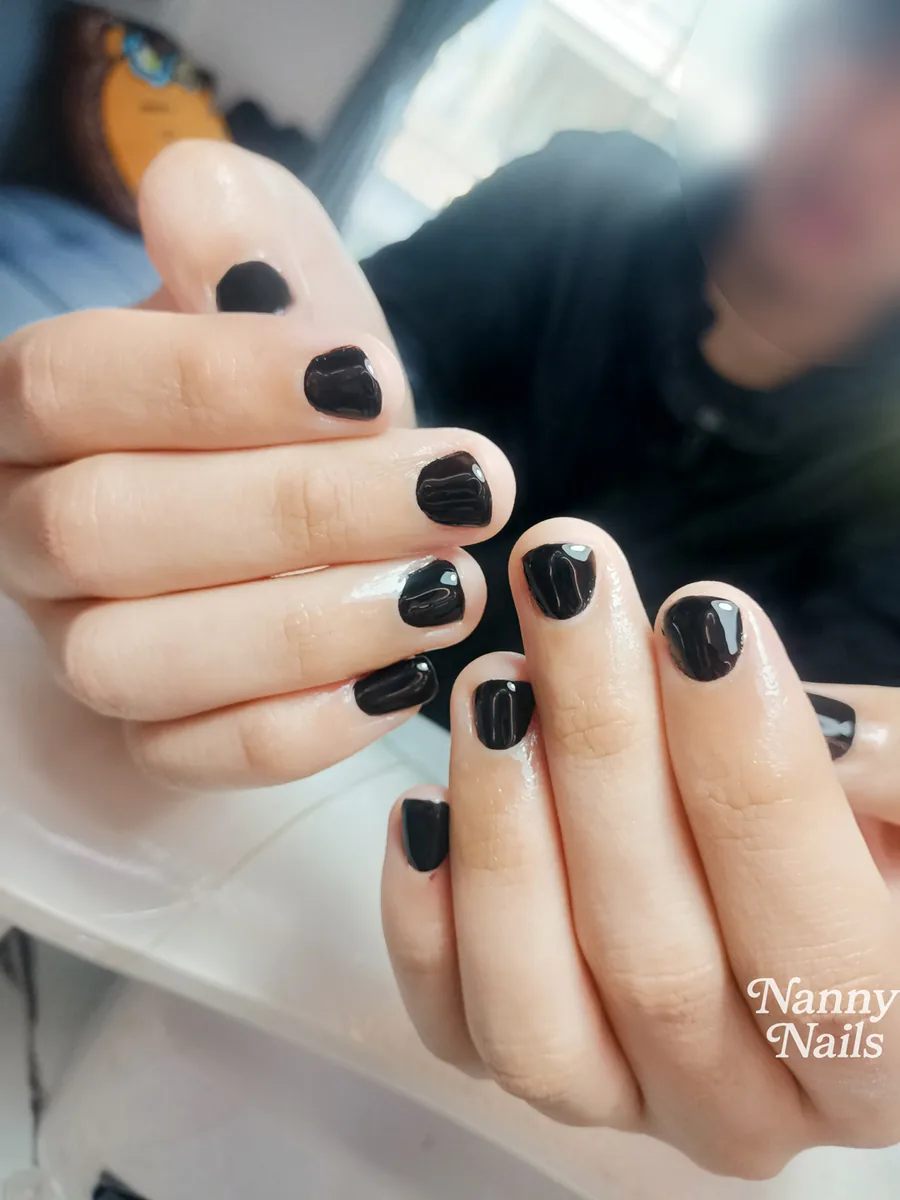
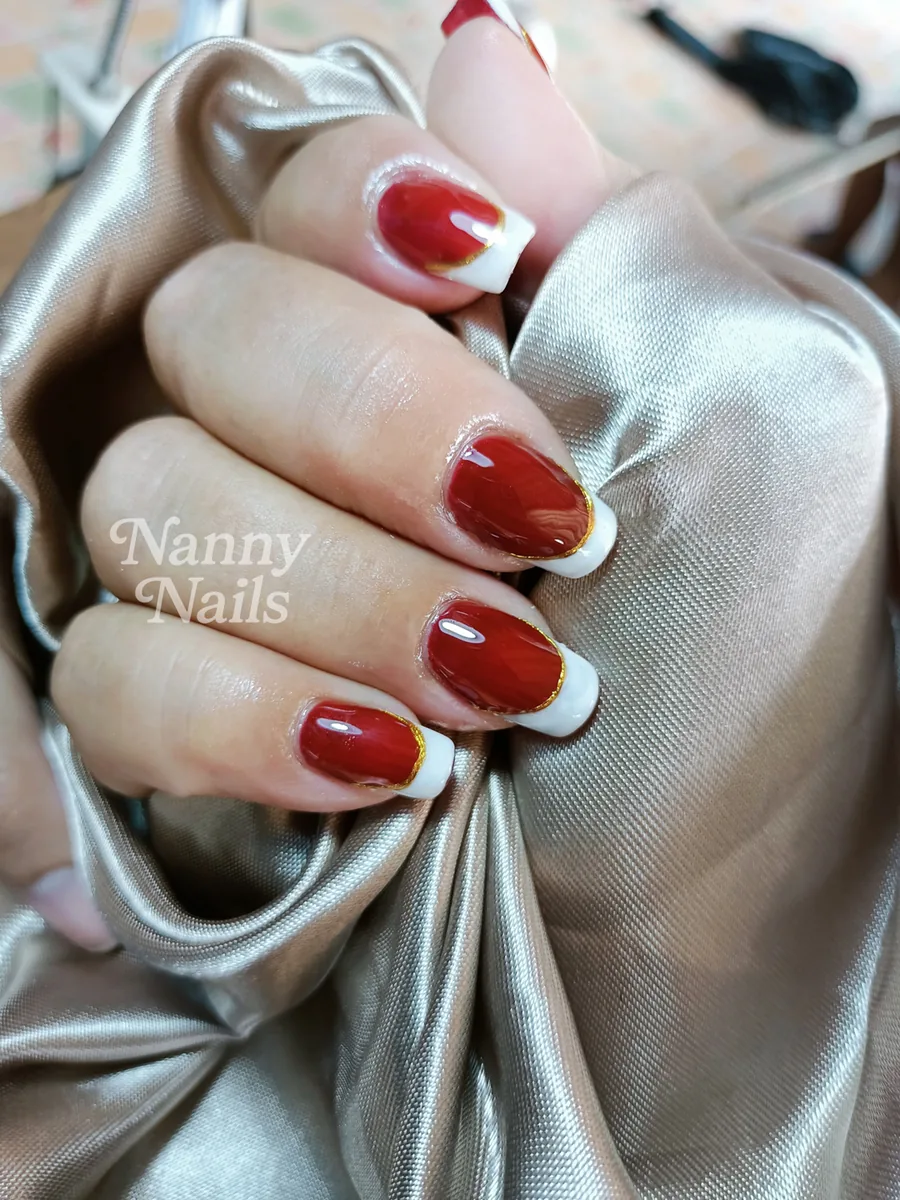
If you have short nails that keep lifting at the tip, you have two options. One is to let your nails grow a tiny free edge before your appointment, so the tip can be sealed properly. The other is to strengthen the nail with builder gel, which adds a little edge at the tip and makes the nail stronger. If you want real length, extensions are also an option. Not sure which suits your nails? Send us a photo first.
Type 3: gel peeling off in one piece
This is when the whole layer of gel comes up at once. Some people tell us it slid off in one piece while they were washing dishes, or caught on their clothes and came away whole, leaving a completely bare nail underneath. It is the one that shocks people most, and the one where we have to look at several things together. There are three main causes.
Very thin nails with nothing to grip
A very thin nail bends every time you press on it, but the gel layer cannot bend with it. After a whole day of bending back and forth, the bond between gel and nail slowly loosens until the whole thing comes off. Thin nails like this can be fixed with an overlay before the colour goes on. We offer two: rubber base, which smooths the surface and makes the nail stiffer, and builder gel, which builds up the structure so it is thicker and takes more pressure. You can read about the difference in Rubber base vs builder gel.
Under-cured gel
Each layer of gel has to be cured in the lamp until it is fully hard before the next layer goes on. If a layer is too thick or not cured long enough, it stays soft underneath. The surface can look perfectly glossy while the base is not properly bonded, and within a few days the whole layer lifts. Proper curing matters for more than durability, too: gel which is not cured properly also increases the chance of developing an allergy. At our salon we use a UV lamp and apply gel in thin layers, curing every one. If you want to know how safe nail lamps are, read Are UV nail lamps safe?
The quality of the colour
Not every gel colour grips equally well. Some look beautiful but do not bond well, and they come off sooner than they should even when every step is done right. If you have had the same kind of set, done the same way, and sometimes it lasted while other times it came off in one piece, the colour is one of the answers to consider.
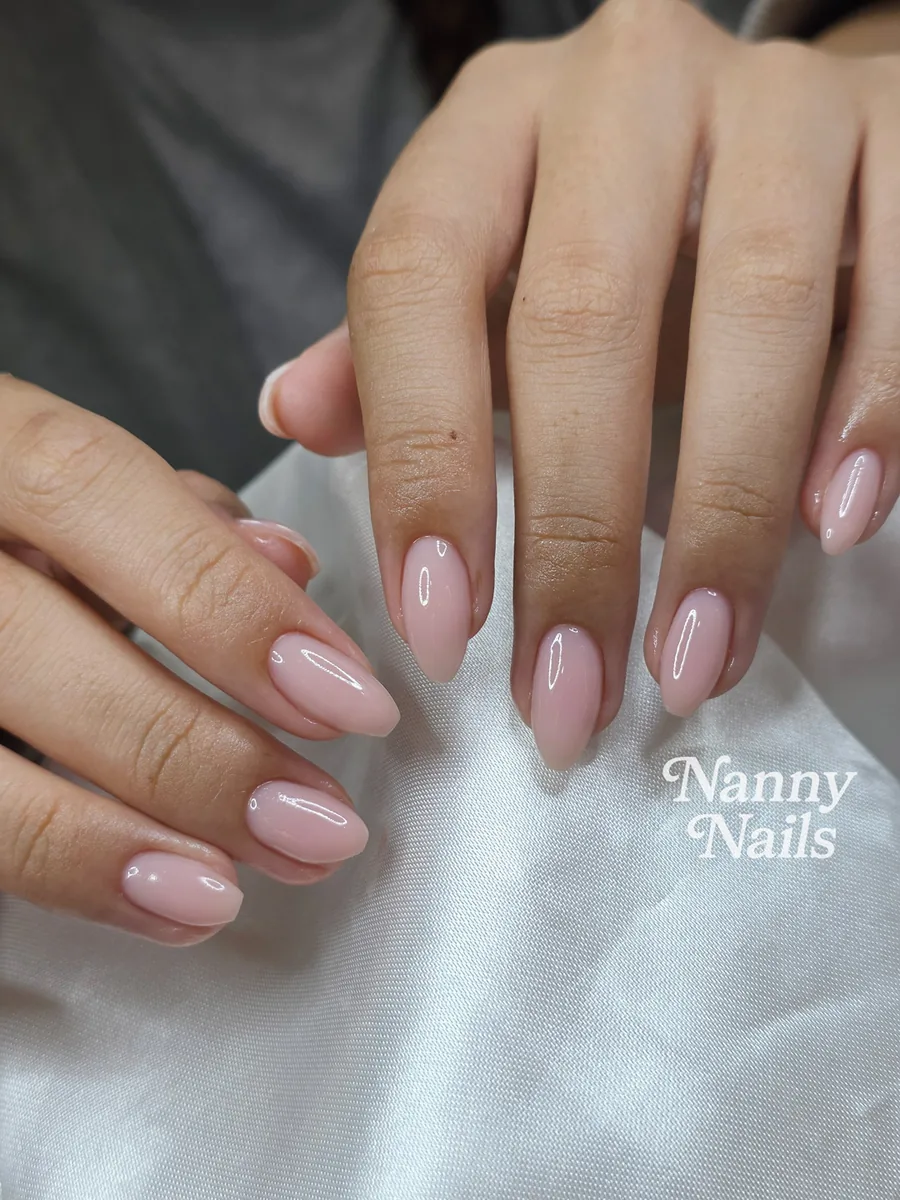
Different kinds of lifting at the same time: what does it mean?
Sometimes one hand shows more than one pattern: the thumb lifts at the tip, the middle finger at the base. That is not unusual, because every finger has a different nail shape, thickness and workload. Look at each finger on its own and match it to the causes above.
- The same finger lifts every time. This is usually about that nail itself, for example a nail that is thinner than the others, or the finger you use most. Ask your tech to pay extra attention to it.
- Almost every nail lifts at the base. Think about the prep step first.
- Almost every nail peels off in one piece within a few days. Think about under-curing or very thin nails.
The most helpful thing you can do is take a photo of your nails as soon as they start to lift, before you peel or remove anything. One photo tells us more than any description.
Causes that are not about how the nails were done
Besides the three patterns above, how you use your hands every day also plays a part, but it usually speeds things up rather than causing the problem. Hands soaked in water for a long time, washing up without gloves, or using your nails to open cans all make a weak spot give way faster. These daily habits are covered in How long do gel nails last?, which also explains how long gel should normally last. If yours comes off much sooner than that, come back to this guide and look at where it lifted.
When it is not about the gel: see a doctor
A nail tech can only read how well the gel is bonded. If you notice any of the following, the problem is no longer the colour or the manicure, and a doctor should look at your nail before your next set.
- Red, swollen, warm or painful skin around the nail, or pus. These are signs of an infection around the nail, and people whose hands are often in water are more likely to get one.
- Green, yellow-green or black colour under the gel or the nail. That is not the gel changing colour. Do not paint over it.
- The natural nail separating from the skin underneath. A white gap between the nail and the nail bed, not between the gel and the nail.
- Itching, a rash, or red peeling skin around the nails after a manicure. This may be an allergy. Do not have more gel done until a doctor has checked it.
We do not paint over nails that are thick and yellow or that we suspect have a fungal infection, because the manicure process adds moisture to the nail and the infection could spread. Please see a doctor first, then come back when your nails are ready.
What we do to prevent all three kinds of lifting
How well gel lasts is decided before the first coat of colour goes on. These are the steps the owner does on every set, grouped by the causes above.
- Against lifting at the cuticle: push the cuticle back first, then trim the excess skin, clean the nail right to the edge, apply a base coat on every set, and keep the colour off the skin.
- Against lifting at the tip: seal the free edge on every layer, from base to colour to top coat.
- Against peeling off in one piece: check how thick your nails are before starting, suggest an overlay if they are thin, apply gel in thin layers, and cure every layer fully under the UV lamp.
Once your nails are done, every set is covered by our 7-day care period. If any nail does not look right, send us a photo on LINE. We will look at where it lifted and tell you what caused it.
Overlay prices for thin nails that peel off in one piece
| Service | Price |
|---|---|
| Gel colour, hands, 1 shade | 200 baht |
| Rubber base | 200 baht (colour not included) |
| Builder gel to strengthen the nail | 250 baht (colour not included) |
| Nail extensions, hands | 200 baht |
For example, one gel colour with rubber base comes to 400 baht. Every set includes shaping, base coat and top coat. See the full menu on our services and prices page.
If your nails are lifting right now
Now that you know the cause, the next question is what to do with the nail that is lifting today. Leave it, rush to the salon, or remove it yourself? It depends on how much has lifted and how many days ago you had it done. We go through it step by step in Will gel nails come off on their own? Leave it or head to the salon. One thing we can tell you right now: do not peel it, because the gel takes the top layer of your natural nail with it.
What customers say about our attention to detail
Real Google reviews of our salon, in the original Thai with a short English translation.
Read all our reviews on the reviews page.
Nails you do not have to keep tilting in the light
Once you know which way your nails lift, you do not have to guess next time. Tell your tech whether your last set lifted at the cuticle, at the tip or in one piece, and she can fix that point from the very first step. A week later you are scrolling on your phone again without tilting your fingers to look for that thin white line at the base of the nail.
In the meantime, you can start choosing your next colour in our nail design gallery.
FAQ
Why do my gel nails lift so easily?
Look at where it lifts. Lifting at the cuticle usually comes from poor prep or colour on the skin. Lifting at the tip usually comes from an unsealed free edge or very short nails. Peeling off in one piece usually comes from very thin nails, under-cured gel or the quality of the colour.
Why does my gel peel off in one piece?
The main causes are very thin nails that bend under pressure so the colour has nothing to grip, gel layers that were not fully cured, or a colour that does not bond well. Thin nails can be fixed with a rubber base or builder gel overlay.
How do I stop gel lifting at the cuticle?
It is fixed at the prep stage: push the cuticle back first, then trim the excess skin, clean the nail properly, and keep the colour off the skin. Tell your tech next time that your last set lifted at the base.
My nails are short and the gel keeps lifting at the tip. What can I do?
If your nails are so short there is no free edge, the tip is hard to seal. Let a tiny free edge grow before your appointment, or strengthen the nail with builder gel so the tip has an edge and more strength.
What if my set from your salon lifts within 7 days?
Every set has a 7-day care period. If it lifts or peels within 7 days, bring it back and we will fix it for free. You can send a photo on LINE @nannynails first. Please do not peel the gel off yourself.
Where is the salon and how do I book?
We are at Ban Noi Tai, Soi 7/1, Mueang Nakhon Phanom. Nail appointments run from 09:00 to 18:00, 3 bookings a day. Book on LINE @nannynails or call +66 99 002 8935.
Send us a photo of the nail that lifted
Take a photo of your nails now and send it on LINE, and tell us whether it lifted at the cuticle, at the tip or in one piece. We will tell you what probably caused it, and whether plain gel, rubber base or builder gel suits you best next time. We take just 3 bookings a day.
Read more